

Dell Technologies: Hollywood director exposes duality of AI
Thu, 21st May 2026
When he unleashed on the Hollywood elite back in 2020, Ricky Gervais quite rightly pointed out that the entertainment set live in a bubble far removed from the rest of us mere mortals. How we laughed, how we scoffed, and how we didn't think exactly the same criticism might be levelled at those of us living in the technology industry (or choose your) bubble. This came up in an interview with Dell Technologies' Chris Kelly on the subject of AI: we're all aboard and embracing it, smugly asserting that our jobs aren't under threat, and it's just a matter of getting up to speed because 'people who use AI' are going to get the work.
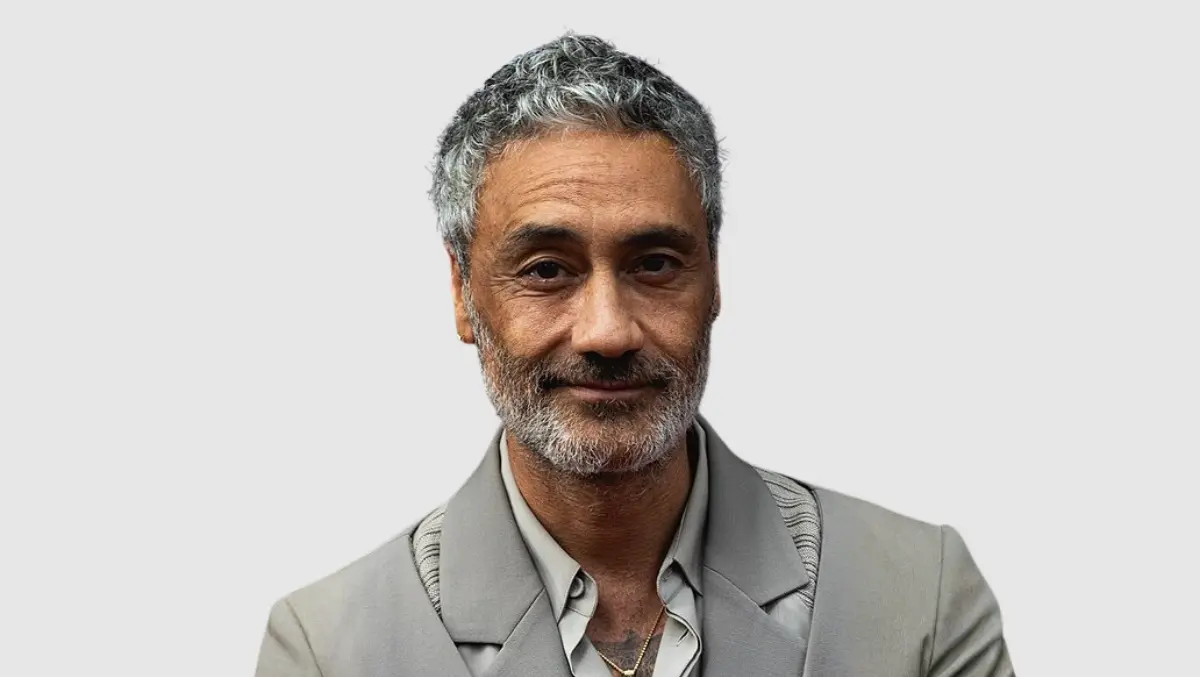
That made a recent on-stage appearance of New Zealand's greatest export after kiwifruit, Xero and Peter Jackson, one Taika Waititi, alongside actress Hayley Attwell, fascinating. Even the folks in Hollywood are worried about the impact of AI, and like many outside of the tech bubble, they view it with suspicion, derision and dismissal. (Waititi said AI produces mediocre output 'super, super fast'. To be fair, he also said 'Usually you have to wait ages for mediocre people to produce mediocre output').
As the guests of Dell Technologies, Waititi and Attwell's appearance got off to a rocky start, mainly because Waititi was taking detached cool a few steps too far, failing to pay attention to the conversation in which he was an active participant: asked a question, he answered 'sorry, I was distracted'. However, cringe soon passed and the real meat and potatoes were served up. Part of that was Waititi asserting "I don't think AI can replace you, us, or me. Because it doesn't have ADHD. It's too focused." And that, apparently, doesn't make for good storytelling.
Best known for his work bringing Marvel comic book characters to life on the big screen, when Waititi was asked about the impact of cutting the edge virtual production, real time rendering, and 'all of these lovely words to get massive visual effects across on screen' and how that changes the way he directs, his visceral response was telling. "It makes it slower."
AI fatigue is real. Again, outside of the industry tech bubble, and outside of the endless cast of characters outsourcing every thought to ChatGPT, people in workplaces can and certainly do feel like AI tools can interfere with productivity.
Writers, for example, can (and many do) use AI to produce a story. They can even get away with publishing that story, and get away with getting paid for it. Guaranteed, not a single one of those who have done this, feel good about it, proving the principle of 'if you have to conceal your use of AI, you shouldn't be using it'.
But there's catch. The story may have been produced in a fraction of a minute, but it has all the hallmarks of fast AI mediocrity. Sure, it puts words on the page and conveys information, but does it tell a story? There's a weirdly detached quality to AI written content, that doesn't quite connect with audiences no matter how often one reads how the topic 'sparks broader conversations around SUBJECT'. It doesn't reflect what you, the writer, was actually trying to say, or what Waititi the director is attempting to portray.
Many writers won't be so idle as to simply submit that draft, and will spend considerable time rewriting it to better suit their purpose. Congratulations, AI didn't take your job, but it changed it. You're now an editor, not a writer.
The real kicker? Organically producing the piece you had in mind is often faster (ultimately) and results in an outcome more closely aligned with intention. That's always been the purpose of communication, effectively encoding what's in your head, transmitting it, and hoping that the recipient forms the same idea in theirs.
Dell Technologies' John Roese recently told a media contingent that AI agents are best targeted at hand-offs and coordination points, because it's here that the greatest impediments to productivity lie. Creatives like Waititi and Attwell clearly don't like the idea of AI applied to creativity, though Attwell did make the excellent point that technology commoditises and therefore increases accessibility to what was previously rare. There's simple message here: careful with that AI.
Roese also said that as its own 'customer zero', "We're [Dell Technologies] only pursuing AI projects that clearly drive the transformation of our business, and the application of AI to that process will produce significant material impact for the company."
The love/hate relationship many of us have, the 'is it scary or is it exciting' quandary is common to the human experience, whether you're in Beverly Hills or just a regular suburban nobody. Call it the AI paradox, as Waititi added that the emergence of fancy technology means "You've got to work with a lot more people." Not fewer, more. Jobs aren't disappearing, they are changing.
On the plus side, he said "It's amazing the ways that you can unlock things that are in your head and actually see them come to life. Directing is very hard in that you're trying to explain what's in your head to multiple people and trying to get that out. When you're working with the VFX artists and pre-designs at Marvel, they're gifted at figuring out what you're trying to say and making that come to life. But it does take time."
Asked if emerging technologies expand or constrain creativity, Waititi's take again exposed a duality. "Both. It expands the worlds that you can create and visually what you can see. Constraints, because of the time it takes, and often becomes a pain in the arse."
Pressed further on AI impacts he expects in his workplace, Waititi said that many involved in the bubble he occupies are already being driven out (again, note that with any technological shift jobs don't disappear, they change - cold comfort to those who became experts in niches only to see them become commoditised.) "A lot of those artists we laid off...the whole model is changing, about how many people are needed, and designers and artists are now being pushed aside." Yes, this is an apparent contradiction with his earlier statement, but this is a tale of duality, and it isn't yet complete.
"I hope it doesn't change that much, because we want to keep people working, and I'd much rather work with human minds to be a little bit slower. I mean, I thought AI [meant] you're getting a notable change, but you're getting mediocre work just super, super fast. I know that stuff will change, but I don't know what the answer is with collaboration. Like, will I just be doing this all by myself? You know, twinning myself and putting myself in a room like Professor X, and thinking things that flat out go on an Olympic screen? That'll be fast and awesome, but I want to work around people."
Not, it seems, entirely unlike the rest of us.
There is, however, a perhaps oddly common lesson worth taking from the lofty Hollywood bubble, which helps deflate the one occupied by those of us in the technology space. 'People using AI will take your job' is no less of a worry than 'AI is taking your job'. Rapid forced change to one's source of livelihood is deeply distressing. Some will adapt, others won't. And with the impacts of AI truly seismic and affecting everyone from Joe Soap to Waititi and his circle, we'll all feel the effects, positive and negative as the genie isn't going back into the bottle.