

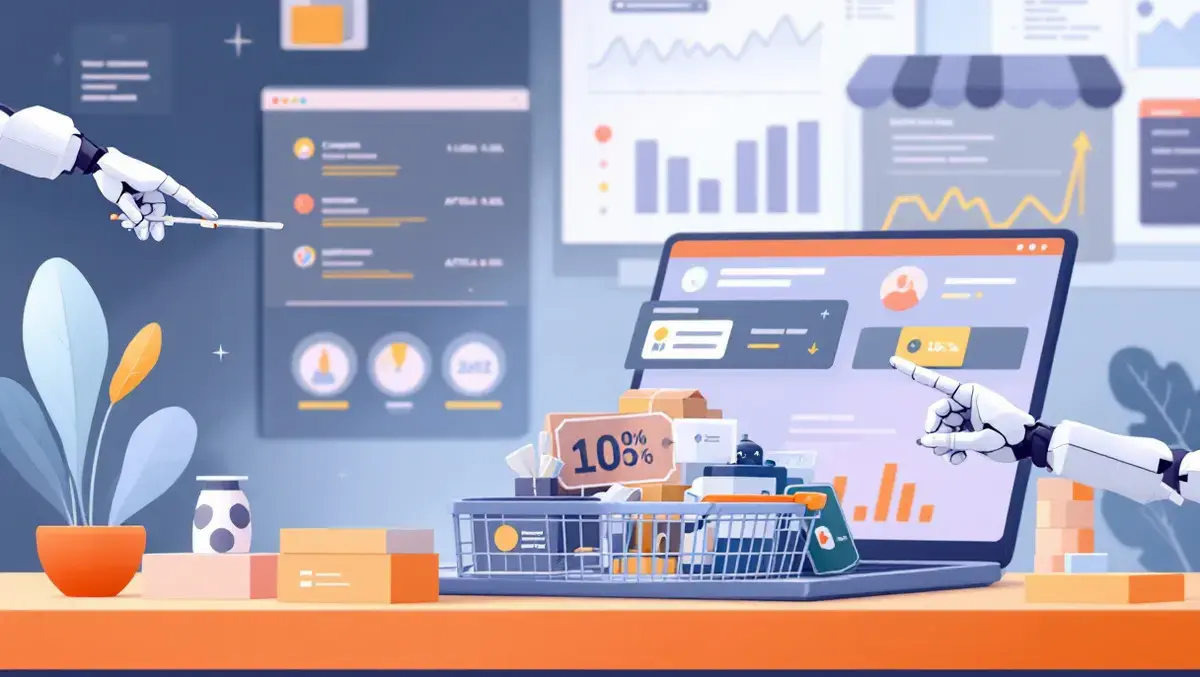
Benson relaunches to track coupon bots & AI agents
Tue, 20th Oct 2026 (Today)
Benson has relaunched with software designed to show merchants when coupon extensions and AI shopping agents interact with their checkouts. The product returns after the original version debuted in 2022.
The service was built by Founder Doug Silkstone, whose background is in affiliate marketing and software. The latest version tracks whether sessions involve people, coupon extensions, AI agents or other automated activity. It is intended to help online retailers measure the effect on discounting, attribution and commission payments.
Silkstone said the idea grew from his experience in affiliate publishing, where he saw browser extensions claiming commission at the end of a customer journey.
"Internally we called it the Honey Hoover. A shopper would find a brand through a review, a comparison site or a creator. Then a pop-up at checkout would claim the last click and take the commission that was meant for the affiliates further up the funnel. The networks had little reason to push back, because every one of those orders still paid them," said Doug Silkstone, Founder, Benson.
This has long been an issue in affiliate marketing, where the final referral before purchase can determine who gets paid. Benson argues that merchants can end up paying both a commission on a sale that was already likely to happen and the value of a discount code applied at checkout.
Why it returned
The original version of Benson opened for early access in 2022. Silkstone said it used a script tag to remove discount-extension pop-ups across more than 50 extensions and stop automatic code testing on Shopify Plus checkouts.
That approach became less workable after Shopify restricted access to checkout customisation. The shift away from checkout.liquid and the move to a sandboxed checkout environment meant apps could no longer alter the page in the same way.
Silkstone said the relaunch was also shaped by recent scrutiny of how coupon tools claim affiliate credit. He pointed to industry concern after public reporting about Honey's attribution practices and Honey's subsequent removal from several affiliate networks, including Rakuten Advertising, impact.com and Awin.
"I'm back, and I'm not taking no for an answer," said Silkstone.
New focus
The updated product expands beyond blocking browser extensions. It now aims to identify and classify traffic from AI shopping agents and agentic browsers, which can read product pages, fill baskets and test codes on behalf of users.
Benson says merchants can use the software to see how much traffic comes from agents, how those visits convert and how many codes are attempted in a session. It also offers controls to limit code attempts per visit, alongside a mode that shows which pop-ups would be hidden before merchants make any live changes.
Silkstone said advances in AI tools have made it easier for a solo founder to build a broader product.
"I have the expertise, but I have the same 24 hours in the day as everyone else. Before, even when I was capable of doing all of it, I couldn't take on an idea this ambitious because I didn't have the time to build it. Now I can hand a lot of the work to agents, spend my time on the hard problems and scaffold the rest. It's been a dream," said Silkstone.
Detection and agent analytics are available on all plans, including a free tier, and the software installs with a single script on Shopify and other eCommerce platforms.
Merchant pressure
The relaunch reflects a wider question for online retailers about who or what is influencing transactions at the point of purchase. For years, merchants have had to deal with discount extensions inserting themselves into the checkout process. AI shopping tools are beginning to create a similar challenge.
Silkstone said the longer-term aim is not simply to stop those tools, but to establish clearer rules for how they operate on merchant sites. He argued that retailers, extensions and AI agents may eventually work on more defined terms if stores can first see what is happening in their traffic.
"Discount extensions will always exist, but they'll start to play by the rules. Benson is here to police them, and to help both sides understand the value each one brings. In an ideal world Benson wouldn't need to block anything. It would be repairing a relationship between merchants and extensions that's been damaged for years," said Silkstone.
He added that merchants will need to decide how they want AI agents to behave on their sites, including whether to expose more data or change how pages present information to automated shoppers.
"Merchants are going to have to decide how they deal with agent traffic. Do they expose more data? Change what's on the page? Give agents clearer instructions? That's conversion rate optimisation for bots, and it's going to matter as much as it does for people," said Silkstone.