

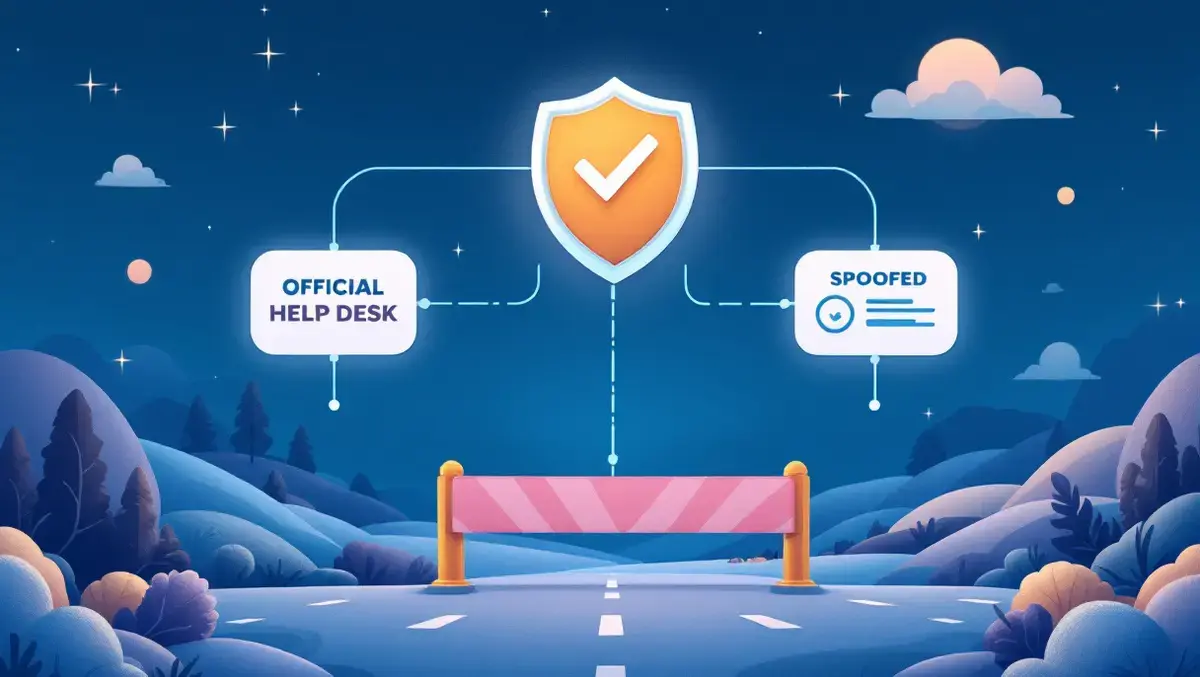
Zendesk launches directory for verified AI support endpoints
Tue, 13th Oct 2026 (Yesterday)
Zendesk has launched the Open Service Directory, a public directory of verified customer support endpoints for AI assistants and personal agents.
The directory is intended to help assistants find official support channels endorsed by brands.
The move addresses a growing problem as consumers increasingly use AI assistants to make appointments, request replacements and follow up on service issues. While assistants can often find websites or help articles, they have lacked a trusted way to confirm they are dealing with a company's authorised support operation.
Zendesk said the Open Service Directory, or OSD, extends the Agentic Resource Discovery specification, allowing assistants to discover and verify customer support agents approved by businesses. The aim is to give AI systems a verified starting point instead of leaving them to rely on unconfirmed contact details.
Several companies are joining the effort, including Betterment, ElevenLabs, Flex, TeamSystem, TBAuctions, Telekom Payment and Wireless Logic. Any brand using Zendesk software or another service platform can be listed in the directory if it opts in and approves a support listing through its provider.
How it works
According to Zendesk, the system works in three stages. First, participating brands approve a support listing through their service provider. Entries are checked against the company's domain and screened for impersonation.
An AI assistant then searches participating registries, verifies the match and uses the approved support destination. It then connects directly to the verified support experience run by the brand.
The directory itself does not access private customer data or perform support actions. Once an assistant connects, any interaction is governed by the brand's own authentication, authorisation and service policies, including rules on what information can be accessed, what actions are allowed and when a human agent needs to intervene.
Zendesk is also developing controls to help brands identify both the assistant and the customer it represents, apply customer-specific permissions and determine which providers are allowed to connect. The goal is to give brands visibility into who acted, with what permission and what happened.
Broader ecosystem
The directory is designed to work across a broader range of AI and customer service technologies rather than within a single vendor's tools. Zendesk said OSD complements communication protocols including UCP, PACT and PAP, and plans to adopt those protocols as part of the wider framework around verified support.
The directory is also compatible with OpenAI's Dots and ChatGPT, Claude, Muse, Instinct, Grok Bot and Gemini. That suggests Zendesk is trying to position the service as shared infrastructure for customer support interactions handled by AI assistants.
In one example outlined by Zendesk, a customer asks a personal assistant to move an air conditioner repair appointment. The assistant could use the directory to locate the company's official support, connect to the brand's own AI agent with the customer's permission and complete the request within the company's policies. If human review is needed, the case could then be handed to a support team with the conversation history and previous actions preserved.
The launch comes as technology companies and service providers seek standards for how autonomous or semi-autonomous assistants interact with businesses on behalf of users. A central issue is trust: brands need confidence that an assistant is authorised to act for a customer, while users need confidence that the assistant is reaching the right support destination.
Zendesk said the Open Service Directory is meant to provide a shared foundation for that process across brands and service platforms. "The problem is that today those assistants lack a shared, trusted way to verify that they're reaching the brand's official support," the company said.