

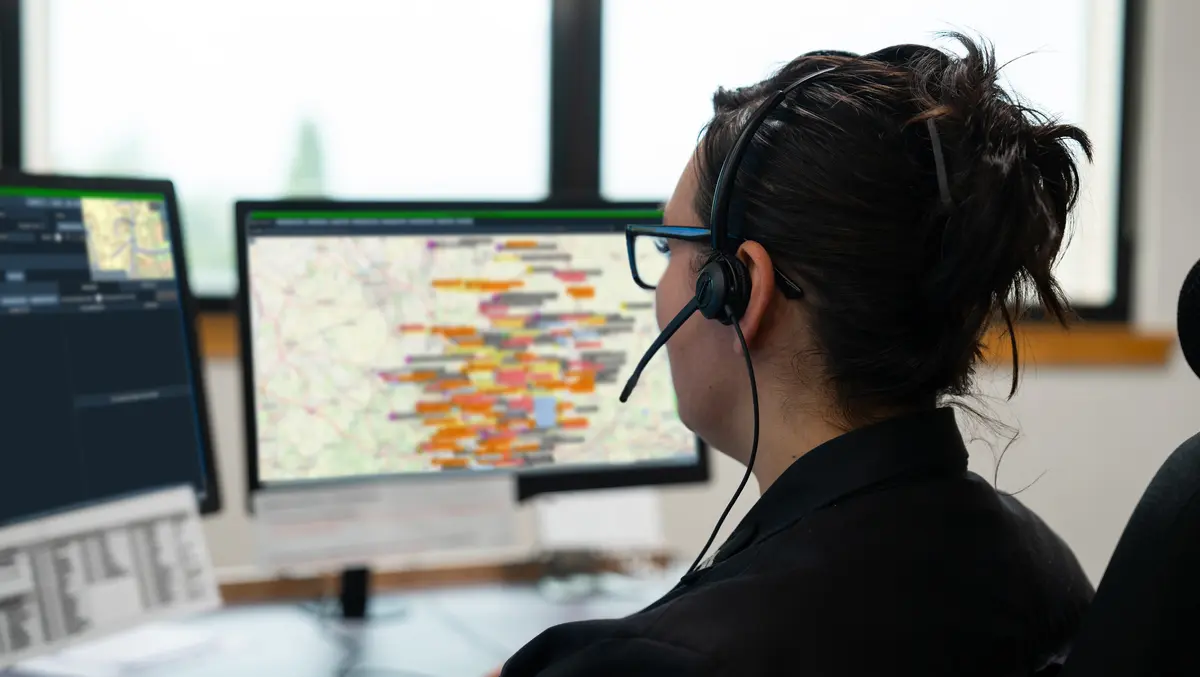
Shared fire control hub unites three eastern counties
Fri, 20th Mar 2026
Norfolk, Suffolk and Hertfordshire Fire and Rescue Services have completed the roll-out of a shared command centre to handle emergency calls, dispatch crews and coordinate incidents across county borders.
Together, the three services cover more than 100 stations and serve more than 2.5 million people. The new set-up uses Motorola Solutions' cloud-based Guardian Hub platform to connect control room operations across the three organisations.
Shared control room
The system supports day-to-day operations for each service and provides a shared environment for joint working during mutual aid incidents. Staff in one county can take calls and manage dispatch for another service when needed.
The approach reflects how incidents can escalate beyond local boundaries, including severe weather and large fires that require additional resources. Mutual aid is common across UK fire and rescue services, but shared operational systems are less widespread and typically require detailed planning around processes, governance and training.
Darren Cook, Assistant Chief Fire Officer at Hertfordshire Fire and Rescue Service, said early experience showed the model working in practice. "Emergencies aren't restricted by borders, and our responses shouldn't be either," he said. "Working closely with Norfolk and Suffolk is already leading to more efficient and effective responses, and sharing knowledge on how we're using this new technology has been incredibly valuable. Within hours of the hub going live, we saw the benefits, as Suffolk FRS operators took calls and managed dispatch for Hertfordshire FRS during a large structure fire."
Incident visibility
A key operational change is visibility of incidents across the partner services during joint working. This helps decision-making when deploying resources across county lines and prioritising responses during periods of high demand.
Scott Norman, Deputy Chief Fire Officer at Norfolk Fire and Rescue Service, said the system provides access to information on neighbouring incidents during major events. "During extreme weather events and major fires, it's crucial that we can share call handling and frontline resources with neighbouring FRSs," he said. "The system gives us visibility into our partners' ongoing incidents to mobilise our own crews faster and respond more effectively. Ultimately, we can provide a better service for our community, when and where they need it."
The shared hub also changes how control room capacity is managed. During demand spikes, call handling and mobilisation tasks can be distributed across the three services rather than kept within a single county, reducing the risk of backlogs when call volumes rise quickly.
Cost and resilience
Consolidating control room operations into a shared hub also affects infrastructure. It removes the need for each organisation to maintain separate IT systems, reducing duplication and cutting costs. It can also ease pressure on call handlers during peak periods.
Technology consolidation has become a wider theme across UK public services as budgets tighten and demand grows. For fire and rescue control rooms, the stakes are high because systems handle emergency calls and coordinate resources during fast-moving incidents. Resilience is also critical, including the ability to maintain operations if one site is disrupted.
Jon Lacey, Chief Fire Officer at Suffolk Fire and Rescue Service, described the change as both operational and organisational. "Our work can often be a matter of life or death - we needed a system which would hit the ground running and enable entirely new ways of working with our neighbouring FRSs," he said. "Motorola Solutions fit the bill perfectly. The Hub model has already proven its value, with call handlers able to manage extremely high call volumes and each FRS seamlessly providing additional support when needed. We've also found unexpected benefits, such as enabling all control room staff to take part in planned training exercises without disrupting live operations."
Training is often constrained in control rooms because staffing levels can limit the ability to run exercises without affecting live work. The shared model improves flexibility for scheduling planned activity alongside day-to-day incident handling.
Supplier view
Motorola Solutions has positioned Guardian Hub as a model for multi-agency collaboration, using cloud deployment to connect organisations and manage shared workflows. In the UK, the company supplies a range of public safety communications and control room products.
"Fire and rescue services are there for their communities, but the pressure they face continues to grow," said David Shorland, U.K. and Ireland Sales Director, Motorola Solutions. "Guardian Hub gives services a better way to connect, coordinate and respond. With agencies increasingly required to do more with less, we're providing a resilient, scalable model to help serve and protect communities."
The shared command centre is now in place across Norfolk, Suffolk and Hertfordshire. Operators can collaborate across counties during mutual aid scenarios while maintaining separate daily operations within the same platform.