

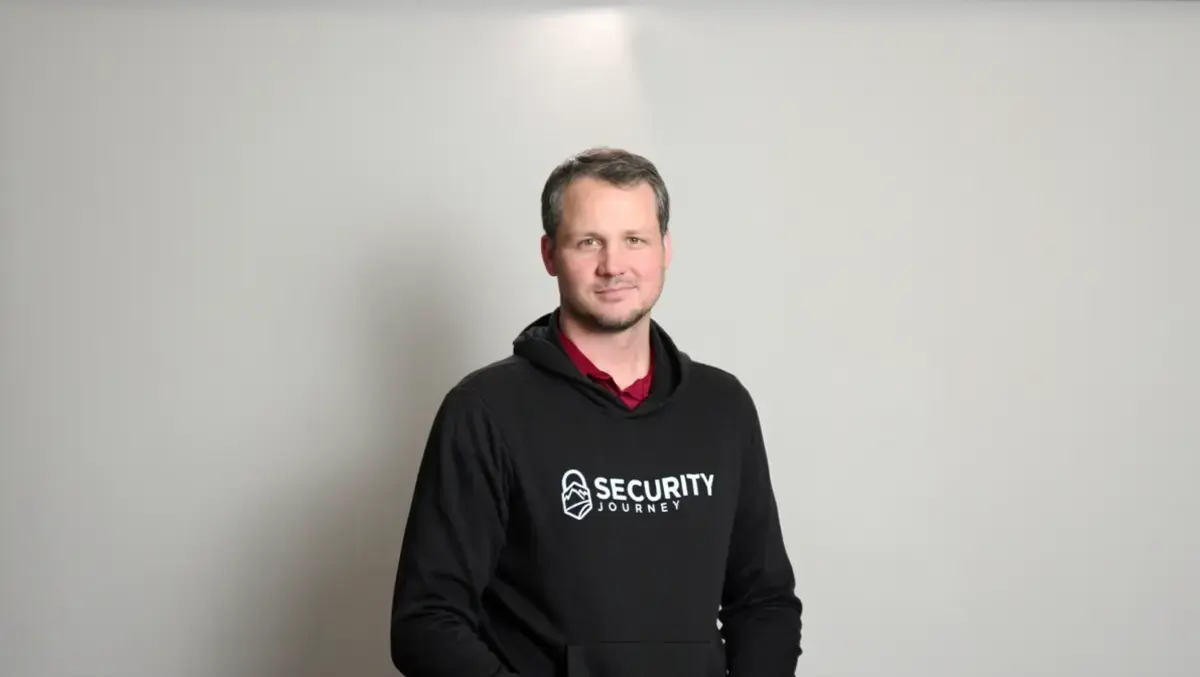
Security Journey launches AI training for wider workforce
Wed, 23rd Sep 2026
Security Journey has launched AI Advantage, a role-based AI training programme for employees across the wider workforce. The offering expands beyond its established focus on developer security training.
The move comes as businesses increase spending on AI tools while struggling to turn that investment into consistent returns. Security Journey cited Gartner research showing that 81% of Chief Information Officers believe gaps in generative AI skills will prevent them from meeting business objectives.
After more than a decade training developers in secure coding practices, the company is now targeting staff in marketing, finance, human resources, operations and customer support. It argues that AI use has spread well beyond software teams, often without formal training or clear governance.
More than 70% of employees now use AI tools in their daily work, according to Security Journey. At the same time, it pointed to data showing that only 5% of AI projects deliver measurable returns, reflecting what it described as a widening gap between access to AI tools and the ability to use them effectively and securely.
The training model
AI Advantage is structured around several learning paths: a foundation layer for general AI understanding and risk awareness, a power-user track for frequent users, role-based learning tied to specific business functions, and a citizen developer route for non-technical employees building applications or automations with AI tools.
The aim is to move workers beyond basic prompting toward repeatable workflows and better judgement on security and reliability. That reflects a broader market shift as companies look for ways to manage the risks created when staff use generative AI to draft content, automate tasks and make decisions that affect customers and internal operations.
One area of concern is the rise of so-called citizen developers: employees outside traditional engineering teams who use low-code tools and AI systems to create applications. These users need grounding in secure development practices if experimental tools are to move safely into production use, Security Journey said.
Michael Burch, Vice President of AI Enablement and Acceleration at Security Journey, said many organisations still mistake access for competence.
"Anyone can get AI to do work, but very few people understand what AI is actually doing to get it done. You are not capable unless you also understand the security implications of what you are building. When you build something that is fragile and can break, you are not building ROI. You are building risk," Burch said.
Broader push
The launch marks an expansion rather than a change of direction for the company. Secure code training remains its core business, but AI-assisted software development has already changed what developers need to learn. Security Journey is now applying the same education model to non-technical teams as AI tools become embedded across the business.
That wider adoption comes as regulators sharpen their focus on AI literacy and governance. Security Journey pointed to the European Union's AI literacy requirements under the EU AI Act, as well as California legislation focused on advanced AI systems, as signs that employers will face growing pressure to show their workforce has appropriate knowledge and oversight.
For companies, that raises practical questions about how to train workers at scale, how to measure whether learning affects outcomes, and how to reduce the risk that employees will use AI tools in ways that expose sensitive data or create unreliable outputs. Its approach is designed to build practical habits and behaviour change rather than treat AI training as a one-off compliance exercise.
Dan Newton, Chief Executive Officer of Security Journey, said the spread of AI had broadened the group of employees whose work can create security and operational risks.
"We've always helped people build securely. AI has simply expanded who gets to build. Security Journey continues to provide secure code training and software security education, and now we're extending that same expertise to meet the needs of an AI-enabled workforce. Our roots in security education, hands-on learning and proven behavior change are exactly what differentiate us in this market," Newton said.
The company also said AI training will need regular updates as tools and regulation change. It plans to add new learning content each month, drawing on customer work, practitioner input and changes in the regulatory environment.
Burch said the pace of change means companies cannot afford to treat AI education as a one-time effort.
"AI is changing too quickly for organizations to treat enablement as a one-time training exercise. Our job is to keep listening, keep learning and make sure people have the skills and judgment they need next. This is a chance to give an entire workforce capabilities that were once limited to a select few. When people understand how to use AI effectively and securely and can see the value it creates in their own work, that's when AI starts to become a real organizational advantage," Burch said.