

Head of computer science wins the AI education award
Mon, 14th Sep 2026.webp)
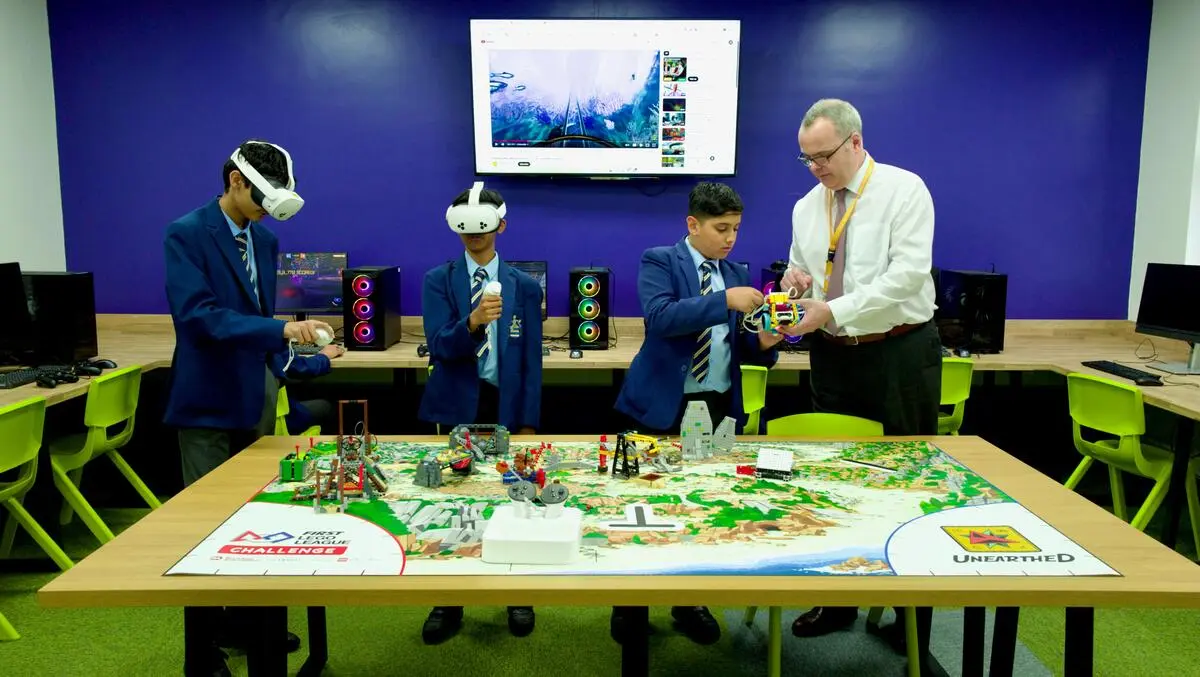
Hulme Grammar School's Head of Computer Science, Stephen Norbury, has won the AI Innovation in Education Award at the national CODE Awards. The award recognises his work in teaching artificial intelligence across the school curriculum.
He was recognised for a programme that teaches pupils from Year 7 onwards how AI works and how to use it critically, while also supporting staff through weekly guidance and continuing professional development sessions. He also led an inter-school hackathon involving more than 100 pupils from primary and secondary schools across Oldham, where students used AI to build software and applications designed to improve school efficiency.
The award comes as schools face growing pressure to prepare pupils for a labour market shaped by automation and rising demand for digital skills. A Royal Society survey of 9,200 teachers found that only 14% were confident in key AI concepts, including practical applications, the underlying technology, and ethical and environmental issues.
National labour and skills data cited by the school point to the same challenge from another angle. Research from Skills England indicates that more than 90% of UK businesses report significant digital skills shortages, while youth NEET levels have passed one million.
Across subjects
At Hulme Grammar, AI teaching is not limited to computing lessons. The curriculum is woven into subjects including English, history and science, with pupils taught to question AI outputs, check sources, and use the technology to support creative and analytical work rather than rely on generated answers.
The programme is delivered through the Brenda Mills Institute for Innovation and Technology. The approach avoids outright bans on generative AI and instead focuses on understanding prompt engineering, machine learning foundations, and human-machine collaboration.
This reflects a broader debate in education over whether schools should restrict access to AI tools or incorporate them into teaching with clear rules and critical oversight. Hulme Grammar's model places particular emphasis on judgement, leadership and critical analysis alongside technical knowledge.
The framework was developed with industry input, including from Purple AI, to combine practical work with ethical reasoning at a time when many employers are adjusting job requirements in response to AI.
Wider pressures
The school linked Norbury's work to concerns about employability and the pace of workplace change. It pointed to findings from PwC's AI Jobs Barometer, which showed demand for AI-related skills rising quickly and skills requirements in AI-exposed roles changing at twice the rate seen in other occupations.
Those trends are shaping decisions about curriculum design, teacher training and digital access. Entry-level jobs in particular are under scrutiny as automation changes the tasks expected of new recruits, increasing the value placed on early familiarity with AI systems and their limitations.
Norbury's award also highlights the role of individual teachers in shaping school-wide responses to those pressures. Alongside direct classroom work, his role has included sharing guidance with colleagues and helping other educators build confidence in using and discussing AI tools.
Digit, which hosts the CODE Awards, said the entry stood out for its whole-school approach. The awards recognise digital projects led by teachers and young people across the UK.
Peter Marshman, Chief Executive Officer of Digit, said: "The CODE Awards celebrate the amazing transformational digital work of young people and teachers. We were delighted by the entry from Hulme Grammar and Stephen Norbury, Head of Computer Science, who has demonstrated whole-school AI integration across subject areas, balancing technological enhancement and critical thinking.
"Champions like Stephen should be celebrated for supporting colleagues and students, and for sharing crucial information that helps develop the future digital leaders of tomorrow. Massive congratulations to Stephen from us all at Digit."
The recognition adds to Hulme Grammar's effort to position AI teaching as part of mainstream school education rather than a specialist topic. Through staff training, regional ethical frameworks and pupil projects, the school has sought to make AI literacy part of everyday learning for teachers and students alike.
Only 14% of teachers surveyed by the Royal Society said they felt confident in core AI concepts, underlining the scale of the challenge facing schools as they decide how to teach a technology that is already reshaping work and study.