

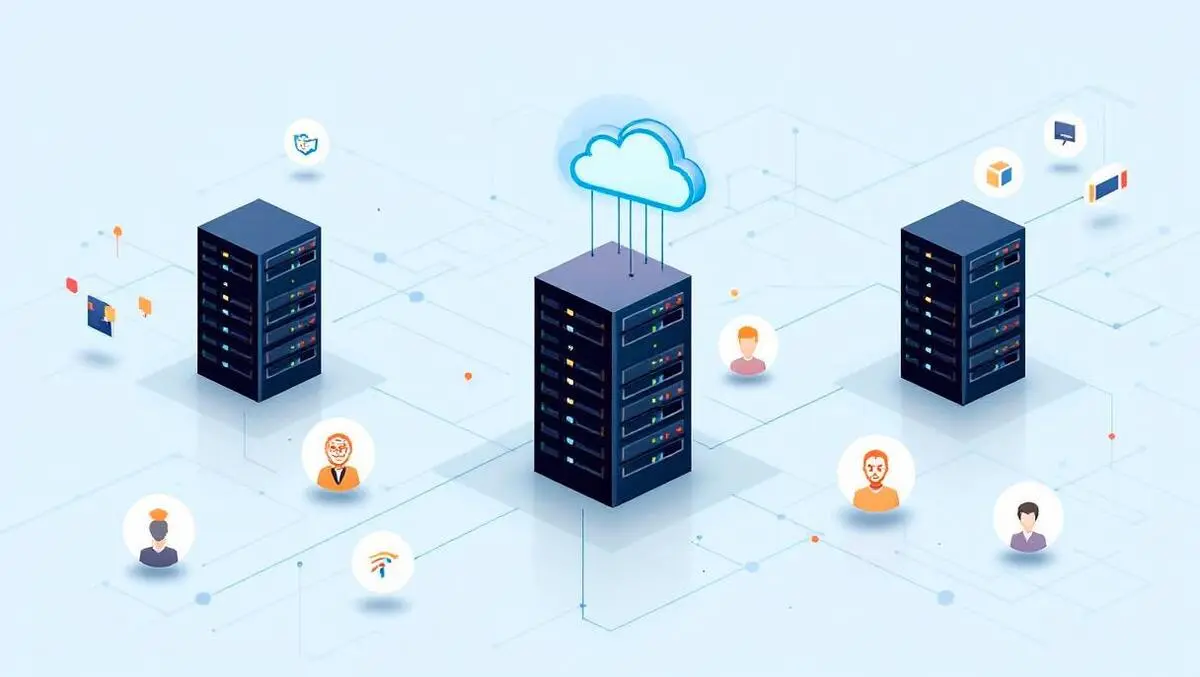
Globant adds new interoperability to expand AI platform
Tue, 5th Aug 2025
Globant has expanded capabilities on its Enterprise AI platform to support major interoperability protocols, introducing Model Context Protocol (MCP) and Agent2Agent (A2A) functionality across multiple enterprise environments.
This update enables integration between agents and tools defined in various frameworks, addressing a key challenge in enterprise AI: the isolation of systems and limited cross-platform communication. With these enhancements, users can import and interconnect tools and agents from external environments such as Agentforce, Google Cloud Platform, Azure AI Foundry, and Amazon Bedrock directly into Globant Enterprise AI. This bridges previously siloed frameworks and aims to facilitate secure, scalable collaboration for organisations.
Protocol integration
The incorporation of MCP and A2A represents a shift for Globant Enterprise AI towards an ecosystem that supports interoperability at scale. MCP allows agents within Globant's platform to connect with enterprise tools and applications worldwide. The A2A protocol extends this by enabling agents to interact autonomously with solutions including Salesforce's Agentforce, Azure Foundry, Amazon Bedrock, and Vertex AI from Google Cloud Platform, supporting coordination across diverse environments.
"Today's enterprise AI landscape is inherently multi-agent and multi-LLM. Globant Enterprise AI was built to thrive in this environment, enabling organisations to model any agentic scenario, from individual agents to coordinated collaborations and complex, cross-channel workflows," said Gastón Milano, CTO of Globant Enterprise AI. "With seamless agent interoperability through A2A and limitless tool integration via new Model Context Protocol (MCP), Globant Enterprise AI acts as the connective tissue for AI agents, tools, and models – bringing enterprise-grade control, context, and scale."
By supporting these protocols, Globant positions its platform as a point of connection for real-time web search, data scraping, and access to multiple AI models from vendors including OpenAI, Anthropic, xAI, Google, and Azure AI Foundry. This allows organisations to deploy AI agents that can collaborate and draw on capabilities from across the enterprise technology landscape.
Business impact
Globant reports that its Enterprise AI platform is delivering measurable results for organisations adopting its expanded interoperability features. According to the company, some organisations have achieved an 80% reduction in legacy system modernisation times after deployment, which has enabled faster responses to shifts in market demand. In addition, businesses in the software development sector using Globant's platform have reported a 50% reduction in operational costs, attributed to more efficient development workflows and resource utilisation.
These results suggest that interoperability between agents and tools - previously a limiting factor for enterprise-scale AI deployment - can deliver substantial cost and efficiency benefits for a wide range of businesses.
Technical reach
Supported by MCP and A2A, the platform's agents can now participate in automated, cross-agent orchestration without being limited to a single language model or framework. This means enterprise users can create and manage workflows in which AI agents utilise the most appropriate tools for a task, regardless of their originating ecosystem. Integration with external AI environments, including Agentforce, Google Vertex AI, and others, is designed to allow flexible deployment strategies based on organisational requirements.
Included in the platform's supported AI models are OpenAI o3-pro, Anthropic Claude 4, xAI Grok 4, Google Imagen 4, and the suite of Azure AI Foundry models, providing users with the opportunity to select models based on preference or task requirements.
Milano described the company's approach in the context of changes in enterprise AI, highlighting the role of cross-agent orchestration as a driver for the next wave of development. The full quote from Milano explains how Globant sees itself as providing essential infrastructure for businesses "to model any agentic scenario, from individual agents to coordinated collaborations and complex, cross-channel workflows," with the new features further strengthening that position.
Globant's move reflects a priority for enterprises to find practical ways to integrate AI capabilities from different providers, reducing siloes and increasing automation potential across their operations. The reported efficiency improvements and cost reductions indicate that interoperability protocols can play a central part in advancing enterprise AI strategy in varied sectors.