

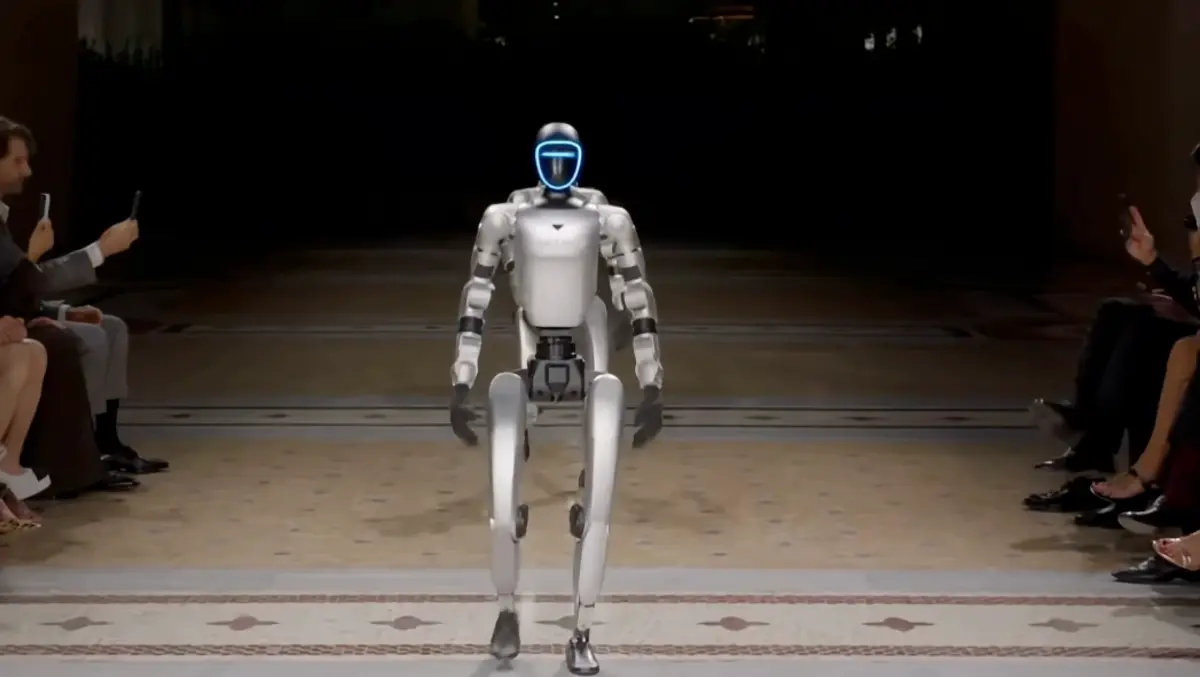
Fashion weeks give AI & robots a mainstream spotlight
Thu, 22nd Oct 2026 (Today)
Artificial intelligence and robotics are playing a more visible role in fashion shows and wearable accessories, exposing consumer technology to a broader mainstream audience, according to a Mouser executive.
Recent fashion events have brought technology to the fore rather than keeping it in the background. At Vogue World in Milan, AI-powered robots appeared on the runway, while Kylie Jenner separately unveiled a cat-eye sunglasses collaboration featuring AI-enabled glasses.
That visibility has prompted debate over whether fashion is becoming an important route for consumer technology or whether such moments are little more than spectacle. Search data cited by Mouser showed UK searches for "Meta glasses" rose 117% in the week after Jenner's announcement.
Mouser also highlighted social media traction around the trend. Vogue's video of robots at Vogue World Milano passed 4 million views within a week, while Jenner's post drew more than half a million likes.
Wider audience
Mark Patrick, Director of Technical Content at Mouser, said fashion gives hardware companies access to people who would not usually encounter emerging technology through industry channels.
"For the tech industry, moments like this matter because fashion is one of the fastest ways to put new hardware in front of a huge, non-technical audience. A trade show reaches engineers, but a fashion week reaches millions of people who have never thought about a joint motor or a camera module. They judge it on whether it looks good and feels natural to wear, not on a spec sheet. That is a different kind of test, and one the industry needs, because technology only goes mainstream when ordinary people are happy to live with it," Patrick said.
He said smart glasses show how consumer adoption often depends as much on familiarity of form as on technical function. Rather than asking people to adapt to a device that looks unfamiliar, manufacturers can build digital features into products consumers already understand.
"Smart glasses are a good example. Rather than asking people to wear a gadget, designers start with a frame people already know and build the technology into it. That is a lesson for the whole industry. The products that win are the ones that fit into people's lives, rather than asking people to change for them," Patrick said.
Beyond spectacle
Fashion has served as a showcase for technology for decades. Mouser pointed to examples ranging from robot arms spray-painting a model's dress at a London show in 1999 to a humanoid robot at Tokyo Fashion Week in 2009 and robot dogs appearing alongside models in Paris in 2023.
Those moments have often drawn a mixed response, alternating between fascination in the room and scepticism online. Even so, they frequently become some of the most discussed images of fashion week, giving technology companies a cultural stage that most industrial launches do not reach.
Patrick said the public nature of fashion presentations also creates practical demands that differ from controlled engineering environments.
"It's also a real-world stress test, and it is changing what engineers have to solve. Robots and glasses built in a lab now have to work in front of a live audience, under lights, for hours at a time. Fashion adds constraints a factory never would," Patrick said.
AI's role in fashion also extends beyond what is visible on the catwalk. Companies across the sector are already using AI tools in planning, stock management, design development and marketing.
"Additionally, this isn't limited to what's visible on the runway. AI is already reshaping fashion behind the scenes too, from predictive planning and smarter inventory management to tools that help designers explore ideas faster. The robots and the glasses are just the visible, viral end of a much bigger shift that's already happening across design, production and marketing. In many cases, the most valuable technology will be the kind people never see," Patrick said.
Wearable shift
The growing overlap between accessories and electronics reflects broader changes in miniaturisation. As sensors, batteries and processors become smaller, manufacturers have more scope to integrate them into products designed to be worn for long periods without drawing attention to the technology itself.
This creates a different set of commercial and design pressures from those of traditional consumer electronics. Products must meet expectations for comfort, appearance and everyday usability, not just technical performance.
Patrick said that balance is likely to define the next stage of wearable technology. "Looking ahead, I expect the line between a fashion accessory and a piece of technology to keep blurring. As sensors, batteries and processors keep shrinking, more of what we wear will do something useful, and the challenge for engineers will be making that technology feel invisible."