

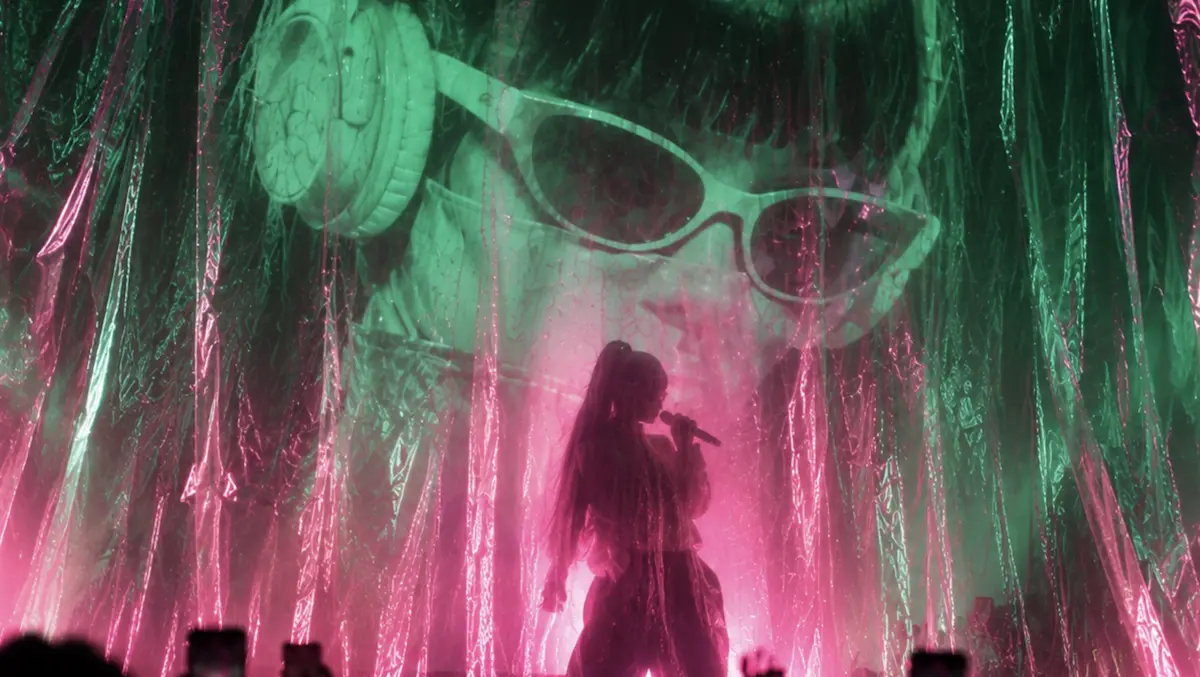
EMM4 makes live debut in Santiago with AI hybrid show
Tue, 15th Sep 2026.webp)
EMM4 has made her first public live appearance in Santiago, marking the live debut of a digital music artist created in Chile with artificial intelligence as part of the creative process.
The appearance took place at VAULT94, where the project combined music, projections, screens, lighting and live performance to bring into physical space a character that had previously existed only in digital settings. Chilean dancer and singer Valentina Guzmán, a member of girl group Dynasty, performed in the show and interacted with EMM4's digital presence on stage.
Chilean partnership studio DUGG developed EMM4 as a fictional music act that can extend across recorded music, digital content, live performance and collaborations. The studio presents the project as an attempt to build entertainment intellectual property around a digital identity rather than a conventional singer or fixed virtual avatar.
The launch comes as music and entertainment companies test how generative artificial intelligence might shape creative work, ownership and artist development. In EMM4's case, AI is part of the workflow, while people remain involved in songwriting, music production, artistic direction, communications, performance and the character's visual design.
Hybrid model
The live debut reflected that approach. Rather than presenting a fully automated digital performer, the production used a mix of digital imagery and stage performers, with the character's presence built through projected visuals, sound, lighting and live human participation.
DUGG positions that model as a way to keep the human element visible, rather than conceal the use of artificial intelligence or use it to displace performers. The project treats the technology as part of the artist's own narrative, making the character's artificial origins central to the concept.
That distinction separates EMM4 from some virtual artist projects that aim to simulate a single performer across every format. Under the studio's concept, the character does not need one permanent physical form and can appear differently depending on where audiences encounter her.
On stage, that may mean a performer interacting with a digital identity. Online, the same character can exist through songs, video and social media content. In other settings, the project could extend to collaborations with musicians, creators, designers, technology platforms or brands.
Music debut
Alongside the live launch, EMM4's debut single, "Peli de Amor," introduces the musical side of the character through contemporary pop. The release is intended to establish the first part of what DUGG describes as the project's narrative universe.
The wider effort has drawn contributors from Chile's creative and music sectors, including Gen94, Sudamerican Voices, We Make Noise Chile and Influenciame. Their involvement highlights how heavily the project relies on a network of writers, producers, visual creatives and performers, despite being framed as an AI-created artist.
The launch also points to a broader question becoming more urgent across creative industries as generative tools spread: whether artificial intelligence will be used to imitate or replace artists, or to help invent entirely new fictional acts with their own identities and followings.
DUGG is betting on the second path. Rather than using AI to create a stand-in for an existing performer, the studio has built EMM4 as an original character designed to evolve through repeated reinterpretation. Different artists and collaborators may engage with the identity in different contexts without needing to preserve a single visual form each time.
IP questions
That model pushes the project beyond the usual boundaries of a recording act and into broader questions of intellectual property. If audiences come to recognise and follow digital characters over time, the commercial value may lie less in any one song or performance than in managing the fictional identity across platforms and partnerships.
For entertainment companies, that raises practical questions about authorship, continuity and control. As tools for generating images, music and text become easier to access, the barrier to creating a digital character falls. The harder task may be building one that audiences return to and that collaborators can adapt without diluting its identity.
EMM4 is still at an early stage, with one single and one live performance now in public view. The project's structure suggests that future iterations may involve new music, new performers and new technical formats while preserving the same core character.
The first show in Santiago tested whether a digital artist can be presented not as a replacement for the people on stage, but as a framework that depends on them.