

Electro‑acoustics, precision audio & women in engineering
Wed, 4th Mar 2026
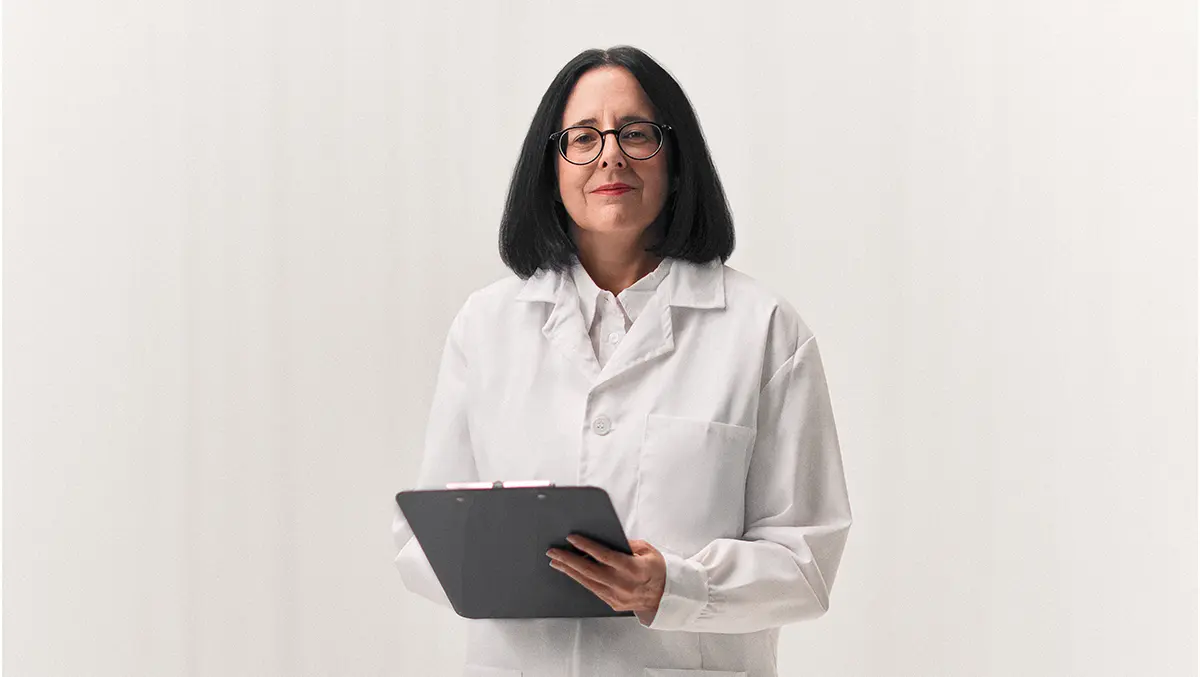
International Women's Day invites reflection not only on representation in technology, but on the nature of expertise and contribution. In highly specialized and historically male-dominated sectors such as electro-acoustics and high-performance audio engineering, authority is earned through scientific rigor, sustained research, and measurable innovation. My career, spanning nearly twenty-five years in electro-acoustic research and advanced system development, has been guided by those principles.
Accurate sound reproduction is grounded in electro-acoustics and advanced digital filtering, the scientific foundations of modern audio systems. Loudspeaker behaviour, phase coherence, signal timing, acoustic wave propagation, and room interaction must be understood not as isolated variables, but as elements of an integrated system. While luxury audio is often associated with craftsmanship and design, its true differentiation lies in uncompromising engineering precision.
My doctoral research at the Swiss Federal Institute of Technology (EPFL) focused on loudspeaker behaviour under incident sound fields. This work examined how loudspeakers interact with external acoustic energy - a critical dimension of sound reproduction. A loudspeaker does not operate in isolation; it functions within a dynamic acoustic ecosystem. Understanding and modelling these interactions is essential to achieving realism and fidelity.
During seven years at EPFL's Labouratory of Electromagnetics and Acoustics, I contributed to industrial and international research initiatives focused on aircraft noise reduction and avalanche localization technologies. These projects required advanced modelling of electro-acoustic system behaviour in complex environments, guided by a consistent methodology: predict, measure, refine.
Today, at Goldmund, I apply the same scientific rigor and data-driven modelling to the development of advanced electro-acoustic systems, from loudspeaker architecture to time-domain correction. In high-performance audio, temporal integrity is essential. Frequency response alone cannot ensure realism: microsecond-level timing discrepancies and phase distortions directly affect spatial coherence, depth, and localization.
Advances in digital filtering and predictive modelling now allow distortions to be addressed with unprecedented precision, marking a shift from empirical tuning toward predictive engineering grounded in data.
Across nearly twenty-five years in electro-acoustics, one constant has remained: meaningful progress is interdisciplinary. Mechanical engineering, digital signal processing, computational modelling, and psychoacoustics must converge, with data guiding design rather than assumption.
As a member of the Swiss Audio Engineering Society committee and contributor to international publications, I have engaged actively with the broader research community. Technical advancement depends on dialogue - through conferences, peer-reviewed research, and global collaboration - shaping the standards of the field.
Engineering remains male-dominated, including in electro-acoustics. Yet technical environments ultimately reward analytical rigor and demonstrable performance. Over time, reproducibility establishes credibility beyond stereotype. Representation matters, but sustained excellence is fundamental.
Looking ahead, high-performance audio will increasingly rely on intelligent digital filtering, adaptive modelling, and real-time correction. As computational power expands, distortions once considered inevitable can be systematically addressed, narrowing the gap between theoretical perfection and the lived experience of sound.
International Women's Day is therefore not solely a celebration of diversity, but of contribution grounded in expertise. In electro-acoustics, the pursuit remains unchanged: precision, coherence, and fidelity. Ensuring that the next generation of engineers - regardless of gender - can contribute to this pursuit strengthens not only representation, but innovation itself.