

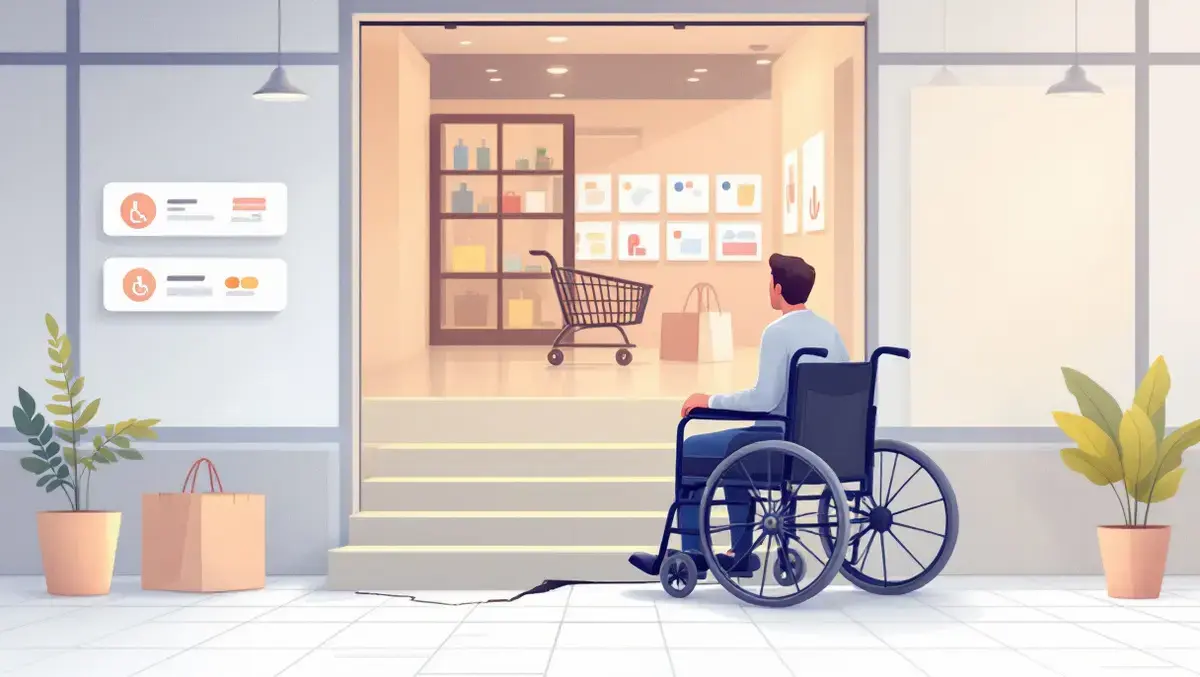
Disabled shoppers face widespread barriers, study finds
Tue, 26th May 2026 (Today)
Nexer Digital has published research showing that disabled consumers face widespread barriers across retail, financial services and travel, with many abandoning transactions or switching brands when they encounter access problems.
The report found that 87% of disabled consumers cannot complete a typical retail journey independently, while only 13% could complete the full journey without difficulty. Across the three sectors studied, respondents described barriers at the browsing, selection, checkout and post-purchase support stages.
Problems were especially pronounced online. Some 62% of respondents encountered inaccessible website content, while 55% cited confusing navigation and intrusive pop-ups during browsing. Nearly four in five found browsing difficult, and 81% said selecting an item was difficult or impossible.
Checkout emerged as a key point of failure. The findings showed that 81% of disabled consumers struggled to complete transactions, often because of inaccessible CAPTCHA systems or complex verification steps. As a result, 38% abandoned purchases at checkout.
Many respondents said they had to rely on other people to complete ordinary tasks. During browsing, 45% asked someone they knew for help, while 26% switched to a competitor. At the payment stage, 43% relied on others to complete a transaction.
The study suggested many of these issues go unseen by businesses. Only 9% of respondents said they contacted customer support when they faced a problem, and just 4% formally reported an accessibility issue.
Retail impact
Retail was identified as the sector with the highest level of difficulty, with 65% of disabled people reporting barriers over the past year, compared with 33% in financial services. Travel also stood out: 56% of respondents said they were unhappy with their journeys and made far fewer trips than the national average.
In travel, obstacles ranged from booking tools to later stages such as tickets, boarding and wayfinding. Early friction often led people to switch providers, while later problems caused journeys to be abandoned or left passengers dependent on staff.
Nexer Digital said the effects extended beyond convenience or lost sales. Respondents linked accessibility barriers to a loss of independence, dignity and privacy, particularly when they had to share personal or financial information with others to complete a task.
The emotional impact was also significant. The findings showed that 88% of respondents felt frustrated when they encountered accessibility barriers, 69% felt excluded, 54% felt angry and 37% felt anxious.
Hilary Stephenson, Managing Director at Nexer Digital, said: "Too many disabled customers are still being forced to work harder than everyone else just to do ordinary things such as browse, compare, buy, pay and get support afterwards.
"This is not a marginal issue. It is a design failure with real human and commercial consequences. What this research shows clearly is that when accessibility is overlooked, customers do not complain, they leave. And when they leave, they often do not come back.
"Many of the issues we see, from missing alternative text and inaccessible forms to poor colour contrast and keyboard traps, are not new. The issue is not a lack of solutions. It is a lack of prioritisation. Accessibility is still too often treated as an afterthought, when it should be built in from the start."
Brand risk
The report also pointed to a broader effect on trust and customer retention. It found that 87% of participants said they avoid, or would avoid, a brand after experiencing accessibility issues, while 74% said they have told, or would tell, others to avoid a business.
By contrast, accessible experiences encouraged repeat business. Nexer Digital found that 98% of customers were more likely to buy again from brands that met their access needs, 81% would recommend them to others, and 57% said they would spend more.
Mike Adams, Founder of Purple Tuesday, said: "This report speaks to the lived experience of so many disabled customers. I can see and hear my voice around the unnecessary barriers put in place by businesses who don't understand the power of the Purple Pound and the straightforward solutions that can be put in place to unlock the disability market.
"It is exactly the reason I set up Purple Tuesday: to support businesses to better understand both digital and physical accessibility and provide disabled people with a good customer experience, which is the key to brand loyalty.
"The report sets out the issues and clear recommendations for businesses wanting to go on their own inclusive journey. As a disabled customer, I am asking you to read and adopt the recommendations. It makes commercial and social common sense."
The research highlighted examples of businesses making progress on accessibility, including M&S, Primark, Tesco, IKEA, Co-op and Auto Trader. It concluded that disabled consumers continue to face barriers that are predictable, avoidable and widespread across everyday services.