

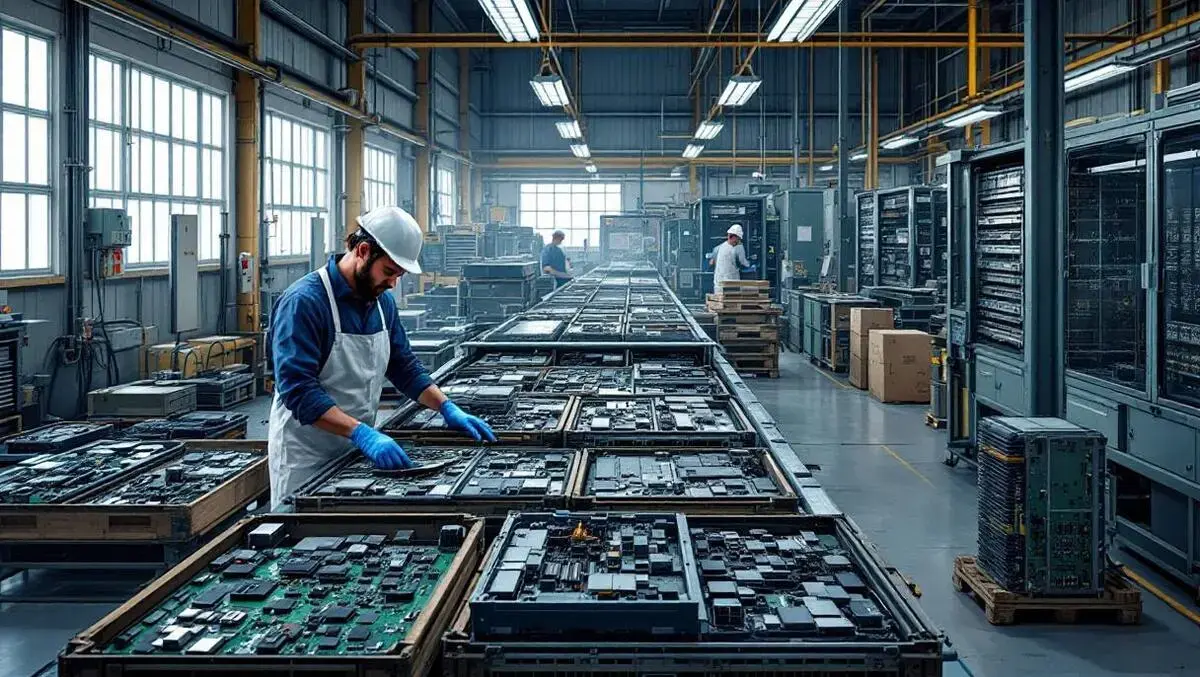
Cisco trials DEScycle metals recovery at Teesside plant
Thu, 16th Apr 2026
Cisco will trial DEScycle's metals recovery system using scrap circuit boards from retired Cisco hardware at DEScycle's demonstration plant in Teesside.
The trial is designed to test recovery performance at batch scale and generate technical and economic data on recovering metals from end-of-life equipment.
Under the arrangement, Cisco hardware will be dismantled and the resulting electronic scrap boards processed by DEScycle at its Wilton site in North East England. The plant will handle the material in controlled batches and measure recovery rates for critical and precious metals.
The project builds on an existing relationship between the two companies. Cisco participated in DEScycle's Series A funding round in 2024, linking the US networking and software company to the UK startup's work on electronics recycling.
Recovery model
DEScycle is developing a distributed, modular approach to metals recovery instead of relying on large, centralised smelting operations. The model is intended to work closer to the source of waste, potentially shortening supply chains and giving customers more direct information on processing and output.
For Cisco, the trial forms part of broader work on end-of-life services and supply chain management. One aim is to assess how DEScycle's process could fit into existing reverse supply chains, with traceability data available throughout the processing stages.
The focus on electronic scrap comes as manufacturers and recyclers face growing scrutiny over access to critical raw materials and the handling of discarded equipment. Circuit boards contain a mix of metals that can be difficult and costly to recover, and much of the industry still relies on energy-intensive processes at a limited number of facilities.
DEScycle's demonstration plant in Teesside will serve as a test case for whether a smaller-scale setup can deliver consistent results on larger batches than those used in laboratory work. The goal is to produce data showing both recovery performance and the economics of the process.
That information may help determine whether such systems can move beyond pilot projects into wider commercial waste streams. Localised processing has drawn interest from governments and industry as concerns grow over supply chain resilience, domestic industrial capacity and the handling of strategic materials.
The trial also reflects a broader push in the technology sector to find more measurable ways to manage retired hardware. In recent years, companies have expanded refurbishment, reuse and recycling programmes, while investors have shown interest in businesses that can recover value from equipment that might otherwise be exported, stockpiled or sent for lower-value disposal.
Teesside has become a notable location for industrial demonstration projects in recycling, chemicals and low-carbon technologies, supported by its industrial base and available infrastructure. For DEScycle, processing Cisco-derived scrap at the site offers a chance to show how its system performs on material from a global technology company's equipment chain.
Fred White, Co-founder and Chief Commercial Officer at DEScycle, said: "This trial is an important step in demonstrating how distributed, modular metals processing can integrate into existing electronics value chains. Cisco recognised early the structural opportunity to rethink how critical materials are recovered, and we are pleased to be progressing from bench-scale validation to demonstration-scale deployment.
Our objective is clear: to show that we can provide a robust, economically competitive and environmentally conscious recovery route, underpinned by transparent performance data and traceability. More broadly, this collaboration supports the development of capital-efficient metals recovery capacity aligned with circular economy principles."
Mary de Wysocki, SVP and Chief Sustainability Officer at Cisco, said: "Cisco has a longstanding commitment to a more sustainable supply chain and to exploring practical, innovative approaches to end-of-life services that reduce waste and deliver business value to customers. Exploring this technology supports our strategy."