

.webp)
Triomics has raised USD $22 million in Series B funding in a round led by Battery Ventures.
The cancer-focused artificial intelligence company will use the money to expand adoption of its platform across US cancer centres, grow its engineering and deployment teams, and deepen work with life sciences groups. Existing investors Nexus Venture Partners, Lightspeed and Y Combinator participated, along with Oncology Ventures and Precision Health Informatics, a subsidiary of Texas Oncology.
The financing brings total funding for the New York-based company to more than USD $36 million. As part of the deal, Battery Ventures Principal Brandon Gleklen will join the board.
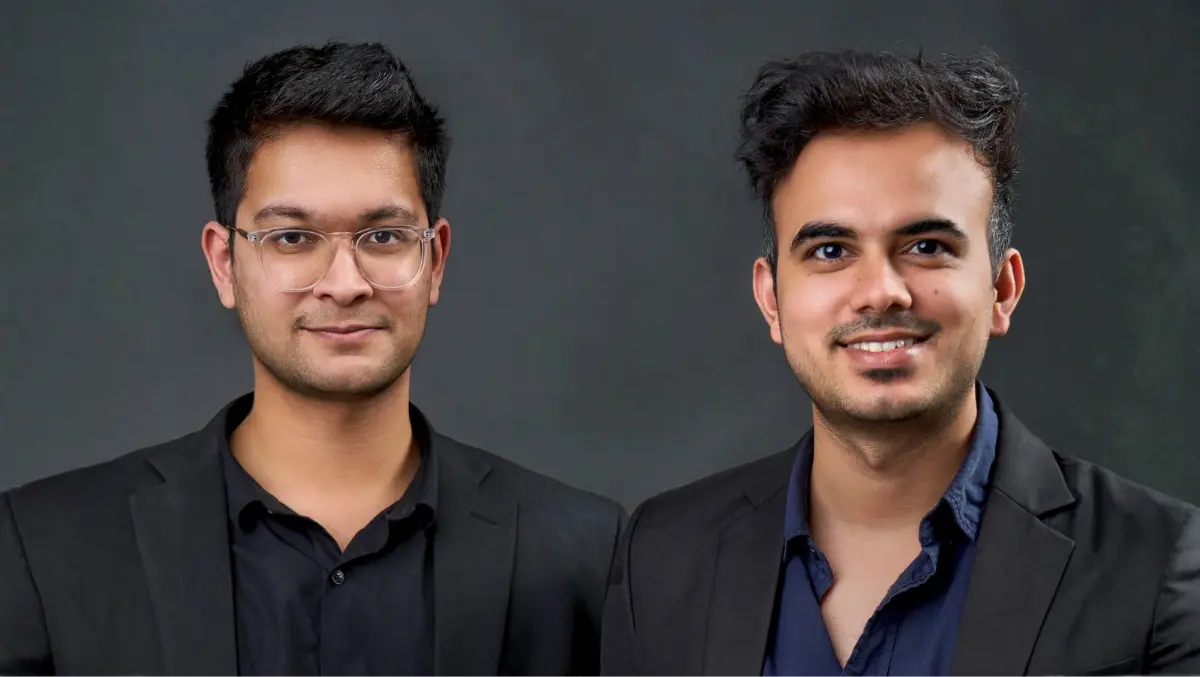
Founded in 2021 by Sarim Khan and Hrituraj Singh, Triomics focuses on oncology workflows that depend heavily on unstructured patient information. Its software reads longitudinal patient records and turns narrative material such as clinic notes, pathology reports, radiology reports, biomarker results and treatment histories into structured outputs that can be checked against source material within the workflow.
The platform is used for clinical trial matching, pre-visit chart review and oncology data abstraction for registries, quality improvement and operational work. Customers include Memorial Sloan Kettering Cancer Centre, MD Anderson, Yale Cancer Centre and Smilow Cancer Hospital, Mount Sinai Tisch Cancer Centre and Texas Oncology.
Data burden
Triomics is targeting a long-standing problem in cancer care: the volume of information tied to each patient and the manual work required to make it useful in clinical and research settings. Patient histories often span hundreds of pages, while trial criteria and treatment guidance continue to change.
Sarim Khan, Co-Founder and Chief Executive Officer of Triomics, said the strain on staff has grown beyond what older systems were designed to manage.
"Oncology faces an information burden at a scale legacy systems were never designed to handle, and that burden can stand in the way of better outcomes," Khan said.
"Clinicians, research coordinators and medical assistants are working against records that have become too large and too dynamic to process manually. We built Triomics to turn that complexity into usable intelligence inside the workflow, purpose-built for oncology. This financing allows us to bring that infrastructure to many more cancer centers and improve care for cancer patients."
Hrituraj Singh, Co-Founder and Chief Technology Officer of Triomics, said building software that can work reliably across full oncology records has taken several years.
"Oncology is the hardest place to build AI, yet the most important," Singh said.
"Getting a model to reason reliably across thousands of pages of notes, pathology, imaging and evolving trial criteria, and show its work, is what separates a demo from software that clinicians actually use. We've spent four years building that foundation, and this round lets us push even further."
Clinical use
Published results from users of the product show a 40% increase in trial matches, a rise of more than 30% in trial enrolments and a 67% reduction in chart review times. The platform has also been validated in Nature Digital Medicine.
That focus on trial operations and registry work has helped Triomics build relationships beyond direct care workflows. It has also developed a broader oncology network to support life sciences organisations involved in clinical trials.
One health system partner is now extending its use of the software into cancer registry abstraction and reporting.
"We are excited to partner with Triomics, our selected solution for oncology clinical trial matching, to extend our collaboration to an AI-enabled method for cancer registry abstraction and reporting. This activity is labor intensive, subjective and challenging to complete in a timely manner. Our goal is to produce autonomous chart abstraction of clinical registry quality that can be rapidly reviewed and finalized for reporting by human registrars to comply with mandatory state, federal and professional society reporting obligations," said Lee Schwamm, MD, Chief Digital Health Officer, Yale New Haven Health System, and Associate Dean, Digital Strategy & Transformation, Yale School of Medicine.
Battery Ventures said it invested based on Triomics' access to major cancer centres and its use of the same underlying system across multiple oncology tasks.
"Triomics built what oncology has always needed: AI infrastructure that actually works on the full patient record," Gleklen said.
"We are live at some of the top cancer centers and demonstrating measurable outcomes-faster enrollment, less manual chart review-and the same underlying AI infrastructure already powers multiple distinct workflows with no redundant integrations. That kind of platform leverage, inside a customer base this strong, is rare at this stage."