

Catapult uses AI agents to speed up support worldwide
Sun, 13th Sep 2026
Catapult Sports has reduced support response and handling times by deploying AI agents as part of a broader overhaul of customer service for more than 5,500 sporting teams worldwide.
The Melbourne-born sports technology company supports teams across more than 40 sports and 139 countries. Its support operation must handle different time zones, languages and sporting schedules.
Catapult began in 2006 with wearable technology designed to monitor athletes during training and games. Its product range has since expanded to include gym-based performance measurement, scouting and video platforms.
The company now supports more than 5,500 teams across 139 countries, with customers speaking more than 60 languages.
Time matters
For Catapult, customer support is closely tied to sporting events, where teams may need access to performance data during training sessions or matches.
A coach receiving live data may use it to decide whether to rest or substitute a player. Formula 1 teams using Catapult's RaceWatch platform can also rely on data to decide whether to make a pit stop or stay out.
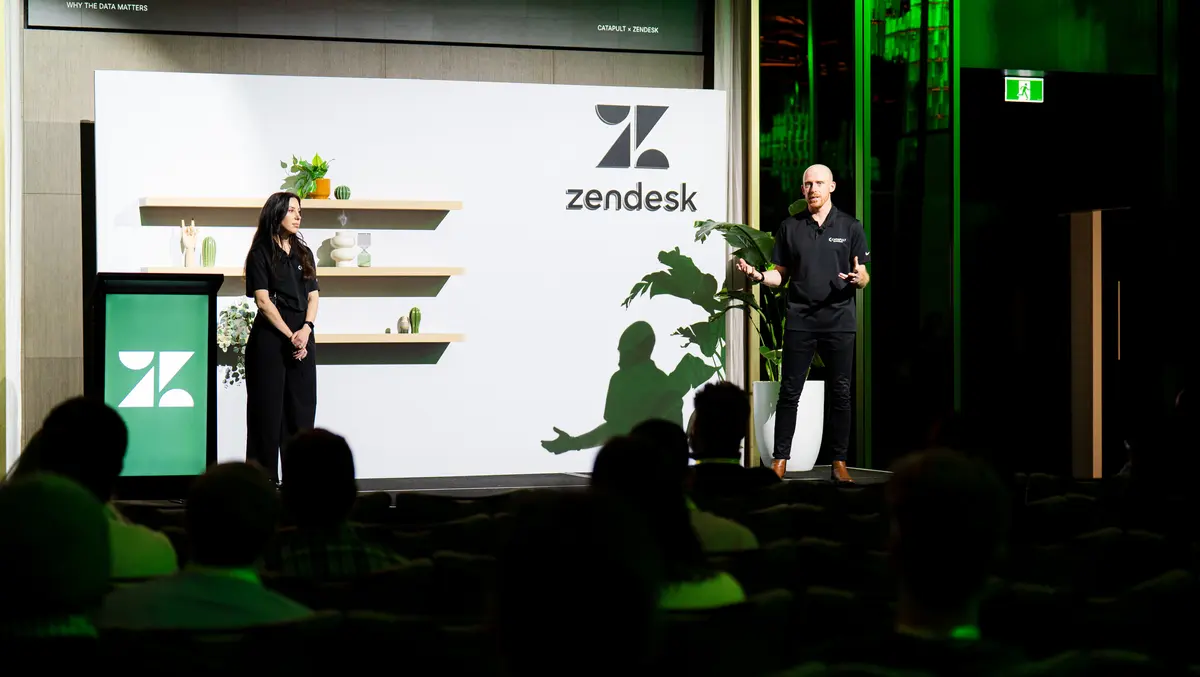
"Sport doesn't wait. What this means is there's a coach on the sideline and he needs data in his warm-up. If he's not getting that data, he's going to reach out to us as support and he wants to know why because he needs to fix that. He needs to make a decision in that moment based on the data that's coming through. So, we need to be able to resolve that and work with that really quickly to get that resolution," said Darcy Brown, Product Support Manager, Catapult Sports.
The support operation recorded more than 500 urgent tickets since April, with a median response time of about six minutes and a 100% customer satisfaction score for those tickets.
Catapult operates three main support hubs in Melbourne, Leeds and Boston, alongside smaller hubs in Canada, Mexico, Argentina, China and Japan.
The hubs maintain at least an hour of overlap between regions so tickets can continue to be handled as teams move between working hours.
"Sport doesn't wait and sport doesn't sleep either. Somewhere in the world there is always a season going on. To accommodate that we have three main support hubs. So Melbourne, where we are today, Leeds and Boston. We also have smaller hubs in Canada, Mexico, Argentina, China, and Japan. Within that, we also allow for about an hour overlap minimum between regions. So that way, no one's handing over into an empty room. There's always someone there to pick up that ticket and help the team," said Andrea Juniper, Product Support Team Lead, Catapult Sports.
Catapult has also introduced priority handling in Zendesk so live issues and workflow-stopping problems can move to the front of the queue.
AI triage
As Catapult expanded its products and geographic reach, support volumes increased. The company turned to AI to absorb some of the repetitive work rather than relying solely on additional human agents.
Its Zendesk AI agent acts as a first line of support, triaging tickets, resolving requests where possible and collecting additional information before handing more complex cases to human agents.
"Our agents are the first line of the team. They're a teammate for us. They are triaging and resolving tickets where they can and they're taking over these repetitive monotonous tasks that our agents were otherwise getting stuck on. So that was really helpful for us to be able to kind of free up some load from our human agents," said Brown.
Human agents can then focus on more complex cases, including customers that require specialist support.
The AI system also collects context before escalating a ticket, reducing the back-and-forth between customers and support staff.
"Our human agents then had more time to spend on the more complex tickets. So our system is reasonably complex and our human agents do a great job of supporting this. A lot of them have experience in the field. Like Andrea, she used to work at the Western Bulldogs Women's. She's got experience working with teams. She knows what to expect and she knows how to work with these teams and what workflows they need. That's a really important skill to have and we want to utilize that as much as we can," added Brown.
The AI agent is built on Catapult's existing help centre content and procedures, rather than requiring a separate knowledge base.
"Our AI agent, as we've mentioned, is built directly on our help center content. So, it's not a separate knowledge base that we need to build and maintain. Our procedures are also integrated and they provide a step-by-step guide for handling tickets by the AI agent, which means it's able to resolve common high volume tickets end to end without any human touch," said Juniper.
Since implementing Zendesk's AI Agent, Catapult has recorded a 36% auto-resolution rate, representing more than 2,500 tickets resolved without human intervention. Juniper said the change had also affected the company's capacity model.
Global reach
Language has become another focus as Catapult has expanded into new markets.
The support team speaks four languages, while the company's customer base spans more than 60. Catapult has adopted AI translation for messaging tickets, allowing customers and support agents to communicate in their own languages.
"AI translation handles the language and the customer and the agent can reply in their own language and it will automatically translate. We also utilize AI voiceovers in our help center so that when we do direct them to content, they're not hitting a roadblock with language again. So that's four languages with 60 plus served," said Juniper.
The company has also integrated WeChat, Line and WhatsApp into its Zendesk environment.
The move addressed limitations with email in some markets, where customers were more likely to use local messaging platforms.
"We like to meet the customer where they are. Email works until it doesn't. So we really found in China, Japan, and LATAM, we really hit a wall. It was the same data, the same devices, the same workflows and pressures. But there was an email that no one was ever going to respond to. The support wasn't wrong, the channel was. We don't get to choose where the conversation happens. The customer does. So, we meet them where they want to be," said Juniper.
Since introducing the additional messaging channels, Catapult has handled more than 460 messaging tickets from 1 April. AI translation means those tickets do not need to be restricted to native-speaking support agents in individual markets.
Juniper said the company had also introduced suggested replies, macros, next actions and guided procedures for less common workflows. Sentiment and topic tracking provide additional visibility into customer conversations.
Faster operation
Alongside AI agents and translation, Catapult has introduced custom applications within Zendesk to bring information from other systems into a single ticket.
The company has built tools including an SLA countdown and an application for return merchandise authorisations. The RMA application reduces manual data entry and allows hardware replacement requests to be submitted more quickly.
The combined changes have reduced first response time by 52%, resolution time by 25% and handling time by 21%.
Urgent VIP tickets have reached a four-minute resolution response time across about 500 tickets, while more than 2,500 tickets have been resolved without human intervention.
The changes have also reduced the cost of serving a growing customer base. Automation has allowed Catapult to expand into new regions without requiring support headcount to increase at the same rate as its customer base.
"As we moved to new regions and new products, it didn't cost as much to serve these customers. We're able to automate a lot of this work which is really handy for us. It also gave us room to grow. So as we were moving out we didn't have to hire for a new language. We didn't have to add headcount because we're able to use the AI features that Andrea talked about to push further into these new regions and new customers. We didn't need that linear growth in support headcount to support those teams in these new regions," said Brown.
Catapult has approached its AI deployment by starting with lower-volume, lower-risk requests before expanding its use.
The company also recommends involving teams outside customer experience, particularly where AI-enabled translation and support capabilities can help expansion into new markets.
Brown said the company is continuing to expand its use of AI while retaining human agents for more complex work.
"We say keep proving ROI in small steps. It's really hard to sell the whole journey from the start, but if you improve little bits and pieces at a time, it makes it much easier to sell," said Brown.
The support operation is continuing to combine AI agents, automation, translation, messaging channels and human expertise as Catapult supports teams across its international customer base.
"There are going to be challenges and there's going to be roadblocks. But it's really important to gather feedback from customers, from the users, from agents themselves about what's working, what's not working and improve that and grow as you roll this out," added Brown.