Remote Access stories
A major coordinated attack on UK battery storage could cost the grid GBP £2 billion to GBP £10 billion within five years, Centrii says.
Attackers are exploiting trusted identities and collaboration tools to steal data and extort victims, leaving defenders with only brief windows to react.
Boards are being pushed to set clear controls as AI decisions spread beyond cyber teams and into daily work, raising governance and outage risks.
Operational downtime and safety risks are mounting, as Claroty says ANZ organisations lost an average USD $2.04 million per cyberattack last year.
The broader signal base is aimed at helping fraud teams spot synthetic identities and linked accounts as generative AI makes scams harder to detect.
Most life sciences manufacturers now see digital transformation as essential, with 54% reporting a cyberattack in the past year and many eyeing AI.
Fraud teams may be better able to link fake accounts as SEON adds more than 1,100 data points across identity, device and session checks.
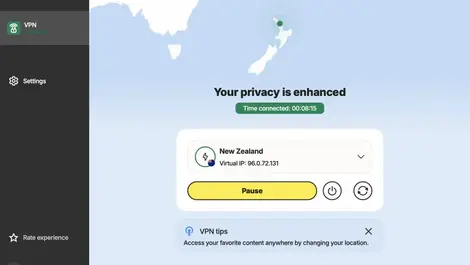
Streaming and everyday privacy get a lift from this easy-to-use VPN, which proved faster than NordVPN in testing and works on TVs too.
Risk teams now have 200 more checks to catch synthetic identities and AI-generated fraud by linking behaviour, devices and address data.
Joint customers can now spot privileged identity risks alongside threat alerts in CrowdStrike Falcon, after BeyondTrust added new data feeds.
Enterprises could cut security sprawl as the platform extends one policy framework to users, devices and machines before login.
Attackers are increasingly using tailored malware and credential abuse as network alerts drop, WatchGuard says, raising hidden-risk concerns.
Critical infrastructure operators are using cellular links to secure distributed assets as outages and spoofing raise the stakes for resilience.
Australian firms could cut complexity and tighten remote access controls as the pair add SD-WAN to a unified managed security service.
The move gives Devolutions a formal way to back IT tools and managed service providers, with deals so far worth USD $500,000 to USD $3 million.
Most Australian office seekers now want private networks before signing leases, as cyber security shifts from IT issue to workplace priority.
Public bodies and mid-market firms in New Zealand can now use a single managed cyber service to cut tool sprawl and relieve overstretched IT teams.
IT teams could cut repetitive support work as validated fixes are turned into automated workflows for recurring endpoint faults.
Irish organisations will get ongoing proof their defences work in live environments, after 71% of CIOs reported a cyber incident in the past year.
Access risks are rising as cloud and AI adoption multiplies digital identities, prompting the enlarged team to target more complex controls.