Germany stories
The launch could help quantum hardware makers build larger machines without redesigning them each time qubit counts rise.
HSBC and JBL are among the brands telling entrants to avoid AI, as D&AD's New Blood Awards highlights the value of human judgement.
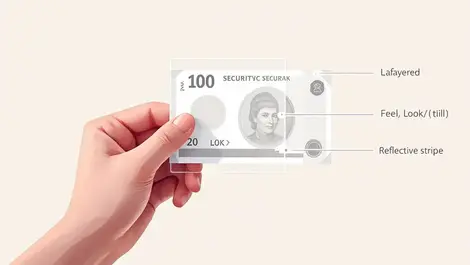
Consumers can spot fakes by feeling, looking and tilting notes, as modern banknotes rely on layered features to deter counterfeiting.
Most US companies expect quantum computers to break current encryption within a decade, yet many say post-quantum migration could take longer.
Small internet providers in Germany will be able to buy Telekom access through existing DE-CIX links, reducing the need for separate connections.
Most companies are not ready to prove control over AI and data, with only 26% of firms reaching the highest evidence tier in IBM's index.
The surge shows how blockbuster game releases can strain digital infrastructure before launch day, with Frankfurt traffic up 19.06% to 22.30 terabits per second.
Price swings in critical minerals are forcing 23% of energy storage firms to defer or cancel viable projects, a DLA Piper survey found.
Only 16% of enterprises make indirect tax a standing board item, leaving many exposed to slower responses and more manual compliance.
Visitors, partners and journalists now have a single reference point for Acorn Global's approved artwork, press materials and service catalogue.
The South African automation group is targeting 12 overseas markets through local partners, as it shifts Welsh from revenue to growth leadership.
Businesses could soon verify company details faster across borders as Foster Moore and Bundesanzeiger's GRX pilot links official registers without a central database.
Advertisers in nine European markets can now gauge how many campaign viewers actually engaged, as the firms combine reach with attention data.
Fewer than a third of firms could resolve their toughest sovereignty problem without disruption, highlighting weak proof of control in AI and data governance.
Europe must fix procurement and funding gaps if deep-tech is to become deployable defence capability, Balnord says.
The Amsterdam site expands the group's European footprint as customers seek to keep AI and data workloads inside the region.
Ransomware claims hit a record 1,063 victims in October, even as Australian organisations still faced 2,117 cyber attacks a week, up 39% year on year.
Fresh backing could help cut the cost and energy demands of AI inference, as Sparxity targets specialised chips for sparse workloads.
Most UK and Ireland customers will use AI support if it solves problems fast, but 65 per cent still prefer a human for tricky queries.
Concerns over cybersecurity and job losses have surged in Ireland, with trust in AI ethics and enthusiasm for the technology also falling sharply.