

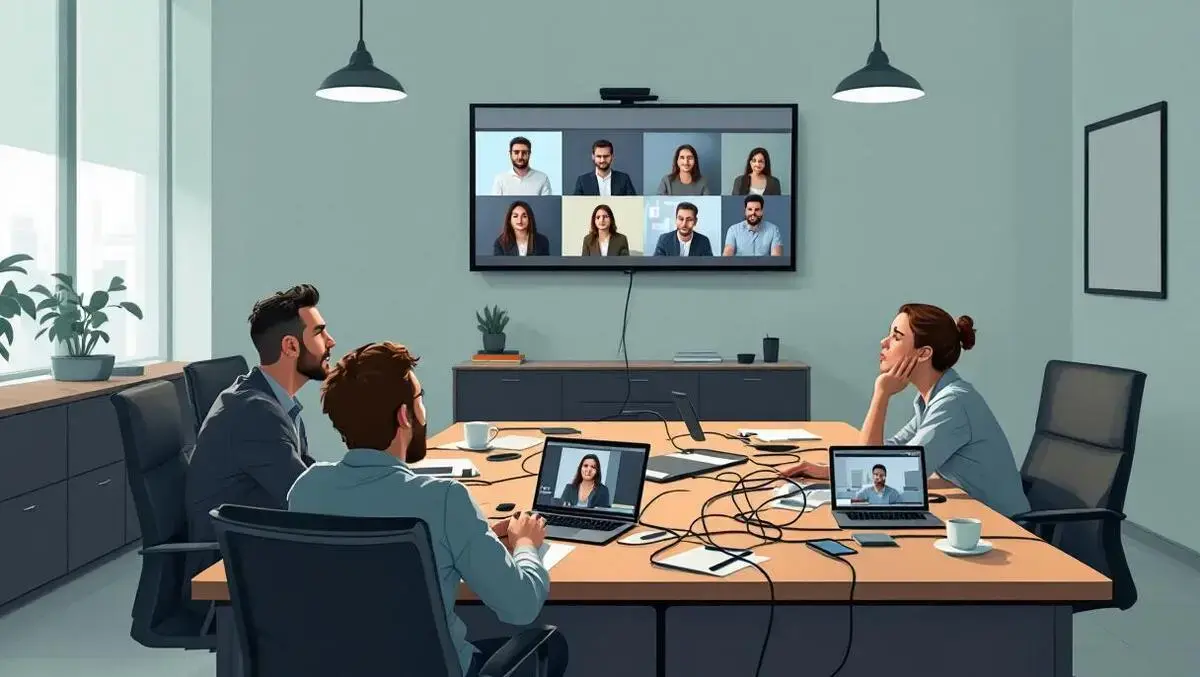
UK workers lose meeting time to hybrid tech glitches
Tue, 31st Mar 2026.webp)
Owl Labs has published survey data showing that UK workers are losing time in meetings because of technology problems. The findings point to persistent friction in hybrid work despite rising employer investment in AI tools and office equipment.
The survey of 2,000 UK full-time office workers found that 79% lose time to technical difficulties in hybrid meetings, with an average delay of 6.5 minutes per meeting while systems are set up. Three in four employees said they face challenges in hybrid meetings, while 78% reported audio echo or distortion and 74% said they miss visual cues.
The results suggest workplace technology has become a central issue for staff rather than a background operational matter. Some 89% of UK employees said access to good technology is important, behind only compensation at 92% and a supportive manager at 91%.
That view was strongest in larger organisations. Among workers in big businesses, 93% said good technology matters, compared with 88% in medium-sized organisations and 84% in small businesses.
Younger employees were more likely to rank technology highly. More than half of Gen Z and Millennial workers, 54%, said good technology is very important, compared with 35% of Gen X and Baby Boomer workers.
Hybrid pressure
The research also underlines how closely technology is tied to working patterns. Almost three quarters of UK employees said they would prefer a hybrid model, and 93% said they would take some form of action if remote or hybrid work was no longer allowed.
Those actions ranged from expecting a pay rise to looking for another job or quitting. The findings come as employers continue to debate return-to-office policies and reshape office environments around new digital tools.
Meeting problems were not limited to remote staff. Full-time office workers were more likely than hybrid staff to report time lost to technical problems, at 83% compared with 77%.
Younger workers also reported more disruption. Time lost to tech issues was cited by 82% of Gen Z respondents and 79% of Millennials, compared with 73% of Gen X workers and 72% of Baby Boomers.
AI uptake
At the same time, many employers are introducing AI into everyday work. Encouraging AI use was the most commonly reported organisational change among UK workers, with 69% identifying it as the main shift in their workplace.
The survey found that 87% of employees had already experimented with AI at work. Three quarters, or 75%, said their organisation encourages its use to some degree.
Office changes appear to extend beyond software. More than four in five workers, 84%, said their employer had made changes to the office, including introducing AI tools, increasing IT staff and support, and installing or upgrading meeting room video or audio equipment.
The most commonly reported changes were the introduction of AI tools at 42%, increased IT staff and support at 38%, and meeting room video or audio upgrades at 35%. The figures indicate spending on both digital systems and physical meeting infrastructure as workplaces adapt.
Frank Weishaupt, Chief Executive Officer of Owl Labs, said the issue goes beyond inconvenience. "Technology has moved from a support function to core hybrid infrastructure. When meeting technology fails, it doesn't just cause mild annoyance, it undermines wellbeing and derails collaboration. Employers and employees alike can't afford for their most important interactions to be held together by last-minute workarounds."
The data points to a mismatch between investment and user experience. While employers are rolling out AI and updating offices, employees still report routine failures in the systems they depend on for meetings, communication and coordination.
For businesses, that may have implications for productivity as well as retention. Workers now appear to treat reliable workplace technology as one of the main conditions of a satisfactory job, alongside pay and management support.
Weishaupt said employers need to focus on how well tools work in practice. "The UK is at a turning point: organisations are investing heavily in AI and meeting technology, but the real value comes when those tools are intuitive, inclusive and trusted. Smarter meeting technology can alleviate setup challenges, sharpen audio and video, and make it easier for everyone to participate, without resorting to intrusive monitoring. In the next phase of hybrid work, the organisations that rely on ever-tighter monitoring will fall behind those that focus on smarter, more connected collaboration."