

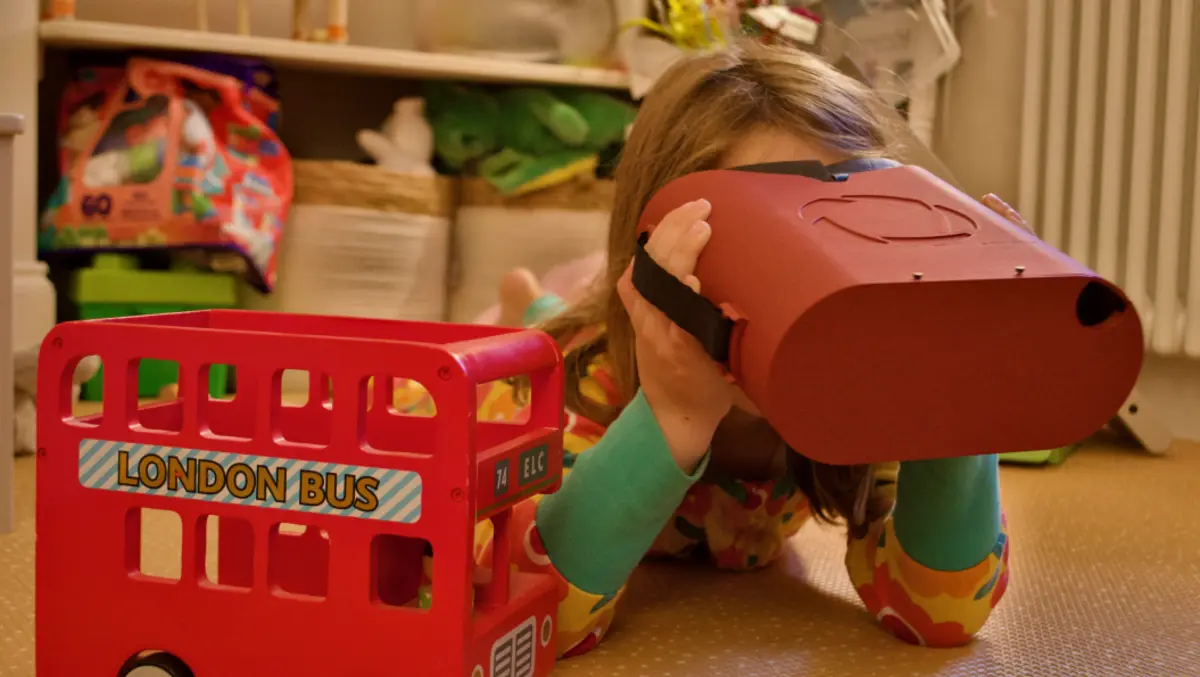
UCL and Siloton adapt an eye scanner for the children
Fri, 2nd Oct 2026.webp)
University College London's Great Ormond Street Institute of Child Health has launched a project with Bristol start-up Siloton to adapt an eye imaging system for children. The work is funded by the National Institute for Health and Care Research.
The project focuses on optical coherence tomography, or OCT, a light-based imaging method that produces detailed pictures from inside the eye. Clinicians use the scans to identify eye conditions and track changes, but the technology is usually limited to hospitals and optometry practices because most existing systems are large and expensive.
Under the collaboration, Professor Ameenat Lola Solebo and Professor Marinko Sarunic of UCL will work with Siloton to develop a paediatric version of the company's anterior segment OCT device. The aim is to help children with potentially blinding disorders be monitored in community settings or at home.
Siloton's device, Akepa, places much of the imaging system on a chip smaller than a £1 coin. The design replaces a larger tabletop arrangement of components and is intended for use in a binocular-style device.
A first cohort of adult patients trialled the technology last year, according to the organisations involved. The new project will focus on adapting both the physical design and the user experience for children.
This will include tuning the lenses to focus correctly within children's eyes and reshaping the casing to fit children's faces more closely. The changes are intended to reduce interference from external light during imaging.
Clinical use
Professor Ameenat Lola Solebo is a Professor at UCL and a Consultant Ophthalmologist at Great Ormond Street Hospital. "The work we have done at the UCL Great Ormond Street Institute of Child Health and at Great Ormond Street Hospital has shown how transformational imaging can be, improving patient outcomes and patient and family experience. We want to bring this life-changing technology into children's homes," Solebo said.
OCT is already a standard tool in many areas of ophthalmology, but its use in paediatrics can be more difficult because children may struggle with long or uncomfortable appointments. A smaller system that can be used outside hospital could widen access to monitoring for a range of conditions.
Alasdair Price, Co-Founder and Chief Executive Officer of Siloton, said the company's previous patient focus groups had largely involved adults because age-related macular degeneration mainly affects older people.
"Until now, our patient focus groups have largely involved adults, because age-related macular degeneration - the leading cause of sight loss in the UK - predominantly affects older people. But the fundamental principles of imaging the eye are the same, and with the right adaptations, Akepa can work just as effectively for children.
"Imaging children's eyes presents different challenges, but the chip-based system we've developed could make it easier to capture high-quality images quickly and comfortably. Many of the pressures adults face apply to children too: getting to hospital, missing school, and needing appointments to be as smooth as possible. By making it possible to image outside a hospital environment, our system could reduce disruption for families and free up clinicians to spend more time on care.
"Children can experience a wide range of eye conditions, from diabetes-related issues to inherited diseases and even signs of brain tumours that first appear in the optic disc. By looking at ways to adapt Akepa to paediatric clinical practice now, the UCL Great Ormond Street Institute of Child Health and Great Ormond Street Hospital are paving the way for a future where children can benefit from faster imaging, better monitoring, and remote assessment," Price said.
Funding support
The National Institute for Health and Care Research is funding the work and has also continued to support Siloton's wider development of the technology. The device itself was developed with backing from Innovate UK, which supported its move from research concept to clinical device.
Professor Mike Lewis, Scientific Director for Innovation at the National Institute for Health and Care Research, said: "NIHR funding is helping researchers and industry partners work together to develop innovative technologies like this. If we can bring this kind of advanced eye imaging into community and home settings, we could make a real difference to children and their families, reducing the need for hospital visits while enabling clinicians to monitor patients more closely. We are continuing to support Siloton as it develops this technology, building on our investment in the quantum research ecosystem."
Akepa is Siloton's first-generation OCT chip and contains more than 300 optical and electronic elements. Around 70% of the OCT system is already integrated on-chip, and the chip has been fabricated in a commercial foundry, offering a route to higher-volume manufacturing.
Siloton has also received support from ophthalmology organisations including Moorfields Eye Hospital and the Macular Society. Its customers include the European Space Agency, which is seeking a long-term way to monitor eye problems that astronauts can develop in space.