

RAICo tests digital twin robot system for nuclear work
Fri, 4th Sep 2026.webp)
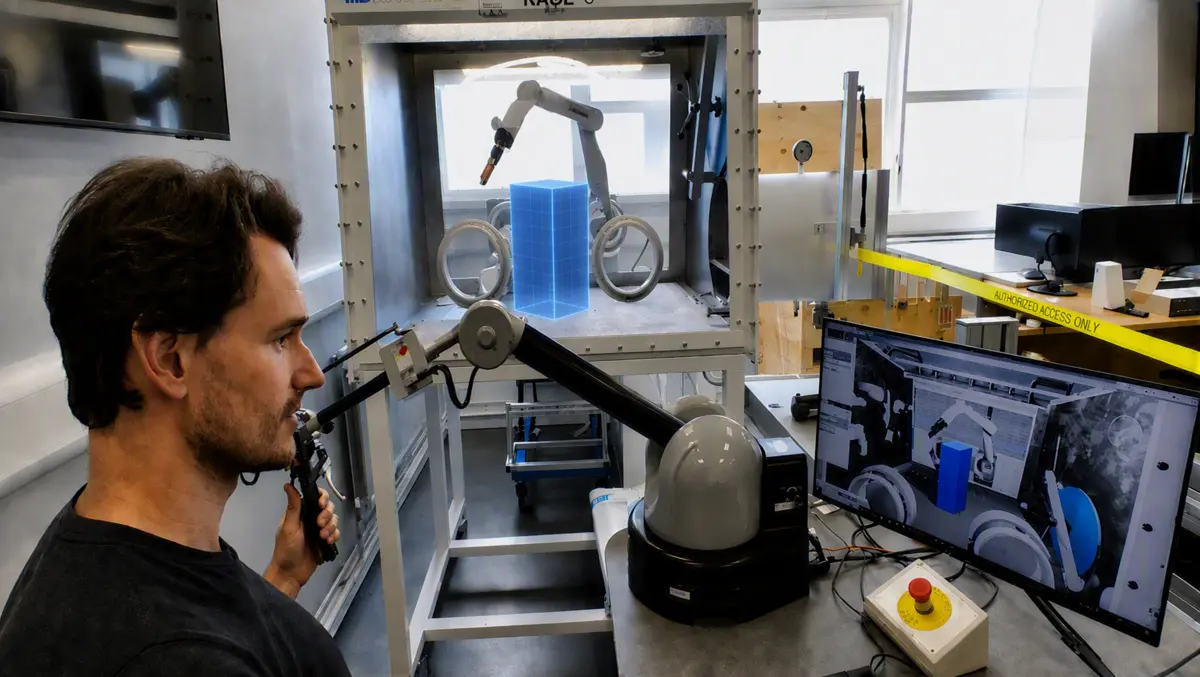
RAICo has developed a Digital Twin in-the-loop system for robotic operations in nuclear decommissioning. AWE Nuclear Security Technologies, the UK Atomic Energy Authority and Nuclear Restoration Services are exploring the technology.
The system sits between a human operator and a robot, acting as a mediation layer that can alter commands before they reach the machine. Its aim is to reduce operating errors in tasks such as handling radioactive debris, working in gloveboxes and sorting materials in hazardous environments.
Remote handling with robotic arms has become an important part of nuclear decommissioning, but it remains difficult to use in practice. Operating a six-axis arm can require specialist training and sustained concentration, limiting the pool of workers able to do the job and slowing deployment on site.
RAICo developed the system with simulation and robotic control specialist TOIA. The software can interpret likely operator intent and adjust commands where needed, such as stopping a robotic arm from moving too close to a wall or preventing an item from being released at the wrong moment.
A senior project member said the aim is to make robots easier to use while reducing the risk of mistakes.
"The DTIL technology is a mediation layer between the operator and robot that can assist the operator to work more safely and efficiently," said Robert Howell, Advanced Robotic Control Lead at RAICo.
He said the approach could also reduce workforce training requirements.
"By assisting operators and designing out risk of human error, this dramatically reduces the level of training needed to use a robot," Howell said.
"That means a wider range of decommissioning professionals can benefit from what robots have to offer, which in turn means remote handling tasks like waste sorting can get done far more quickly," he added.
The project points to a broader shift in how robotic systems could be used in high-risk nuclear settings. Rather than requiring an operator to manage every movement directly through a handheld controller, mediated software could increasingly handle lower-level adjustments while the human focuses on the task outcome.
The organisations involved say that could eventually support intent-based operations, in which a user specifies the required result and software generates the control instructions for the robot to carry it out. For now, the focus is on reducing complexity in current remote-handling work.
Early users
AWE Nuclear Security Technologies is among the first organisations assessing the system. Its interest centres on safety features that could widen the use of robots in decommissioning without relying on a small group of dedicated remote-handling specialists.
"We're very interested in the digitally mediated safety features. This could mean we can rapidly expand the use of robotics for decommissioning - and so keep our people safer - without the costs and limitations of having to train up and depend on a pool of dedicated remote handling operators," said Luke Ankers, Team Leader, Robotics and Smart Technologies, at AWE Nuclear Security Technologies.
The UK Atomic Energy Authority is also examining how the approach could improve precision control at its Materials Research Facility. Work there is focused on a six-axis robot in a receipt cell, where the technology is being considered to support improved user interfaces, assistive guidance, simulated viewing systems and failsafes.
Nuclear Restoration Services is studying the same platform from a training perspective. The group is exploring its use in simulation so new operators can learn remote handling in an environment that more closely reflects the behaviour of a real robotic system.
Training link
One practical issue in robotics training is that simulated systems often feel different from live equipment. Training environments typically rely on virtual reality approximations, which can create a gap between what an operator experiences during instruction and what happens in real operations.
The mediated control layer can be used in both real and virtual settings, allowing the same control systems to sit behind training simulators and physical equipment. That could narrow the divide between practice and deployment, particularly for technically demanding remote-handling tasks.
The developers also say the software may simplify the integration of new input devices, including haptic controllers. In conventional setups, that process can require extensive modelling work. The mediated approach instead reduces the task to building a software link between the controller and the DTIL layer.
That matters because operators in hazardous environments often need more intuitive ways to control robotic systems. If new interfaces can be connected more quickly, decommissioning operators may be able to test and adopt alternative control methods with less engineering work.
RAICo brings together the UK Atomic Energy Authority, the Nuclear Decommissioning Authority, Sellafield, the University of Manchester and AWE Nuclear Security Technologies. The collaboration focuses on robotics and artificial intelligence for nuclear decommissioning and fusion engineering.
The latest work highlights a persistent challenge for the sector: robots can reduce human exposure in dangerous environments, but only if enough people can use them effectively. The DTIL approach is intended to address that bottleneck by placing software between the operator and the machine, making complex robotic systems more practical for routine decommissioning work.