

Nvidia & Dassault partner to build industrial AI twins
Wed, 4th Feb 2026
Nvidia and Dassault Systèmes have set out a long-term partnership around a shared industrial AI architecture, linking Dassault Systèmes virtual twin software with Nvidia's AI infrastructure and modelling technology.
The companies said the work will focus on "science-validated" industry world models that can run at scale across sectors including biology, materials science, engineering and manufacturing. They positioned the effort as a foundation layer for industrial AI deployment and validation.
"We are entering an era where artificial intelligence does not just predict or generate, but understands the real world. When AI is grounded in science, physics and validated industrial knowledge, it becomes a force multiplier for human ingenuity," said Pascal Daloz, Chief Executive Officer, Dassault Systèmes.
"Together with NVIDIA, we are building industry World Models that unite Virtual Twins and accelerated computing to help industry design, simulate and operate complex systems in biology, materials science, engineering and manufacturing with confidence. This partnership establishes a new foundation for industrial AI, one that is trustworthy by design and capable of scaling innovation across the generative economy," said Pascal Daloz, Chief Executive Officer, Dassault Systèmes.
Nvidia framed the partnership around "physical AI", a term it uses for AI systems trained and validated against real-world constraints and physics-based models.
"Physical AI is the next frontier of artificial intelligence, grounded in the laws of the physical world," said Jensen Huang, Founder and Chief Executive Officer, Nvidia.
"Together with Dassault Systèmes, we're uniting decades of industrial leadership with NVIDIA's AI and Omniverse platforms to transform how millions of researchers, designers and engineers build the world's largest industries," said Huang.
Virtual twins
Dassault Systèmes sells design, simulation and lifecycle software used in manufacturing and product development. It develops virtual twin technology that models systems and processes in software.
The two companies said they will work on virtual twins that model complex systems across multiple domains. They highlighted biology, materials science, engineering and manufacturing as initial areas for development.
The partnership centres on the 3DEXPERIENCE platform from Dassault Systèmes. The companies said they will build "skilled virtual companions" on the platform. They described them as agentic tools that draw on industry world models and industrial context.
AI factories
Dassault Systèmes said its cloud business Outscale is deploying AI factories as part of a "sustainable and sovereign cloud strategy". It said these facilities will use Nvidia AI infrastructure across three continents.
Outscale said the AI factories will run AI models within the 3DEXPERIENCE platform. The company also said it will offer data privacy, intellectual property protection and sovereignty controls for customers using the system.
Nvidia said it will adopt Dassault Systèmes model-based systems engineering approach for AI factory design. It said it will start with the Nvidia Rubin platform. It also said it will integrate this work into the Nvidia Omniverse DSX Blueprint, which it described as a framework for large-scale AI factory deployment.
The companies also detailed how they expect the infrastructure and software combination to work across different Dassault Systèmes brands and Nvidia libraries and models.
Research areas
In biology and materials, the companies pointed to the Nvidia BioNemo platform alongside Dassault Systèmes BIOVIA tools. They said the combination will be used with science-validated world models for molecule and materials discovery.
In engineering, Dassault Systèmes said SIMULIA will use AI-based virtual twin physics behaviour with Nvidia CUDA-X libraries and AI physics libraries. The companies said this will provide prediction of outcomes for designers and engineers.
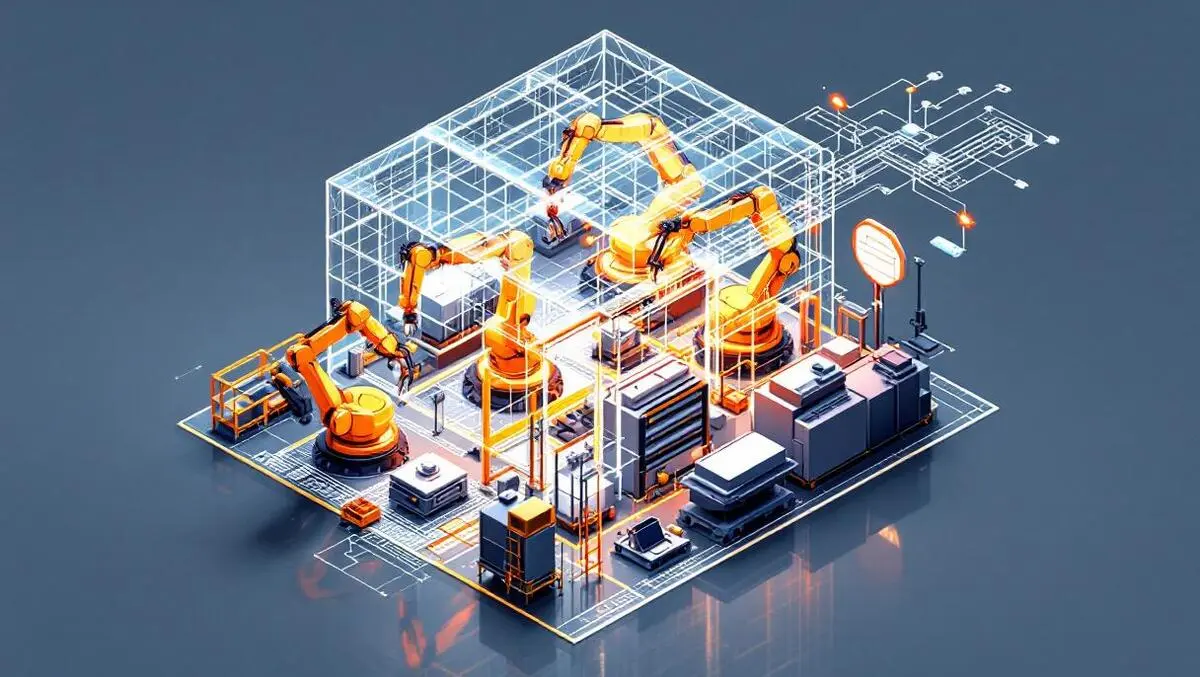
In manufacturing, the companies said Nvidia Omniverse physical AI libraries will integrate with Dassault Systèmes DELMIA virtual twin models of production systems. They said the result will be "autonomous" and software-defined production systems.
They also said Nvidia Nemotron open models will integrate with Dassault Systèmes industry world models for virtual companions inside 3DEXPERIENCE. They said these tools will be designed around "trusted, actionable intelligence" and industrial context.
Customer signals
Several organisations and companies commented on the partnership and its potential applications in their own work.
"Bel Group is building a sustainable food future through responsible formulation and packaging. Through the NVIDIA-Dassault Systèmes collaboration, we gain the computational power to model and optimize our products at scale-accelerating innovation while delivering on our sustainability commitments," said Cécile Béliot, Chief Executive Officer, Bel Group.
"To address the growing complexity of modern manufacturing, the industry must move toward fully autonomous and digitally validated production systems," said Motohiro Yamanishi, President of Industrial Automation, OMRON.
"By combining NVIDIA Physical AI frameworks with Dassault Systèmes' Virtual Twin Factory and OMRON's automation technologies, manufacturers can move from design to deployment with greater confidence and speed," said Yamanishi.
Lucid, which uses Dassault Systèmes tools in vehicle engineering, also pointed to its work around AI-based physics models for simulation and iteration.
"Lucid's award-winning engineering and technology continues to set new standards in the automotive industry, and Dassault Systèmes remains a key partner, enabling us to stay at the forefront of vehicle and powertrain engineering," said Vivek Attaluri, Vice President of Vehicle Engineering, Lucid.
"Agility, speed of innovation and rapid iteration are at the core of our work flows, and our exploration of Virtual Twin AI-based physics, powered by NVIDIA's open-source physics informed AI models, has the potential to help our teams move from concept to production faster than ever before, without sacrificing predictive accuracy. We look forward to continued collaboration and leveraging these new tools to support Lucid's future innovations," said Attaluri.
Wichita State University's National Institute for Aviation Research said it is looking at the use of virtual companions in engineering workflows and certification activities.
"NIAR empowers the next generation of aircraft. From asset digitization through design and manufacturing creation and validation, Virtual Twin technology introduces unparalleled capabilities and efficiency. Dassault Systèmes' Virtual Companions for engineering, leveraging the 3DEXPERIENCE agentic platform using NVIDIA Nemotron open models and Dassault Systèmes Industry World Models, accelerate the by-design compliant synthesis of aircraft Virtual Twins. Using the platform to align the Virtual Twin to the means of compliance, reduces certification efforts while preserving sovereignty of the information," said Shawn Ehrstein, Director, Emerging Technologies and CAD/CAM, National Institute for Aviation Research, Wichita State University.
The companies said the partnership will expand their existing collaboration into a shared approach for how industrial AI systems are built, validated and deployed at scale.