

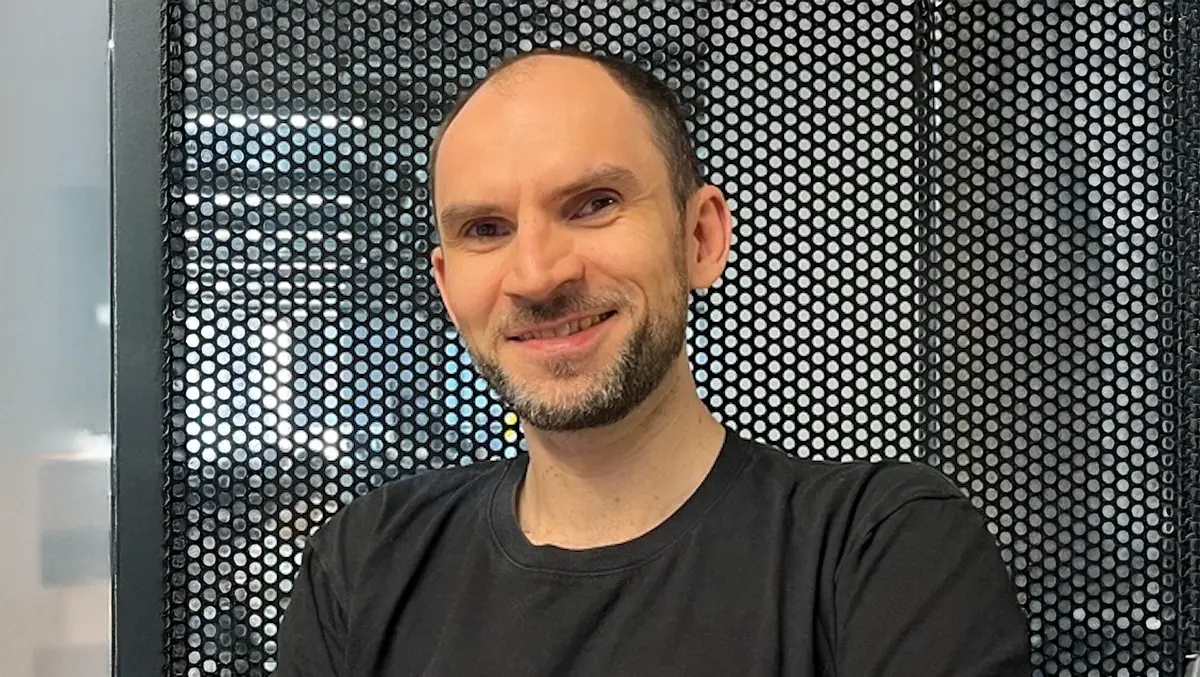
Michael Parker joins TurinTech to lead Artemis AI expansion
Thu, 7th Aug 2025
Michael Parker, previously of Docker, has joined TurinTech as Vice President of Engineering to oversee the scaling of the company's Artemis AI engineering platform.
Appointment and background
Parker brings considerable experience in developer tooling and platform engineering, having held senior roles at Docker, where he was responsible for leading modernisation of the company's cloud platform as well as improving the developer experience. His career includes building scalable systems and managing distributed engineering teams globally.
At Docker, Parker was involved in steering the firm's transition from infrastructure-focused solutions to developer-first tooling, leading initiatives such as platform modernisation and overseeing the user experience behind Docker Hub.
Role at TurinTech
In his new post at TurinTech, Parker will be responsible for engineering delivery across both cloud and on-premises deployments of Artemis. He will focus on integrating AI agents into software development processes, overseeing planning workflows and deploying outcome-based review tools, aiming to enable developers to work seamlessly with AI technologies.
TurinTech's Artemis platform is built to support the new era of agentic AI in software development, offering teams guidance, validation of AI contributions, and aligning development work with organisational goals. The platform is structured around an outcome-first approach, prioritising productivity gains that can be measured and verified.
Mike Basios, Chief Technology Officer at TurinTech, commented: "We're building Artemis to help teams get the most out of AI - whether that's LLMs, agents, or both. It's not about generating more code - it's about delivering measurably improved outcomes."
Parker's appointment comes as TurinTech prepares for a broader rollout of Artemis. The platform is already in use by several global enterprises, including Intel and Taylor Wessing, as part of its limited launch phase earlier this year.
Addressing the challenges facing the adoption of agentic AI, Parker emphasised the importance of structured workflows in development environments reliant on AI agents.
"Agentic development is a powerful shift, but it needs structure to succeed," said Michael Parker, VP of Engineering. "With Artemis, we're building the planning and workflow intelligence that lets AI agents work more like real teammates. Developers stay in control, but get meaningful support - from scoping to implementation to validation. It's about tackling the real-world friction in today's GenAI tools and making AI genuinely useful in everyday engineering."
TurinTech reports growing demand for Artemis, as organisations recognise the need for platforms that not only generate code but also deliver functional, production-ready software with a clear focus on organisational outcomes.
Market response
Leslie Kanthan, CEO and Co-founder of TurinTech, said that interest in Artemis has expanded since its initial roll-out. He highlighted the significance of Parker's recruitment in supporting the company's ambitions to increase the platform's availability to more teams worldwide.
"Demand for Artemis continues to grow since our limited launch earlier this year. Global enterprises like Intel and Taylor Wessing are already engaging, and we're seeing strong developer interest in our AI-driven engineering platform. With Michael onboard, we're excited to accelerate availability and bring the power of Artemis to more teams, faster."
As part of the broader expansion, Parker has also recruited former colleagues Johnny Stoten and Diogo Ferreira, who previously held roles at Docker, to further bolster the engineering function at TurinTech.
TurinTech focuses on building systems that evolve and improve both code and machine learning models. Its products, including Artemis for code and evoML for machine learning pipelines, use agentic planning, evolutionary algorithms and real-time validation to achieve results that can be measured in a production environment. The aim is to help clients move beyond basic AI generation, facilitating the deployment of software that is robust, efficient and aligned with organisational objectives.