

Global survey backs standards for growth & innovation
Fri, 20th Nov 2026 (Today)
The International Electrotechnical Commission has published a study on the role of international standards in economic and technological development, as delegates gather in Hamburg for its annual General Meeting.
The survey covered eight countries across five continents and found strong support for the role of standards in trade, emerging technology, and access to digital and energy systems. Overall, 85% of respondents said international standards are important for deploying emerging technologies safely and equitably, while 88% said they help bridge the digital and energy divide.
Nearly seven in 10 respondents, or 67%, said international standards are very effective at reducing trade barriers and expanding market access. On global development more broadly, respondents most often linked standards to technological innovation at 43% and economic growth at 41%, ahead of environmental sustainability at 35% and social progress at 32%.
The data also showed differences between markets. In Singapore, 51% of respondents associated standards with both economic growth and technological innovation, compared with 29% and 37% respectively in Japan. On the role of standards in deploying emerging technologies safely and equitably, support ranged from 72% in Japan to 95% in Brazil.
Results on the digital and energy divide followed a similar pattern. The share of respondents who said standards play an important role in closing those gaps ranged from 74% in Japan to 94% in Brazil. Canada stood at 88%, France and Ghana at 90%, and Singapore and South Africa at 92%.
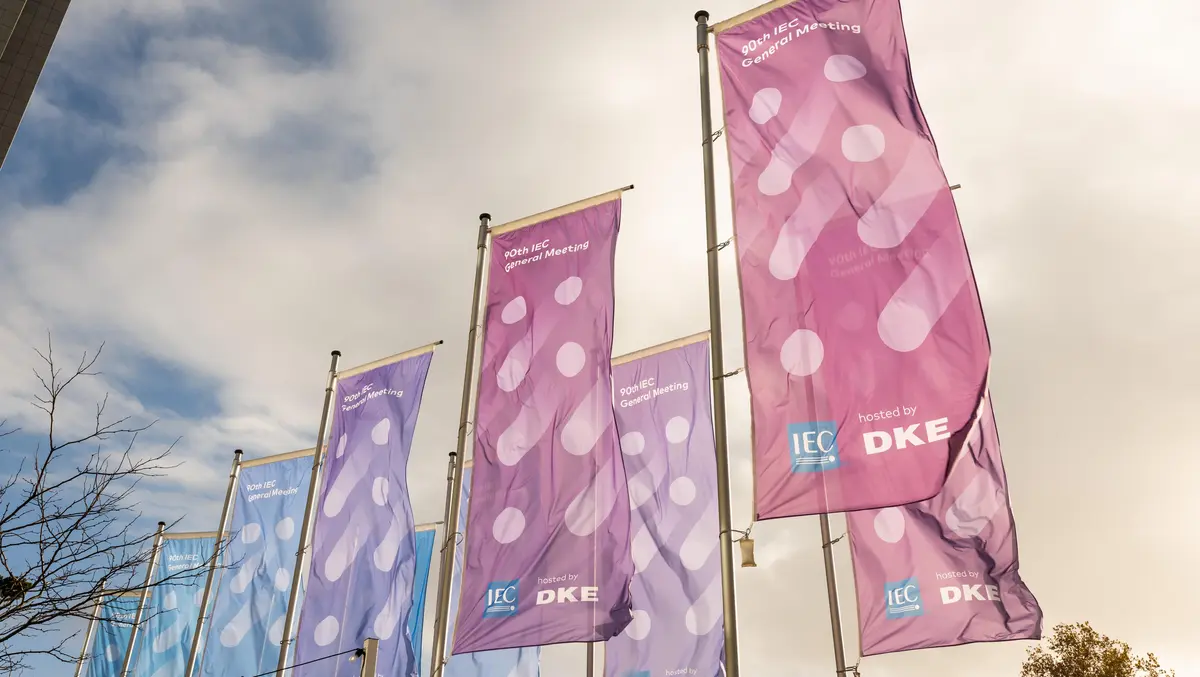
The study was published as nearly 4,000 participants from more than 100 countries convened in Hamburg, with a further 1,500 joining remotely. The meeting brings together representatives from the IEC's member and affiliate countries, along with technical experts, policymakers, regulators, civil society groups, and partner organisations.
Survey findings
The figures suggest broad recognition of standards as part of the infrastructure behind trade and technology adoption. They also point to weaker public awareness of their role in environmental and social outcomes. Only around a third of respondents said international standards benefit environmental sustainability and social progress, placing those categories below growth and innovation.
That gap is likely to draw attention from organisations involved in standards-setting as governments and companies place greater emphasis on energy transition, digital access, and the social effects of new technologies. The IEC said the findings underline the need for faster, more efficient cooperation as innovation outpaces computing, energy, and infrastructure systems.
Philippe Metzger, Secretary-General and Chief Executive Officer of the IEC, linked standards work to broader economic and technological pressures.
"Today, we face major global challenges which require global perspectives, in energy transition, digitalization, mobility, communication," said Philippe Metzger, Secretary-General and Chief Executive Officer of the IEC. "The IEC community creates standards and enables their conformity assessment through dialogue, openness, and mutual respect to ensure safety, progress, fairness, and a better life for people everywhere. This work is more relevant than ever. We're dealing with fast-changing technologies, increasing complexity, and the urgent need for hands-on solutions. Standardization helps turn innovation into impact - across sectors, across borders."
The meeting in Hamburg is hosted by DKE, the German standardisation organisation. Its theme focuses on global development and the role of standards, reflecting growing interest in how technical rules affect not only manufacturing and trade, but also digital systems, electrification, and access to infrastructure.
Country split
The country breakdown shows support for standards across a diverse group of economies. In Australia, 37% of respondents linked standards to economic growth and 43% to technological innovation. In Brazil, the figures were 44% and 48%, while in Canada they were 46% and 41%. France recorded 32% and 41%, Ghana 46% and 44%, Japan 29% and 37%, Singapore 51% and 51%, and South Africa 46% and 43%.
Those differences may reflect varying levels of industrial development, public familiarity with standards bodies, and national priorities in areas such as energy access and digitalisation. Even so, the survey points to a shared view across the markets sampled that international standards remain closely linked to how new technologies are introduced and how markets connect.
Michael Teigeler, Deputy Managing Director of DKE, said the broader significance of standards should not be underestimated.
"Standards do not merely follow development, they drive it," said Michael Teigeler, Deputy Managing Director of DKE. "As the world grapples with shared challenges such as ensuring safe technological progress, clean energy access, and sustainable cities for people, the discussions and decisions at the IEC General Meeting 2026 are more than just event outcomes - they are a unique accelerator for global progress. We are proud to host this year's General Meeting in Hamburg and we look forward to finding ways for us to have even greater impact for more people in future. For 120 years, under the IEC framework, standardization has ensured safety, reliability, and sustainability in electrical and information technologies - always serving the public good. The strong international cooperation within the IEC paves the way for the future of our electrified world. This is how we help set the course for a better tomorrow, driven by standards, the invisible infrastructure for global development."