

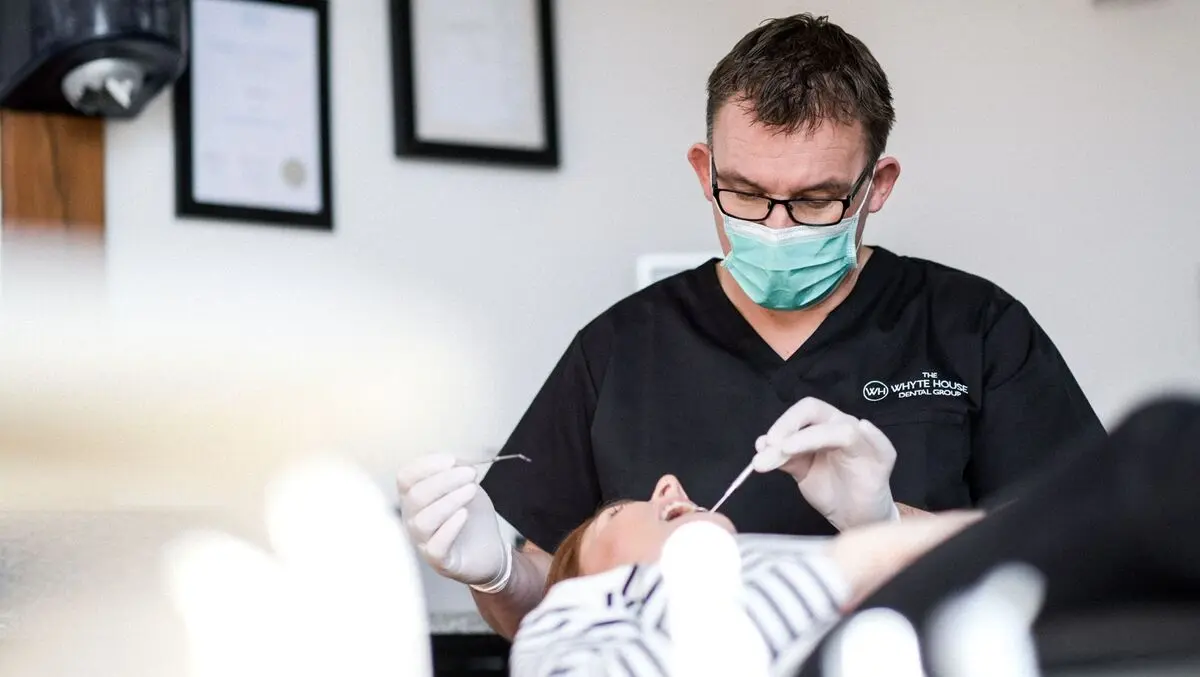
For more than twenty years, I have built and run dental clinics across the United Kingdom. In that time I have worked with thousands of patients and managed every pressure a small business can face. Staffing shortages. Burnout. Regulation. Financial strain. And above all, the responsibility of caring for people when they are at their most vulnerable.
This background is the reason I speak about artificial intelligence with such conviction. I am not a technologist. I am someone who has lived the problem. I have seen how operational inefficiencies quietly drain a business, how overwhelmed staff lose confidence, and how patients slip away long before anyone realises what is happening. That is why this moment in the AI revolution matters. It is not theoretical for me. It is practical. It affects real people every day.
Life has a way of reminding us what truly matters.
My children grew up in front of me faster than I ever expected. One day, without knowing it, I picked them up for the last time. If someone had told me to pause, breathe and pay attention, I would have listened. We assume we will always get another moment. Then we discover that the moments have already passed.
I saw a similar shift at work. One extremely busy day, I stepped into the staff room and found eight members of my team staring into their phones. It was not laziness or disengagement. It was habit. The same habit that has pulled many of us away from the people directly in front of us. The mobile phone, once the great connector of our generation, quietly became the most powerful disruptor. It replaced satnav devices, cameras, torches and watches. Entire industries disappeared before we even noticed.
We did not pay attention. We did not even notice the shift.
Now we stand at the beginning of the AI revolution. And I ask again, friend or foe. Travel back one hundred years. If AI had existed then, would we have walked on the moon, or broken the four minute mile, or split the atom? I fear the answer may be no. AI calculates what is probable. Humanity reaches for what is possible. Our greatest breakthroughs were born from irrational ambition, not predictable outcomes. The human spirit has moved civilisation forward, and it still does.
Humans can reason. We can pivot. We can interact with subtlety and instinct. We have empathy, courage and a sense of responsibility that no model can replicate. We protect our own. We will never allow a future where machines rise above us.
But before we start digging up the Terminator hoping we find the T 1000 and not the T 800, let us pause. Have you noticed how quiet the topic of AI regulation has become? The silence is telling. Many AI models are emerging, flaring brightly, then collapsing under the weight of unrealistic expectations. I have ridden those waves myself, sometimes learning the hard way. Then the answer appeared, simple but profound. We must preserve the human spirit.
HG Wells once said that through hardship, humanity earned its place on this earth. That is exactly it. If we can build AI that enables more face to face contact, that lets teams breathe for a moment, that helps businesses reclaim lost patients or customers, then AI becomes a friend. It becomes a partner, not a threat. In my world, AI allowed receptionists to return to what they are truly meant to do. Care, communicate, reassure. And in healthcare, that is everything.
Every small business, regardless of industry, faces the same pressures: too few hands, too many tasks and not enough time. That is why healthcare is so important in this discussion. It is the most demanding environment of all. If AI can work here, it can work anywhere. In my clinics we saw that an AI receptionist could reduce call congestion, return meaningful hours to staff and bring back patients who had quietly slipped away. The goal was not to replace people. The goal was to give people space to excel.
If your staff are not efficient, your business will suffer. But the solution is not to replace everyone with machines. The solution is to make people better and then bring in AI that supports them. With the right system, clinics can double turnover with the same number of staff. That is healthier than stagnation or cuts. It makes the whole organism stronger.
We have now proven that AI can work in healthcare, arguably the most demanding vertical of all. We control and train the AI, not the other way around. Humans belong on earth. We deserve to thrive here. We must stop looking for shortcuts and start doing what is right. Look after each other. Build organisations rooted in humanity. If we do that, we will find that AI is not only a friend. It is a force multiplier for the human spirit.
Tomorrow will bring new challenges. But tomorrow is tomorrow. Today, we choose how this revolution unfolds.