

.webp)
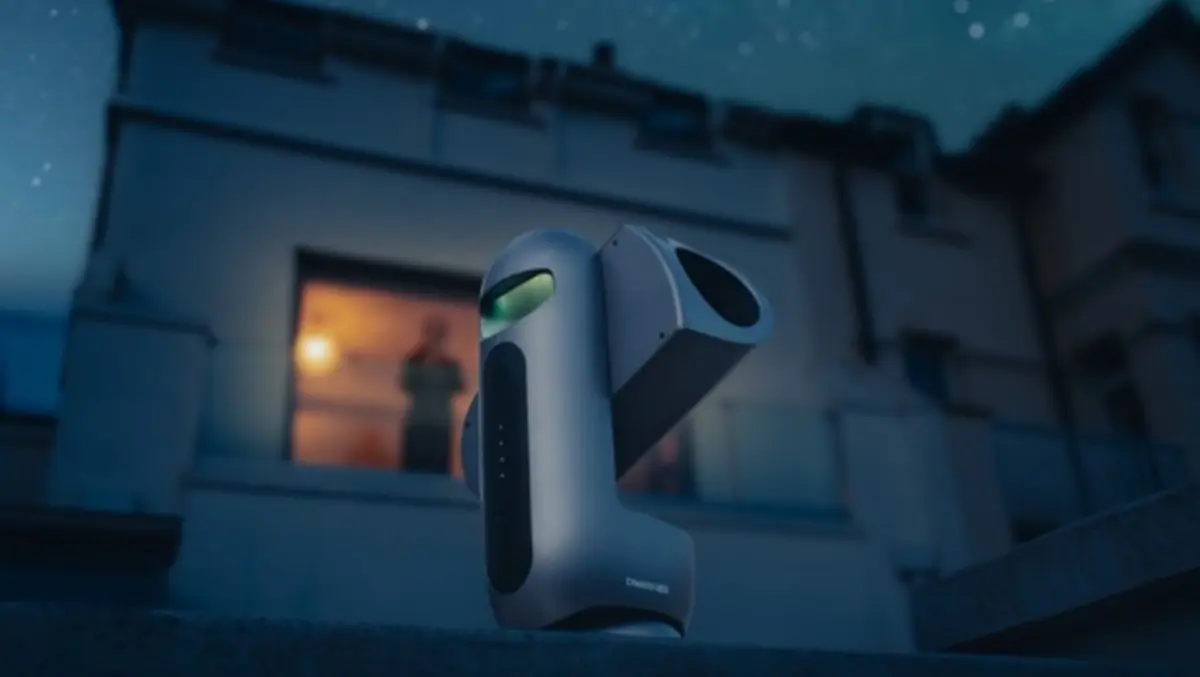
DWARFLAB has launched the Draco Smart Telescope in Standard and SHO editions.
Aimed at amateur astronomers, it is designed as an all-in-one imaging system for deep-sky, solar system and solar observation. Pricing is set at GBP £1,299 for the Standard model and GBP £1,449 for the SHO version.
Draco features a 90mm aperture, a 340mm focal length and a fast f/3.8 optical system in a folded design. This allows the optical path to fit into a body measuring about 386mm, while keeping the instrument portable enough for travel and regular outdoor use.
Long-exposure imaging is a key selling point. Draco supports single-frame exposures of up to 300 seconds and uses built-in guiding to monitor star drift and correct tracking errors during a session.
A rotating CMOS sensor compensates for field rotation at the imaging plane. This allows long-exposure imaging in an alt-azimuth setup without a separate guide scope, equatorial mount or polar alignment.
The system also offers an optional equatorial tracking mode for users who prefer that approach. Its all-metal base is integrated with an internal metal frame, which helps maintain stability when the telescope is set at an inclined angle.
Imaging options
At the centre of the telescope is a 1/1.3-inch, 50MP sensor with two readout configurations. For deep-sky work, Draco uses 2x2 pixel binning to produce images of about 12MP with an effective pixel size of 2.4μm, a setup intended to improve signal-to-noise performance when capturing dim objects such as nebulae and galaxies.
For the Sun, Moon and planets, the device switches to the sensor's native 1.2μm pixels and full 50MP resolution. This mode is designed to capture fine detail, including lunar craters, sunspots, Saturn's rings and features in Jupiter's atmosphere.
The two editions differ mainly in their filter arrangements. The Standard version includes an internal H+O dual-band filter for nebula imaging and an internal ND solar filter that moves into place automatically when Solar System Mode is selected.
The SHO model is aimed at users who want to collect a full sulphur, hydrogen and oxygen narrowband dataset. In that version, the internal ND filter is replaced by an S+O filter, which works with the H+O filter so the system can capture and combine SII, H-alpha and OIII data through the app.
Because that internal filter arrangement is used for deep-sky imaging, the SHO model comes with a separate external ND filter for solar observation and imaging. This creates a more specialised narrowband workflow than the Standard edition, which is positioned as the simpler option for mixed use.
Automation focus
Much of Draco is built around app-based automation. Users can select a target in the DWARFLAB app and let the telescope handle focusing, calibration, targeting, tracking, capture and live stacking automatically.
For those who want more direct control, the app also includes a Pro Mode. It allows adjustment of exposure time, gain, filters and other settings, with exposures ranging from 1/10,000 second to 300 seconds.
The software also handles image processing after capture. Tools include automatic enhancement, noise reduction, star correction, star reduction, star removal and Hubble Palette controls, while files can be exported in JPG, PNG, TIFF and FITS formats for use in other software.
Calibration features are built into the workflow. Draco includes flat- and bias-calibration data and can capture dark frames automatically, with calibration applied during live stacking to reduce thermal noise, vignetting, dust shadows and read noise.
Field use
Thermal management is another area where the product differs from basic consumer telescopes. Draco combines active sensor cooling with an internal system intended to limit heat-related image noise during long sessions, while the heat generated by the device also supports automatic lens dew prevention.
The telescope is designed to operate in temperatures from minus 20°C to 45°C and carries an IP56 protection rating. These specifications suggest DWARFLAB is targeting users who image outdoors in a wide range of conditions, rather than limiting the device to casual backyard use.
Portability remains part of the pitch despite the larger aperture and metal construction. Draco weighs about 5.5kg and includes a 77Wh battery that provides up to five hours of operation, depending on imaging mode and environmental conditions.
Connectivity options include Wi-Fi, Bluetooth, NFC, USB 3.0 and wired Ethernet support through USB. This gives users a choice between local operation and longer-term remote deployment.
DWARFLAB says its products are used by observers in more than 100 countries and regions, placing Draco in a growing market for smart telescopes that combine optics, tracking and software automation in a single package.
The new model stands out in that segment with a 90mm aperture, support for 300-second single-frame exposures and built-in physical field de-rotation in an all-in-one format.