

.webp)
Aina has raised USD $5.5 million in seed funding to support its work on a general-purpose interface for AI.
The round was led by Redstart Labs and 360 ONE Asset, with participation from MIXI Global Investments, Antler, Blume Founders Fund, and angel investors including Kunal Shah, Tikhon Bernstam, Harshil Mathur, Shashank Kumar, and Vaibhav Domkundwar.
The company will use the funds to bring its flagship interface to market and expand its team across San Francisco and Bangalore. It has also opened a waitlist for a pilot of the product, which has so far been developed privately.
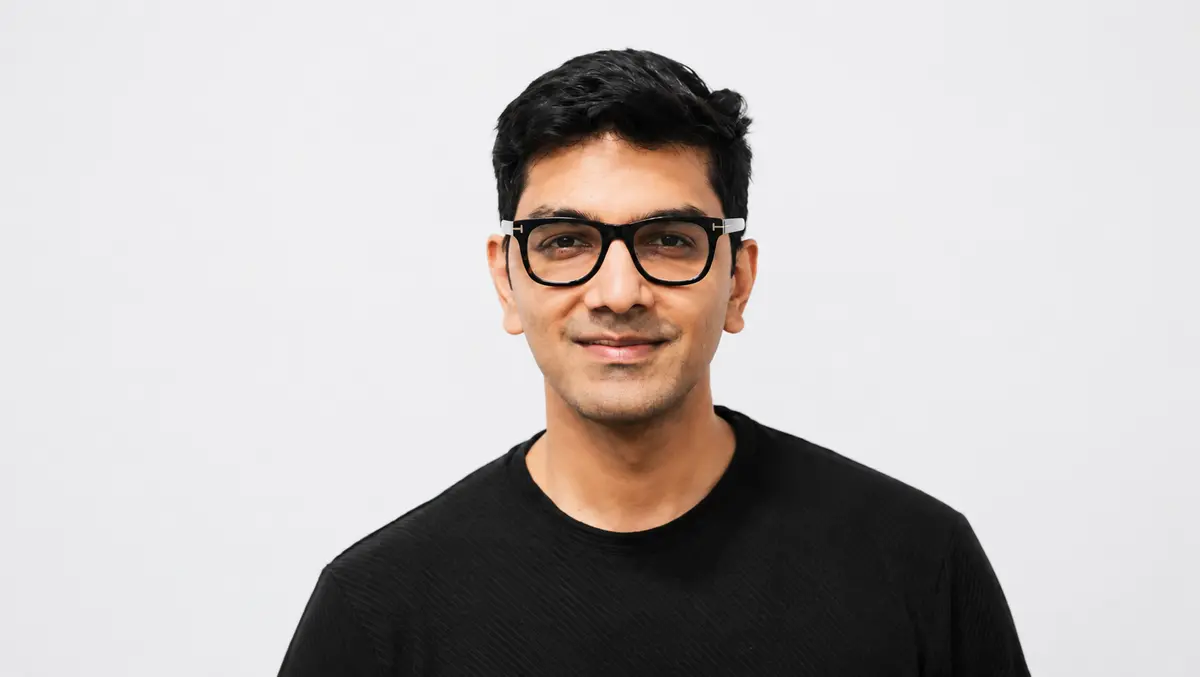
Aina was founded by Apoorv Shankar, former Vice President of Hardware at Ultrahuman. Incorporated in 2025, it has operated in recent months as a human-computer interaction lab under the name Project Mirage.
The company is trying to address a gap between rapid advances in AI software and the devices people still use to interact with digital services. It argues that keyboards and smartphone touchscreens are still built around older computing habits, even as AI systems take on more tasks and respond to natural language prompts.
That puts Aina among a growing group of hardware and software companies trying to redefine how users interact with AI tools. As generative AI spreads across work and daily life, companies are testing whether existing interfaces are too slow or too complex for systems that can increasingly automate decisions, recommendations, and routine actions.
From experiments
Before announcing the funding, the team had already been running smaller product experiments. At CES 2026, it presented three AI interface concepts aimed at common tasks such as joining online meetings, booking cabs, and ordering food.
One result was Dune, a three-key keypad for Mac computers that changes its functions based on the application in use. Aina has shipped hundreds of Dune devices to early users and used their feedback to study day-to-day workflows and AI adoption.
The company describes those experiments as stepping stones toward a broader interface that can work across phones and computers rather than within a single application. The aim is to reduce the number of manual steps required for routine digital tasks.
Aina has a team of 35 people across San Francisco and Bangalore. Its focus on consumer hardware comes at a time when many AI start-ups have concentrated on software models, agents, and workplace tools rather than dedicated devices.
Investor backing
Investors framed the bet as part of a longer pattern in computing, where major shifts in software are often followed by changes in hardware and interface design. That thesis has drawn attention in recent years as companies explore wearable devices, voice-led systems, and specialised AI assistants.
Shankar outlined the company's view of the problem in a statement released with the funding announcement.
"Phones and computers today are still primarily designed for Browsing. You think about the task, manually input what's needed, and put in the same effort whether it's something done daily or once a year. These interfaces put everything in front of you and let you figure out what you need. When you're doing hundreds of tasks a day, every unnecessary decision, every extra step, every moment spent navigating instead of acting adds up to real cognitive load across a working day. As intelligence gets commoditized, AI assistants will get better at understanding context and knowing what you need, and agents will execute on your behalf. We will simply receive prompts for every day-to-day task, and all we will have to do is say yes or no. The missing piece today is this context-aware layer paired with an easier way to capture human choice. We are building a general-purpose interface for this future, designed to capture human approval, effortlessly," said Apoorv Shankar, Founder and Chief Executive Officer of Aina.
Redstart Labs tied its investment to the view that AI is changing the basic relationship between users and software.
"We inherited the assumption that computers are tools - you instruct, they execute. AI is quietly dissolving that line. One of the key questions that matter is how the relationship changes when software starts to understand context and the interface disappears. That's where new categories like Aina are born and where part of the future is hiding. We are excited to back the team in this endeavor," said Vibhore Sharma of Redstart Labs.
Another investor pointed to past transitions in computing to explain the interest in a new device layer for AI systems.
"Every leap in computing has demanded a new hardware interface, from punch cards to the GUI to the smartphone. As AI agents become the primary way for people to interact with computers, the world once again needs a new generation of interfaces built for how we'll actually compute. Apoorv and the team have shown they can design and manufacture revolutionary consumer hardware from India for the world, and we're proud to co-lead their seed round as they build it," said Nag.