Resilience stories
The upgrade aims to ease London dependence for Midlands firms needing low-latency AI capacity, security and resilience.
Farmers in West Sussex can now spot heat stress earlier after a private 5G link put in-pen sensors on livestock buildings.
More than half of IT leaders remain unhappy with their resilience setups, as 76% still reported outages lasting over 10 minutes last year.
Google Cloud's fallback machine selection has helped Yahoo keep analytics jobs running, cutting Spark cluster provisioning failures by 85%.
A USD $1 billion push will widen subsidised access to AI cyber tools for utilities, local governments and banks with thin security teams.
Cross-border transfer costs may fall as nearly half of banks and fintechs are already using or piloting stablecoins, ACI Worldwide says.
Customers could cut carbon and waste more easily as Verdantix praised Blue Yonder for embedding sustainability data into supply chain planning and execution.
Enterprises could cut the manual work of linking AI and cloud systems as Equinix readies a managed service built on an open standard.
The overhaul has unlocked trapped procurement data and helped the building products maker set up 18 interfaces in just 12 days.
Customers and suppliers are feeling the effect as Logicalis lifts renewable power use and raises community funding in FY26.
The three winners cut manual work, sped up deployments and bolstered resilience across transport, defence research and banking in Australia and New Zealand.
The clean energy developer is sharpening its governance as it advances projects in Australia and prepares for a public unlisted listing.
Heavy use in disaster relief and military missions has made New Zealand's NH90 fleet the first in the world to log 3,000 hours in service.
Local councils will get a national baseline as Ottawa seeks to curb power bills, water use and hidden impacts from new data centres.
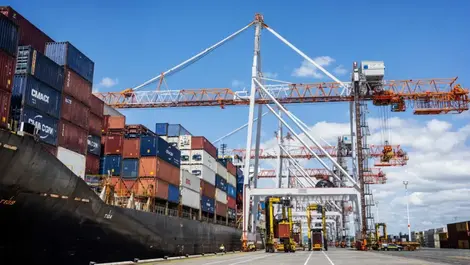
New wharves and dredging will ease congestion at New Zealand's biggest cargo port, after approval for a long-delayed expansion.
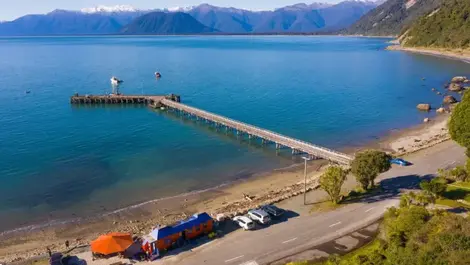
Councils and ratepayers have been spared steep local bills after NZ Transport Agency kept majority funding for two isolated West Coast roads through 2030.
South Island warmth and a June heat spike drove New Zealand's winter to 9.7C, with 27 places logging record seasonal temperatures.
Projects at Wellington Airport and Seaview Wharf were recognised for keeping flights and fuel deliveries moving during complex live-site construction.
Despite softer confidence, most Australian SMEs still expect to meet targets, with price rises and technology investment helping offset cost pressure.
Rising electrification demand is driving a bigger build-out of New Zealand's grid, with approved projects set to lift capital spending further.