Modular data centre stories
As AI demand rises, businesses face outages, price shocks and sovereignty risks unless they spread compute across cleaner, smaller sites.
Operators facing denser AI workloads could gain a smaller backup-power option, as the PU200 delivers 462 kW per cabinet in cramped data centres.
Racks are already pushing 50-100kW, forcing operators to redesign cooling, power and build methods for AI workloads.
The new design could let operators devote 90 MW of every 100 MW of provisioned capacity to servers, easing power constraints for AI build-outs.
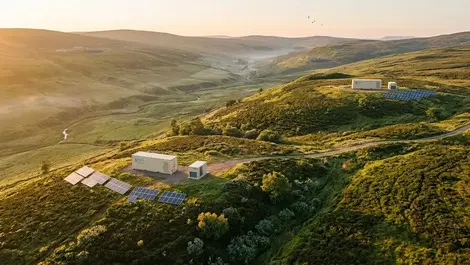
The plan could channel more than US$30 billion into regional sites by turning curtailed wind and solar power into exportable computing capacity.
More than 6,500 customers have adopted Dell's AI Factory with NVIDIA as it adds deskside systems, servers and managed services for agentic AI.
Rising demand for AI and cloud services is pushing operators to spend on lower-emission facilities as the market heads towards USD $197.02 billion by 2031.
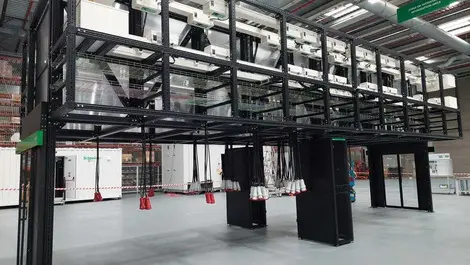
Rising demand for AI computing is pushing operators towards repeatable builds, and Schneider Electric says its new modular design can speed deployments.
Governments tightening energy and water rules are pushing data centre operators toward smaller sites that avoid grid delays and local backlash.
Adoption has climbed to more than 6,500 customers as businesses shift from AI pilots to on-premise production and weigh rising costs.
Rising AI-driven demand for faster data centre builds has prompted EfficiencyIT to add a veteran engineer to manage modular production risks.
The new venture aims to speed up AI infrastructure builds by factory-testing modular systems before they are shipped to customer sites.
The deal lifts DXN's AI high-performance computing order book to about AUD $21 million as demand for faster-deployed modular sites grows.
It lets cloud operators pair custom XPUs with NVIDIA's rack-scale systems, aiming to cut delays and integration costs in AI build-outs.
Data centre operators could free up more power for servers as the new architecture is designed to direct up to 90% of provisioned capacity to IT compute.
Japan's push for local control of AI and cloud services is driving the alliance, which aims to reduce reliance on overseas-operated platforms.
Customers and partners can now inspect integrated power and cooling systems in Singapore as AI data centres demand denser, more efficient infrastructure.
Operators facing surging AI demand can now test integrated cooling and power systems at a new Singapore facility for dense computing workloads.
Operators in Southeast Asia could speed AI capacity builds as Delta's modular system pairs liquid cooling with 800 VDC power for NVIDIA Vera Rubin.
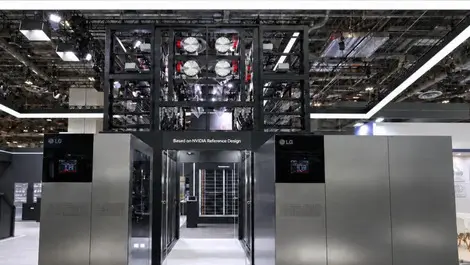
Operators facing soaring heat and power demands from AI servers may gain faster, more integrated infrastructure from LG's new offering.