

Why 'good enough' voice tools quietly cost businesses
Fri, 13th Mar 2026.webp)
Businesses often tolerate minor flaws in their communications tools. Dropped calls, slow connections and clunky meeting links become part of the working day. Staff find workarounds, and leaders prioritise spending on more visible systems. Over time, those delays and interruptions add up-both financially and in reduced service quality.
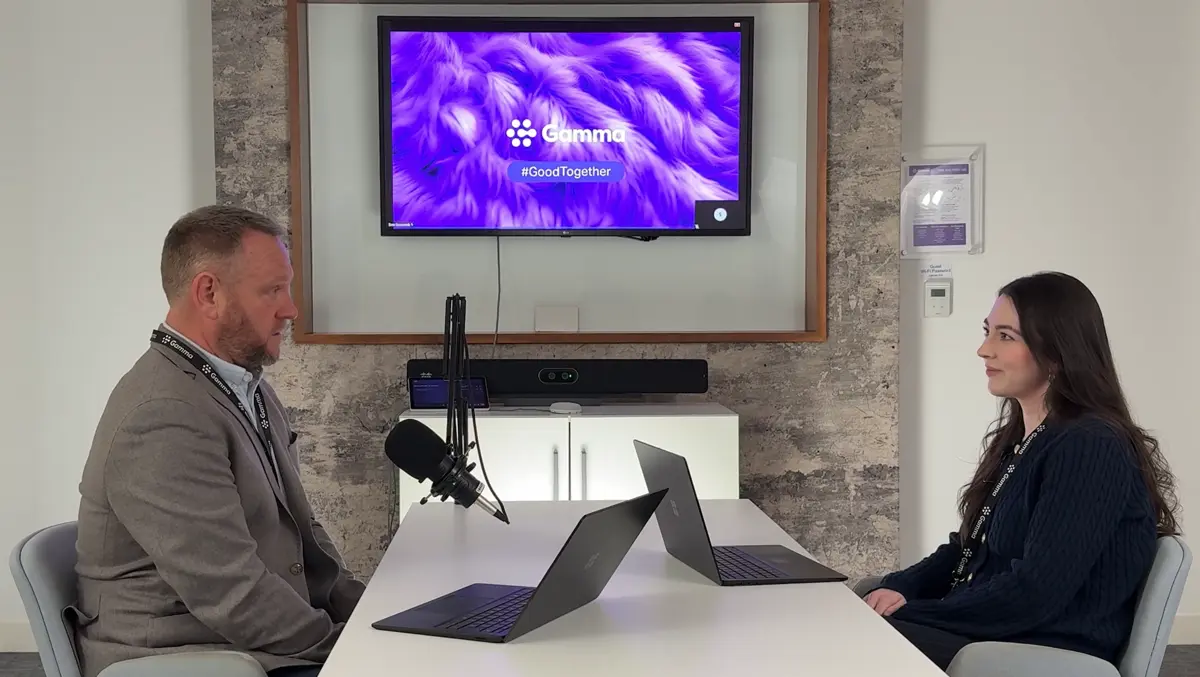
Gamma frames this as a "good enough" problem in collaboration and voice. It sells voice and unified communications services to organisations across the public and private sectors.
"When I think of what good enough is, it just means it works. No one's thrilled about it. It's not the best out there. A good analogy is what's happening at home right now: the kitchen light is flickering and I need to change the bulb. It's annoying, but am I going to go out of my way to fix it? Probably not for a while-until I'm forced to. "In collaboration terms, it's dropped calls, latency, clunky meet-and-join, and using multiple systems to do one task. It's not the best, but you can get by." said Samantha Mooney, Proposition Owner - Collaboration, Gamma.
In many organisations, these problems rarely show up as a single failure. Instead, they appear as small delays and repeated friction. Staff still complete tasks, and customers still get answers. The cost is hidden in lost time, duplicated effort and inconsistent experiences across teams.
"There are so many workarounds, and sometimes they're so ingrained that it's just 'the way we do things around here'. For example, if you're taking a call on your mobile, logging into the CRM system and sending an email-how much can get lost? "It's not until you have a new starter and you're explaining, 'Oh, we do it this way', and they ask, 'Why can't we do it in one system?' Then you realise you're saying, 'Well, it's just the way it's done.' We complain about it, but nothing really happens because we can still get the result. It's not as efficient as we want, but we did the workaround and got there." said Mooney.
Voice can slip down the priority list when organisations compare projects. CRM replacements and productivity suites have clearer, more visible outputs. Telephony, by contrast, is expected to run quietly in the background. That creates a gap between how much people rely on voice and how much attention it gets in technology planning.
"There are a few reasons. If you're in telecoms, you understand telephony. But if you're not, and you're installing a shiny new CRM system, you can see the output. With telephony, it's more like, 'It's lagging again', and then you're five or ten minutes late to a call. "Another issue is how overwhelming it can feel to change your telephony environment or collaboration tools. If you're just getting by, the question 'Where do I start?' becomes a blocker. You do a bit of research and there's so much information-different providers, different solutions-that it becomes a big project in people's minds. "It's like the flickering light bulb: you can live with it, but then you have to go to the shop, find the right bulb, make sure it fits, and it starts to feel like a hassle. That's why people deprioritise it compared with other internal projects." said Mooney.
Latency can affect customer behaviour directly. Small delays can lead to abandoned calls, while poor audio can shape perceptions of service. For organisations with contact centres or phone-heavy operations, that sits alongside the cost of staff time.
"When you put a cost against that latency, you start asking: how many customers call up and then hang up? If there's even a three- or four-second delay, you think, 'I haven't got through-try again', or 'I'll just give up.' When you put a cost against it, you realise it's really important that we do something." said Mooney.
The impact also shows up internally. In hybrid and distributed organisations, teams rely on a mix of calling, messaging and video meetings. When those tools are unreliable, staff switch between apps, repeat actions, and spend time joining meetings or fixing call issues instead of focusing on the conversation.
"You've got hard workers who want to be quick, and we're slowing them down. If they can't even join a customer meeting, imagine being the employee who wants to do better but doesn't have the tools behind them. I 100% agree." said Mooney.
For larger organisations, inconsistency across offices and regions adds another layer of friction. Different tools create different user experiences, which can make it harder for teams to stay connected across locations and time zones.
"Most enterprises are global now. You need that joined-up feeling, but if you're using disparate systems, how are you supposed to feel connected? If you have to email one person but can message another easily in Teams, it's not the same relationship. It's not quick or efficient. "Enterprises want the same system and technology across the board, so it's easy for anyone to contact anyone within the business." said Mooney.
Small frictions, scaled costs
One theme Gamma highlights is accumulation. A few minutes lost here and there can seem insignificant for an individual, but the impact changes when it scales across teams and weeks. Organisations can also face less direct costs, such as slower decision-making and higher employee churn.
"With a 'good enough' system, it's like death by a hundred paper cuts. It's all the little things you don't see on the surface-five minutes wasted on a call, maybe once a week. Multiply that across 500 users, and it adds up. "It can also slow decision-making. And if employees feel they can't move faster because the tools aren't supporting them, you'll see turnover. Those little things need to be considered and costed, so you can see it's a big problem." said Mooney.
Gamma also points to planning issues. Organisations often choose tools as point solutions, then deal with integration and adoption later. Mooney argued that approach can miss how teams actually work day to day.
"If you're not considering your business strategy as a whole, you can end up thinking, 'We just need to sort out this office-plug something in.' But if it isn't integrated with how your employees work, it won't deliver. "When you're looking at a collaboration or voice tool, you need to start with: how do people use it? Then choose a solution that supports that. Lean on experts for guidance on the best way to use it so you're supporting employees properly. "With a unified communications system, you've got chat, video and calling in one place." said Mooney.
Risk, reputation and legacy estate
In sectors such as healthcare and emergency services, voice has a safety dimension. In customer-facing industries, voice performance can affect reputation. Poor service may show up as long waiting times, poor audio and repeated calls-issues that can translate into lost business.
"If you're customer-facing and you develop a reputation for poor service-people can't get through, it takes ages, or the audio is crackly-then it's not just financial. It's reputation, which ultimately leads to financial losses." said Mooney.
Mooney also pointed to the operational burden of older systems. Organisations may face higher running costs and reliance on specialist skills. Some also pay for licences that include calling, even when they do not use that capability.
"Legacy estates can be a drain. They don't do what you need, and they're expensive to run. You often need specialist skills in-house, unless you rely on an external IT team. "If you already have a licence with a vendor-for example, an E5 licence in Microsoft-you might not be using the phone system. If you're not, it can be a quick add-on. Then you have voice and collaboration in the same system. If you're already in Microsoft, that can be the logical next step." said Mooney.