

Ultrasound scans living coral to spot developing eggs
Wed, 11th Nov 2026 (Today)
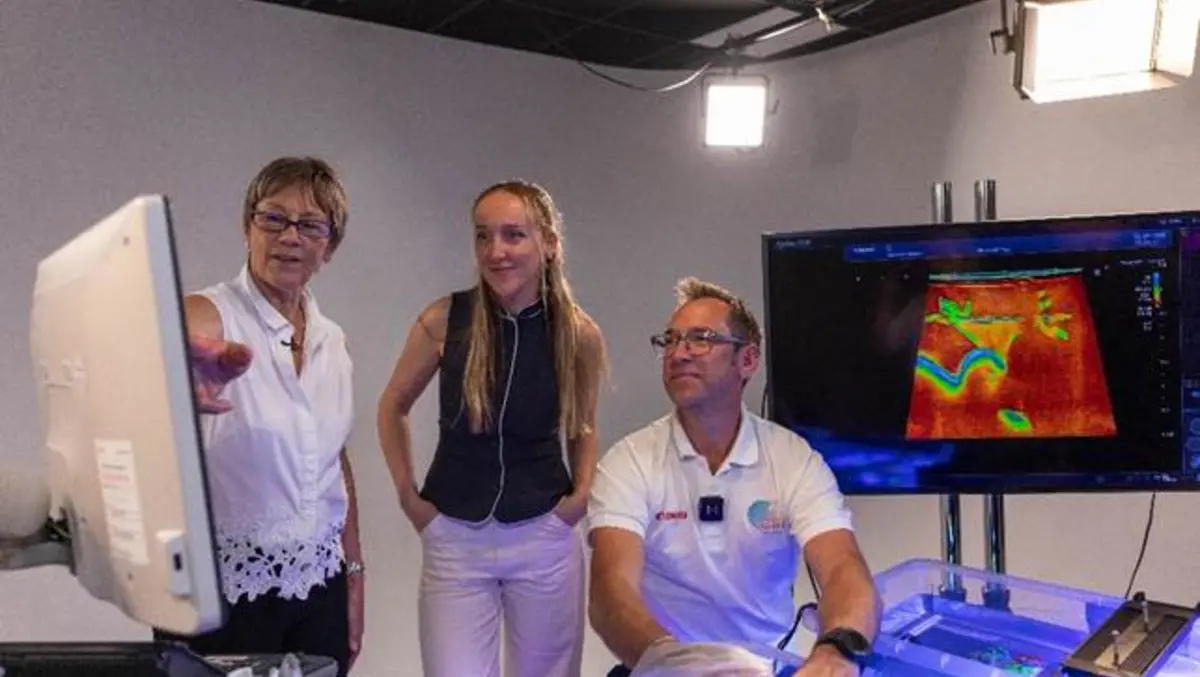
Coral Spawning International and Canon Medical Systems say they have carried out the first ultrasound scan of living coral to identify developing eggs, using medical imaging equipment adapted for underwater use.
The scan was performed on six large polyp stony coral species with different skeletal structures while the corals remained fully submerged. Researchers used Canon's Aplio i700 ultrasound system with high- and ultra-high-frequency probes to examine internal structures in real time without cutting into the animals.
The project marks a departure from the standard approach in coral reproductive research, which often requires scientists to cut open specimens to inspect tissue and check for eggs. Here, the imaging revealed developing eggs and other small internal structures inside living coral.
The ability to inspect living colonies could help researchers judge spawning windows more accurately. That matters because coral reproduction varies widely by species and location, and timing is central to conservation planning, propagation and restoration work.
To test the scan results, the team fragmented one trachyphyllia geoffroyi coral and compared macro photography with the ultrasound images. They said the cross-check confirmed that the structures identified in the scans were eggs.
Dr Jamie Craggs, co-founder of Coral Spawning International, said: "Corals still hold so many secrets, particularly when it comes to the complex processes that drive their reproduction. Being able to look inside a living coral and see these processes unfolding in such remarkable detail is an extraordinary moment. This experiment has given us a new perspective on these animals and, as we continue monitoring them through spawning, we hope to build an increasingly detailed picture of how different coral species reproduce."
The trial builds on a wider collaboration between the coral research group and the imaging company. Alongside ultrasound, the work has used cameras, macro lenses, photomicrography and photogrammetry to document stages including spawning, embryonic development, settlement and growth.
Research method
High-frequency ultrasound offers greater depth with lower resolution, while ultra-high frequency produces a sharper image over a shallower range. By combining both, the team aimed to produce a fuller view of coral anatomy across species with different physical forms.
Large polyp stony corals were chosen for the initial work because their size made them suitable for early ultrasound testing. These corals have hard calcium skeletons covered by fleshy tissue, and their internal reproductive state is difficult to assess without invasive examination.
The ultrasound system used in the study is more commonly deployed in hospitals to examine human organs, blood vessels and pregnancies. For this experiment, the equipment was adapted to scan coral underwater, extending a healthcare imaging tool into marine biology.
Sally Davey, clinical product specialist at Canon Medical Systems UK, said: "This experiment showcased just how powerful ultrasound technology can be. Moreover, that the experiment was successful opens opportunities in fields such as minimally invasive surgery and diagnosis of dermal conditions."
The corals used in the scans will continue to be monitored for six months, with recordings taken when gametes are released. The monitoring is intended to give researchers more data on reproductive cycles in large polyp stony corals and improve estimates of spawning periods.
Conservation focus
Scientists working on coral restoration have increasingly focused on sexual reproduction and selective breeding as reefs face pressure from warming seas and other environmental stresses. Identifying when colonies are close to spawning can help laboratories collect eggs and sperm at the right moment, support breeding programmes and improve the efficiency of restoration projects.
Coral Spawning International specialises in land-based sexual coral reproduction, which seeks to raise corals in controlled settings before they are used in reef repair efforts. More precise, non-invasive checks on reproductive condition could reduce the need to damage valuable specimens during that process.
Peter Bragg, sustainability and government affairs director at Canon EMEA, said: "This experiment demonstrates that imaging innovation has the power to show us what was previously unseen, creating deeper understanding of the world around us. By unlocking this knowledge, we hold a fundamental belief that imaging has the power to transform the world."