


Two UK-based companies are developing technological solutions to make the European Space Agency's Zero Debris Charter achievable by 2030.
The ESA's Zero Debris Technical Booklet outlines a target of attaining a debris-neutral orbital environment within the decade, as space activities and satellite launches increase the likelihood of debris accumulation in Earth's orbits. While the zero debris ambition has been described as necessary and urgent, industry commentators suggest that policy alone will not be sufficient.
Plextek and Aphelion Industries are each developing technologies intended to address different aspects of orbital debris risk management.
Real data in orbit
Plextek has designed compact millimetre-wave radar systems that can detect micro-debris in orbit, which ground-based sensors are unable to observe. The company believes this capability will improve real-time situational awareness for satellite operators and contribute to more accurate validation of debris models.
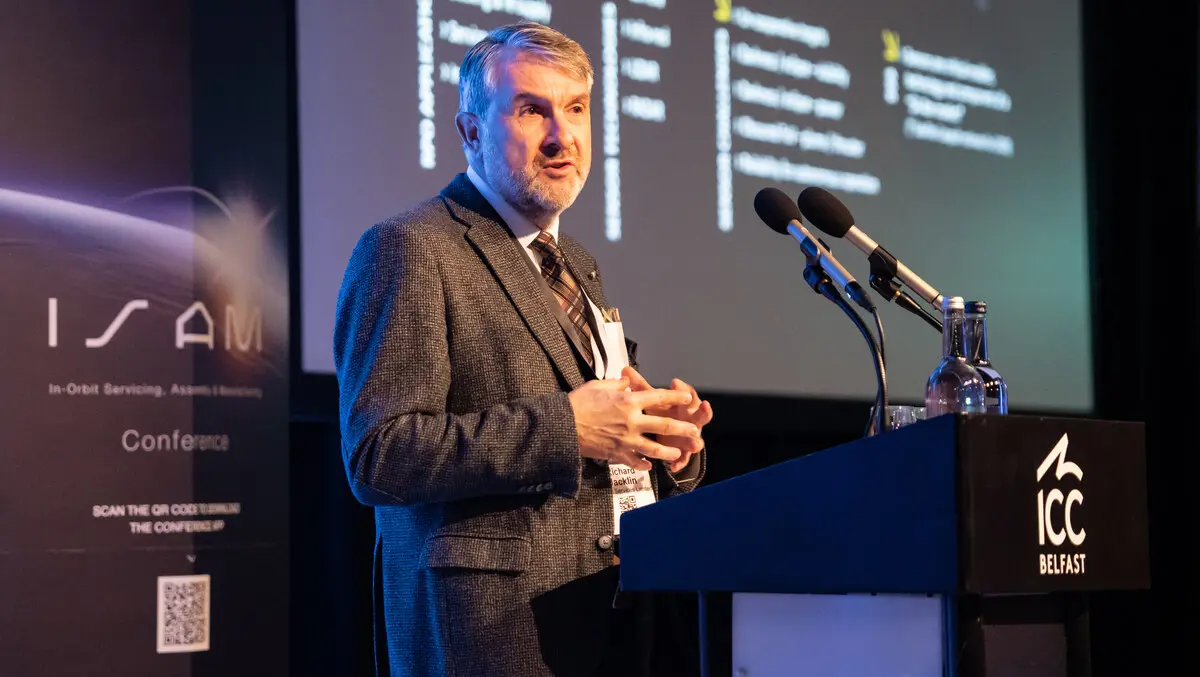
Richard Jacklin, Commercial Lead for Space at Plextek, said,
"The industry still relies too heavily on theoretical models. We need real, in-orbit data to truly understand what's happening above us, and that's exactly what we're building."
The radars are lightweight, use little power, and are configured to provide uninterrupted continuous feedback about the orbital debris environment. According to Plextek, this helps improve collision avoidance for satellites and spacecraft.
Spacecraft shielding
Meanwhile, Aphelion Industries, operating from Scotland, has developed a new spacecraft armour system called TARGE. This system is reportedly capable of protecting satellites from impacts by so-called lethal non-trackable debris (LNT), which includes micrometeoroids and fragments generated by spacecraft fragmentation events.
James Snape, Founder of Aphelion Industries, said,
"Our armour makes collisions survivable and prevents secondary debris. It's lighter, more compact, and designed for the realities of modern satellite missions."
The TARGE armour's characteristics are designed to offer last-line protection for satellites, which, when used in conjunction with early detection solutions such as Plextek's radar technology, provide a layered approach to debris mitigation. Together, these systems enable satellites to both avoid and withstand impacts with small debris particles that are otherwise difficult to detect or shield against.
Towards implementation
Plextek and Aphelion Industries emphasise that while the necessary technological building blocks are increasingly available, widespread adoption will depend on new approaches to funding, broad international cooperation, and the acceptance of dual-use solutions that serve both civilian and defence-oriented customers.
Jacklin added,
"The next 12 to 24 months are critical. Technology exists. What's needed now is commitment, from agencies, governments, and industry, to deploy it at scale."
The ESA's Zero Debris Charter is regarded by many in the space sector as one of the key benchmarks for environmental responsibility in orbit. Both Plextek and Aphelion Industries are among the companies actively developing capabilities that could help address this issue within the timescale set out by the agency.