

PORT raises €14.5m to expand autonomous delivery network
Tue, 10th Nov 2026 (Today)
PORT has raised €14.5 million to expand its autonomous urban logistics network in a round led by EBRD and Balnord.
The London-based company will use the funding to develop its AI Driver software and autonomous delivery vehicles, building on its network of 24 micro-hubs across London, Birmingham and Manchester. The financing, which includes equity and debt, brings total funding raised to date to €29 million.
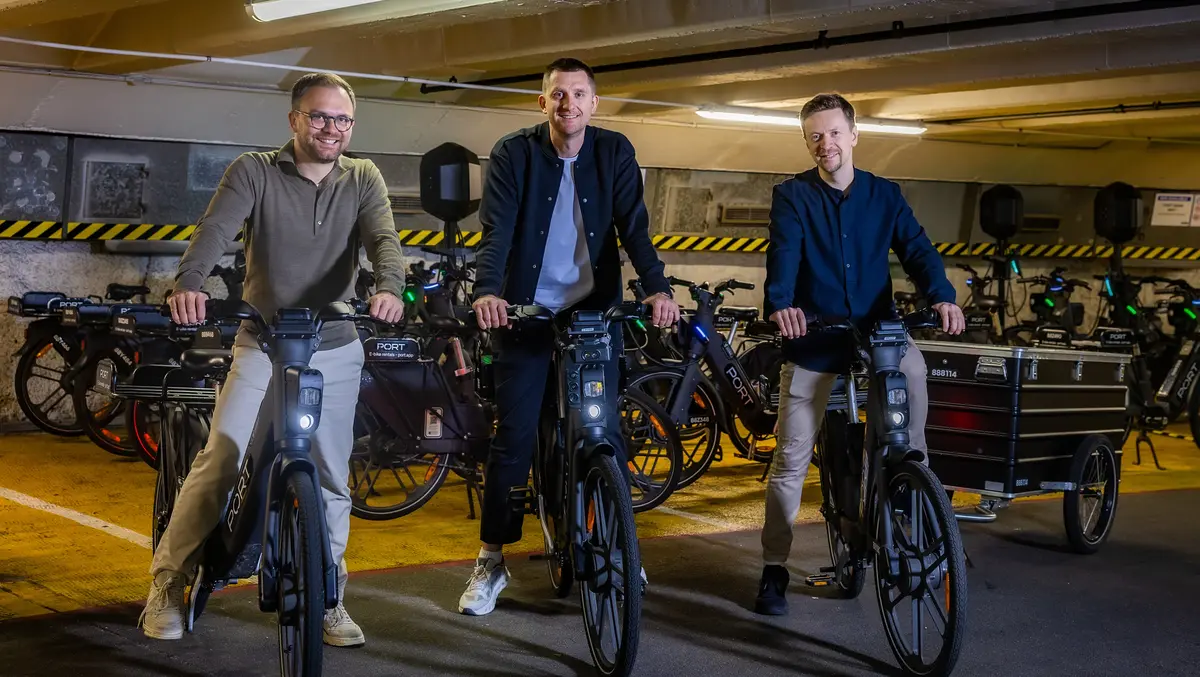
PORT operates a rental e-bike service for couriers and says more than 50,000 riders have registered on its platform. Since 2024, its fleet has covered more than 50 million kilometres, with 3,500 e-bikes operating from hubs in underground car parks, warehouses and railway arches.
It is now using part of that fleet to collect street-level data for its autonomous delivery system. Some bikes have been fitted with NVIDIA-powered cameras and lidar to record conditions on delivery routes, including kerbs, cyclists, traffic and drop-off points.
According to PORT, the data is uploaded automatically when bikes return to a hub using fibre connections at those sites. It then processes the footage to identify scenarios for training the AI Driver it plans to deploy in its robots.
"We believe robotised logistics does not start with the robot; it starts with the infrastructure, operations and data required to put robotics to work in the real world. We have spent years building that foundation. Now, with this investment, we are focused on the physical AI and robotics that will run on top of it," Kamil Suda, Founder and Chief Executive Officer of PORT, said.
The strategy reflects a wider challenge in urban delivery robotics: operators need access to dense urban infrastructure and real-world training data collected close to delivery points. PORT argues that its centrally located hub network solves the storage and charging problem, while its live courier fleet provides data from the streets where future robots would operate.
Hub network
PORT says its 24 hubs account for 52,000 sq ft of logistics space across three UK cities. In London, the network provides 92 per cent coverage within a one-mile radius of the Congestion Charge Zone and 60 per cent coverage within two miles across inner London.
That urban footprint is central to the economics of last-mile automation because delivery vehicles need to be stationed near addresses rather than travel long distances from remote depots. PORT's model uses underused city space to place vehicles, charging points and maintenance facilities close to demand.
Ervin Luga, Head of Venture Capital Investments at EBRD, said: "PORT's impressive, proven commercial operation provides the ideal foundation for the next evolution of autonomous, robotic urban infrastructure. The environmental and economic advantages of driverless delivery are well established, but the missing real-world data layer has, so far, been a prohibitive limitation. PORT is actively building that data and already has the infrastructure in place to make better use of it than anyone."
Royal Mail link
Alongside the funding, PORT is developing its own autonomous delivery vehicles and working with Royal Mail on a new robotic delivery system. It did not disclose commercial terms of the partnership.
Royal Mail already uses PORT's equipment in parcel operations through cargo bikes and trailers. PORT added trailers to its fleet in September 2025, allowing e-bike couriers to handle parcel deliveries, and says its cargo bikes have delivered more than 300,000 parcels so far.
Jack Clarkson, Managing Director of Out-of-Home at Royal Mail, said: "We are always looking for solutions and partners to help elevate our customer proposition, reduce our costs and reach our sustainability goals. The PORT team are providing us with access to frontier technology and expertise that can help us unlock the next evolution of urban logistics. We want to be at the forefront of this last-mile innovation, and look forward to continuing and deepening our partnership."
Expansion plans
PORT was founded in 2020 and now employs 76 people across research and development, product, operations and field teams, including mechanics and operational staff. It is increasing hiring in research and development and AI roles.
The business also plans to expand beyond the UK with a micro-hub in central Paris, its first site outside its home market. Suda said the company sees its logistics infrastructure and training data as the basis for autonomous urban delivery.
"The success of autonomous urban delivery will hinge on access to reliable training data and established urban infrastructure which enables autonomous vehicles to be stored, charged and deployed from locations close to the point of delivery. PORT has spent years building that foundation. Now, we are bringing the infrastructure, physical AI and robotics together into one system," Suda said.