

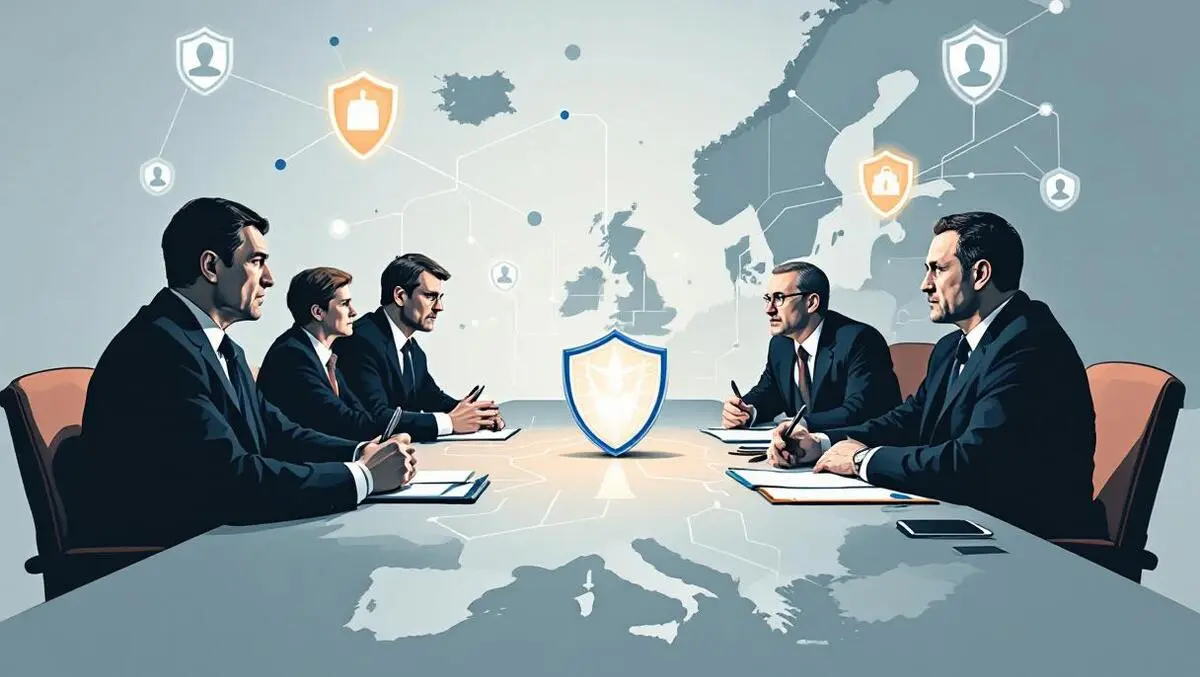
Infosecurity Europe spotlights Ukraine & cyber cooperation
Tue, 24th Mar 2026.webp)
Infosecurity Europe has named former Ukrainian Foreign Minister Dmytro Kuleba as a headline keynote speaker for its 2026 event, as new research from the organiser shows 59% of cybersecurity leaders believe geopolitics is making European cyber collaboration harder.
Kuleba is due to speak on Ukraine's hybrid war and the cyber front line, drawing on his experience in government during Russia's full-scale invasion. The programme will also include sessions on national resilience, cyber conflict and cooperation across Europe.
The research suggests European countries are divided on how well they are working together on cyber security. Among respondents in the UK, France and Denmark, majorities said geopolitical tensions were making cooperation more difficult: 62%, 68% and 69% respectively.
At the same time, the findings point to support for a stronger European role in a major cyber crisis. Some 43% of cybersecurity professionals said the EU should have the power to command and control national cyber defences during a serious cross-border incident, while 34% backed EU control in specific critical sectors. Just 19% opposed such powers, meaning 77% supported some form of EU intervention.
That tension between national control and collective action is emerging as a central issue for security leaders, as cyber threats increasingly overlap with foreign policy and military conflict. The survey also found that 42% of professionals believe their country is doing enough to work with European partners, while 43% disagreed.
Concern was sharper in some of the region's larger economies. In the UK, 53% said not enough was being done to cooperate with European partners; in Germany, the figure rose to 57%.
Even so, respondents still saw practical benefits in cross-border work. A third identified threat intelligence sharing as the biggest advantage of closer cooperation, while 27% pointed to better incident response coordination.
War lessons
Kuleba served as Ukraine's Foreign Minister from 2020 to 2024 and became one of the country's most visible international representatives during the war. His address is expected to focus on how cyberattacks, telecommunications disruption and disinformation were used alongside conventional military action.
The choice of speaker reflects how security conferences are increasingly drawing in senior political figures as cyber risk becomes more closely tied to state conflict and national resilience. For businesses, that shift has widened the discussion beyond technical defence to questions of continuity, supply chains, public infrastructure and the role of government.
Infosecurity Europe is also bringing in Ciaran Martin, Professor and Director of the CISO Network at SANS Institute, to chair the morning keynote sessions. Martin was the founding Chief Executive of the UK's National Cyber Security Centre and led the response to more than 2,000 nationally significant cyber-attacks while in government.
"The world is so unstable right now. What that means for cyberspace and cybersecurity leaders isn't yet clear and won't be for some time. So how do we prepare for a whole range of difficult possibilities, and protect ourselves as best we can? Infosecurity Europe is critical for such discussions and insights," Martin said.
National outlook
A senior representative from the National Cyber Security Centre is also scheduled to deliver a keynote on the UK cyber threat landscape and national priorities. The session is expected to cover the shifting threat picture and the implications for government, industry and critical national infrastructure.
The programme shows how organisers are framing cyber security less as a standalone IT issue and more as a strategic question tied to national policy and economic stability. That approach also reflects changes in boardroom thinking, where cyber incidents are increasingly treated as risks to operations, reputation and regulatory compliance rather than isolated technical failures.
The underlying research was conducted among 396 cyber security professionals in the UK, France, Germany, Holland, Belgium and Denmark. While the sample is relatively modest, it offers a snapshot of opinion in a European market where political fragmentation and regulatory divergence continue to shape security planning.
For companies operating across borders, the figures underline a difficult balancing act. Many security teams appear to want deeper cooperation and faster intelligence sharing, but they are working in an environment where geopolitical strain is making trust and coordination harder to sustain.
That dynamic has become more pronounced as cyberattacks are used not only for espionage or financial gain, but also to disrupt public services, undermine confidence and test alliances. The prominence of Ukraine in the programme suggests that, for many security professionals, the lessons of war are now central to discussions about business resilience in Europe.
The strongest signal from the survey may be that support for cooperation remains broad even as confidence in current arrangements weakens, with 33% of respondents naming threat intelligence sharing as the single biggest benefit of closer cross-border work.