

EUMETSAT satellite completes Europe's weather network
Thu, 3rd Sep 2026.webp)
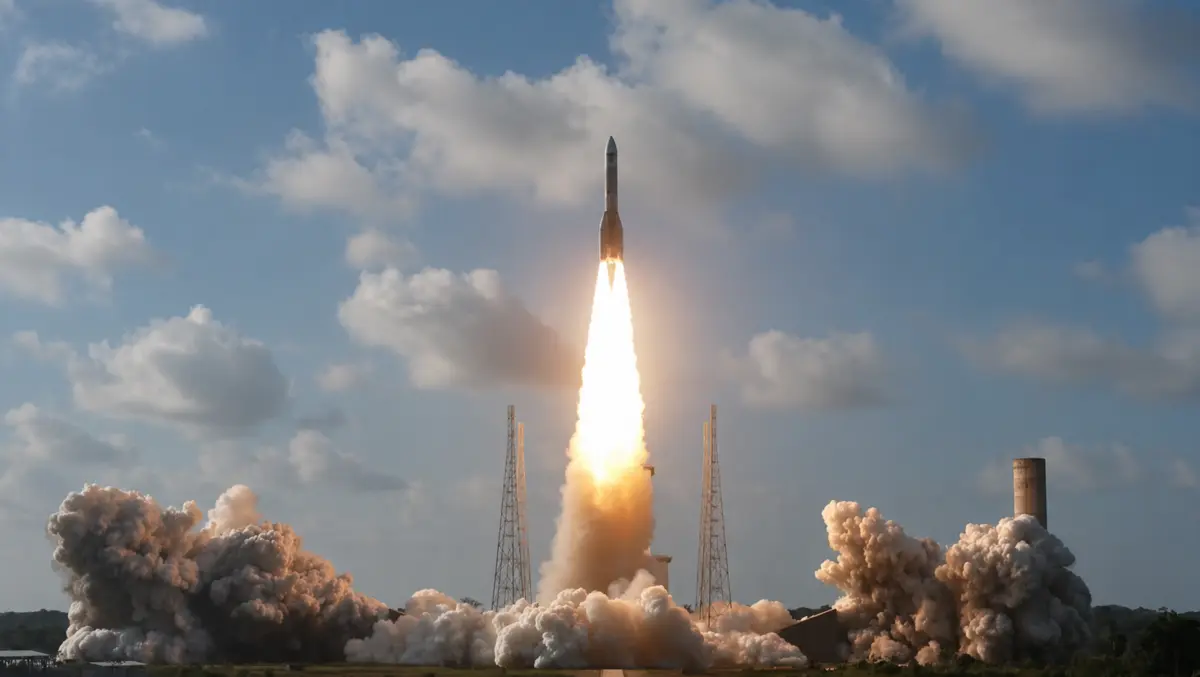
EUMETSAT says the Meteosat Third Generation Imager 2 satellite has reached orbit after launch, completing the first full Meteosat Third Generation constellation in orbit.
The satellite launched on an Ariane 6 rocket from Europe's spaceport in French Guiana and has already cleared its first post-launch checks. Teams established communication with the spacecraft and confirmed deployment of its solar panels.
MTG-I2 will now enter its Launch and Early Operations Phase, during which controllers will move it to a higher orbit about 36,000km above Earth. A longer period of calibration and validation will follow before the spacecraft enters service.
The new satellite is the second imaging spacecraft in the Meteosat Third Generation system. It joins Meteosat-12, launched in 2022, and MTG-S1, a sounder satellite launched in 2025 that is expected to become operational before the end of 2026.
With the addition of MTG-I2, the constellation is intended to give forecasters a faster flow of weather imagery over Europe. The satellite will provide observations for EUMETSAT's rapid scan service every 2.5 minutes over Europe and North Africa, while Meteosat-12 continues to provide a 10-minute full-disc scan service.
That update rate is central to the system's role in short-term forecasting and severe weather monitoring. More frequent images are designed to help meteorological services track fast-moving developments such as storms, hail, strong winds and flash floods with less delay between scans.
MTG-I2 also carries dedicated fire-detection channels, intended to help identify active fires and support closer monitoring of wildfire spread and smoke.
Faster imagery
According to EUMETSAT, the Flexible Combined Imager on MTG-I2 will deliver observations at twice the frequency of the rapid-scan service from the previous Meteosat generation. The instrument also includes four high-resolution channels that can provide detail down to 500 metres.
Those specifications reflect growing demand for faster, more detailed observations as weather patterns become harder to track in real time. Across Europe, meteorological agencies have faced repeated pressure during recent periods of extreme heat and wildfire risk, as well as severe convective storms that can intensify quickly.
The Meteosat Third Generation programme is one of Europe's main civil weather satellite projects, run through cooperation between EUMETSAT, the European Space Agency and industrial partners. EUMETSAT operates the satellite system and distributes data to its member states and other users.
From its headquarters in Darmstadt, the organisation manages weather and climate observations from geostationary and polar-orbiting satellites. Its data is used by national weather services for forecasting, monitoring and emergency response across a range of sectors.
Phil Evans described the launch as a step towards completing the wider system.
"With MTG-I2, we are unlocking the complete capabilities of this extraordinary European system. In particular, MTG-I2 will enable much more frequent observations over Europe, giving forecasters a more continuous view of rapidly developing weather and helping national meteorological services provide timely and reliable warnings.
"The Meteosat Third Generation system is the most sophisticated and innovative geostationary meteorological system in the world, and a major European achievement. It is already delivering huge benefits to forecasters and users. At its heart is EUMETSAT, working with ESA and European industry to deliver this new generation of weather satellites and the services built around them. EUMETSAT will operate and maintain the full system throughout its lifetime, delivering reliable data and services to its Member States and users worldwide," said Phil Evans, Director-General of EUMETSAT.
The next phase of the mission will test the spacecraft in orbit and prepare it for routine operations. Once commissioning is complete, MTG-I2 is expected to become a key source of near real-time imagery for European forecasters dealing with rapidly changing weather and wildfire conditions.
The spacecraft is operating as expected after launch.