

Cursor 3 retools coding workspace around AI agents
Tue, 7th Apr 2026
Cursor has launched Cursor 3, a new software development workspace built around AI agents. The release redesigns the company's product around agent-based coding.
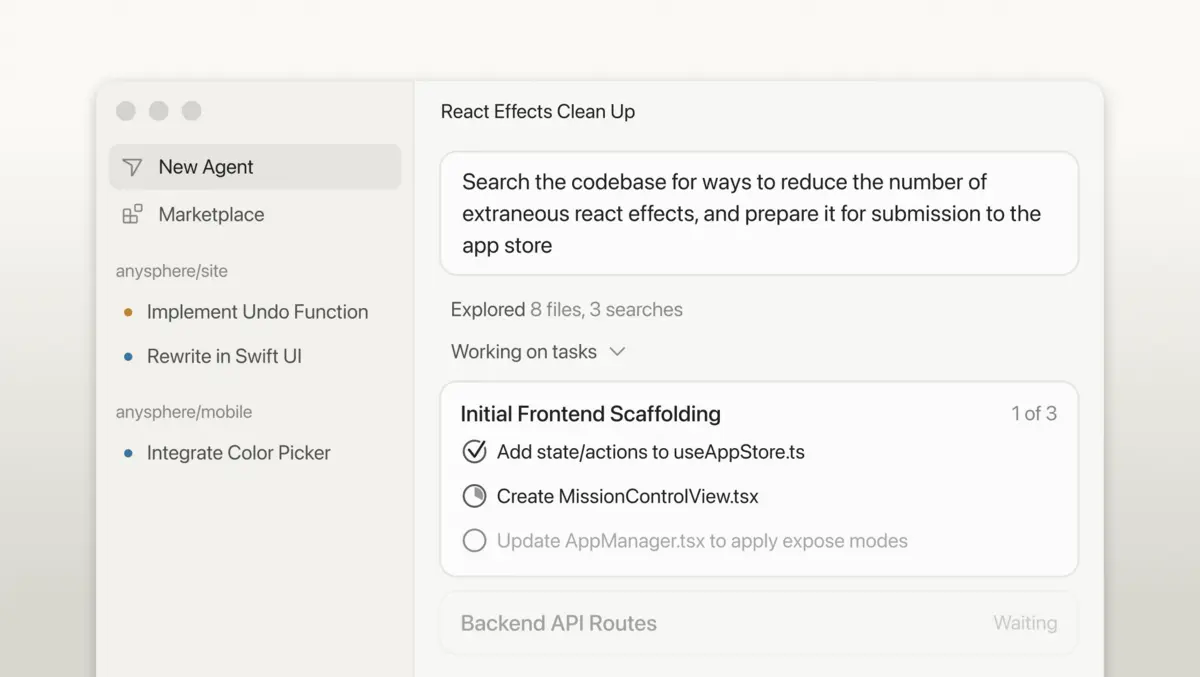
The update introduces a new interface built from scratch, rather than layered on top of an existing product, and focuses on managing multiple agents across repositories and environments. The goal is to reduce the need for engineers to track separate conversations or switch between terminals, tools and windows.
New interface
The workspace is multi-repository and multi-workspace by default, allowing users and agents to work across different codebases in one place. Local and cloud agents appear in a single sidebar, including agents started from mobile, web, desktop, Slack, GitHub and Linear.
The structure reflects a broader shift in software development tools towards AI systems that handle more of the coding work. Over the past year, developers have moved from manually editing files towards using agents that write much of their code, and Cursor is now positioning its product around that workflow.
Among the changes is a new handoff process between local and cloud agents. Users can move an agent session from the cloud to a local machine to make edits and test software on their own desktop, or transfer a local session to the cloud so it can continue running after a laptop is closed or while they move on to another task.
Cloud agents can also produce demos and screenshots of their work for verification inside the desktop application. The same environment includes access to the company's browser-based agents service, integrated into the desktop workflow.
Review and merge
The release also adds a new diffs view for reviewing and editing code changes. From that interface, users can stage and commit changes and manage pull requests, extending the product beyond code generation into more of the development and review process.
Users can still return to the Cursor IDE when needed. Cursor 3 combines parts of the IDE with newer agent-focused features in a single interface.
Several existing product elements remain part of the new workspace. Users can inspect files directly when they need to understand code in more detail, and the editor supports go-to-definition through language server protocols. The software also includes an integrated browser that can open and navigate local websites.
Plugin access
Another part of the update is access to plugins through the Cursor Marketplace. Users can browse plugins that extend agents with MCPs, skills and subagents, and can also set up private team marketplaces.
Cursor chose early on to fork VS Code rather than build a conventional extension so it could control the product surface more directly. With Cursor 3, it has taken that approach further by rebuilding the interface around agents rather than a traditional editor-first model.
The announcement highlights how AI coding companies are trying to define the next stage of developer tools as they compete on interface design as well as model quality. Rather than focusing only on autocomplete or chat, vendors are increasingly trying to manage longer-running workflows across repositories, cloud systems and collaboration tools.
Cursor still plans to invest in its IDE alongside the new workspace, while building tools for more autonomous agents and broader collaboration across teams. It said the latest product is intended to provide the core model, product and runtime needed for that shift.
"This won't be the last time the interface for building software changes. More powerful coding models will unlock new interaction patterns. We are excited to continue to build, simplify, and transform Cursor to be the best way to code with AI," said Cursor.