

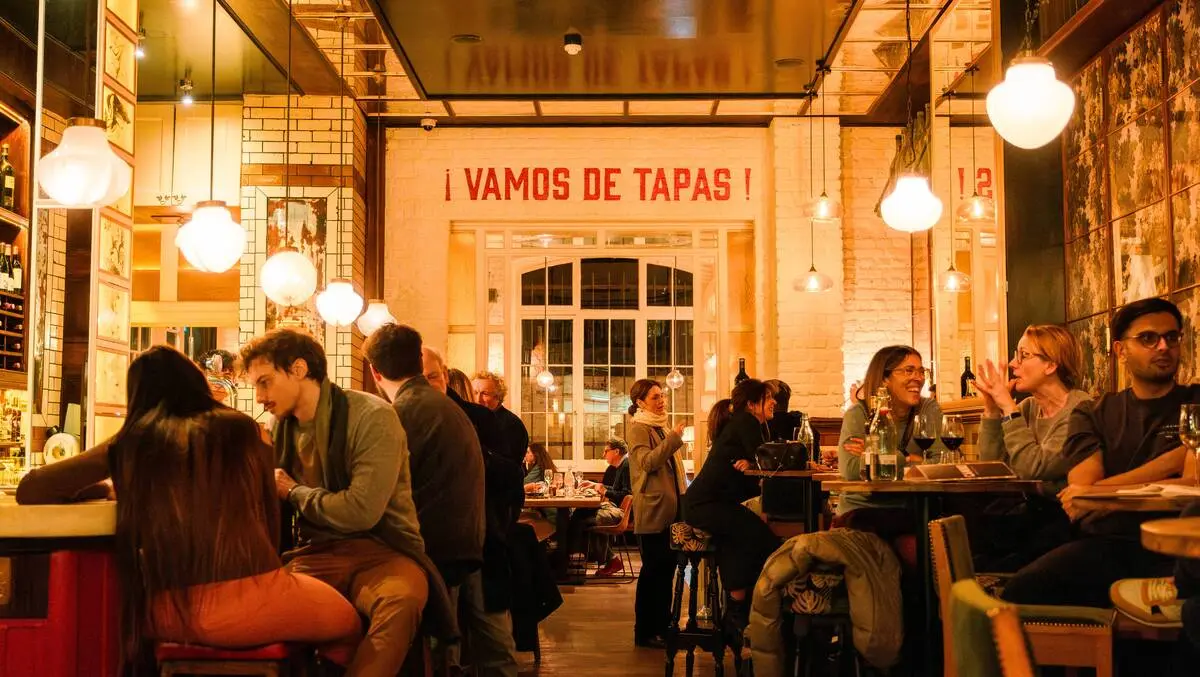
Camino cuts labour costs with Tenzo platform in London
Fri, 24th Jul 2026%201.webp)
Camino has cut labour costs and cost of goods sold across its five London restaurants using Tenzo's data platform, generating savings worth hundreds of thousands of pounds.
Labour costs fell to 31% from a projected 36%, while cost of goods sold dropped to 25% from 28% after Tenzo was introduced as a central system for tracking sales, staffing, stock and guest feedback.
The figures offer a detailed look at how a mid-sized hospitality group is trying to protect margins as operators face higher wage, food and overhead costs. Camino runs five sites in London and also operates Bar Rioja alongside its King's Cross restaurant.
Management rolled out the platform across the estate in April 2025 as a shared reporting tool for general managers, head office staff, owners and the kitchen leadership team. It brought together information that had previously sat in separate systems, including point-of-sale data, labour scheduling, inventory and customer reviews.
Camino wanted a clearer view of day-to-day performance so managers could respond more quickly to changes in trading, staffing needs and stock usage. It also wanted reporting that was easier to use than relying on point-of-sale data alone.
Margin pressure
That focus reflects a wider challenge in hospitality, where operators are under pressure to preserve service standards while controlling labour spending and food costs. Cutting staff numbers too far can hurt guest experience, while price rises alone may not be enough to offset rising costs.
Guest satisfaction scores were maintained or improved while the cost reductions were delivered. Camino also tied use of the platform to its general manager bonus scheme, linking operational performance more directly to day-to-day decision-making at site level.
The reporting tools also reduced time spent on manual reporting. For multi-site operators, that can matter as much as direct cost savings, as finance and operations teams often spend significant time gathering figures from separate sources before they can act on them.
In the kitchen, Camino used the system to assess dish performance, ingredient prices and margin by menu item. That analysis helped the business weigh a common trade-off for restaurant groups between dishes that sell well and those that deliver stronger returns.
Menu changes
One example centred on an eight-hour braised ox cheek dish that had performed strongly during winter. Camino wanted to adapt that success into a summer offer that would still attract customers while using the ingredient more profitably.
Using menu engineering data, Camino developed the Bikini, a Spanish-style toasted sandwich that used braised beef cheek in smaller quantities. The dish became one of the group's most popular and highest-margin menu items across the estate.
That kind of menu adjustment can have an outsized effect on profitability in hospitality, where ingredient inflation and waste can quickly erode margins. Small changes in portioning, product mix and menu design can materially alter food costs when applied across several busy sites.
The case also points to a broader shift in how restaurant operators are using software. Rather than treating reporting tools as back-office systems used mainly by finance teams, groups are increasingly using data to guide routine decisions by site managers and chefs.
For Tenzo, the Camino results provide a customer example in a market where hospitality technology suppliers are competing on their ability to combine operational and financial data in one place. Founded in 2016, the company focuses on restaurants and integrates information from point-of-sale systems, labour scheduling, reservations, inventory and guest feedback.
Camino, founded in 2007, has built its business around Spanish tapas restaurants in London. Its sites are in King's Cross, Monument, Shoreditch, Farringdon and Covent Garden, and the group's executive group chef is Nacho del Campo.
Financial discipline has become more visible in the casual dining sector as operators face persistent cost inflation and uneven consumer demand. For management teams, the challenge is often not simply gathering data, but turning it into changes in scheduling, purchasing and menu planning quickly enough to affect weekly results.
Camino finance director Tyrone Delaney outlined the impact in direct terms. "Tenzo is helping a lot with driving better numbers. COGS has gone down from 28% of revenue to 25%. Our expectation for labour was 36%. But instead it was actually 31%. Tenzo has delivered clear ROI for Camino, improving labour efficiency, strengthening margins and saving management time. It has definitely paid for itself."