

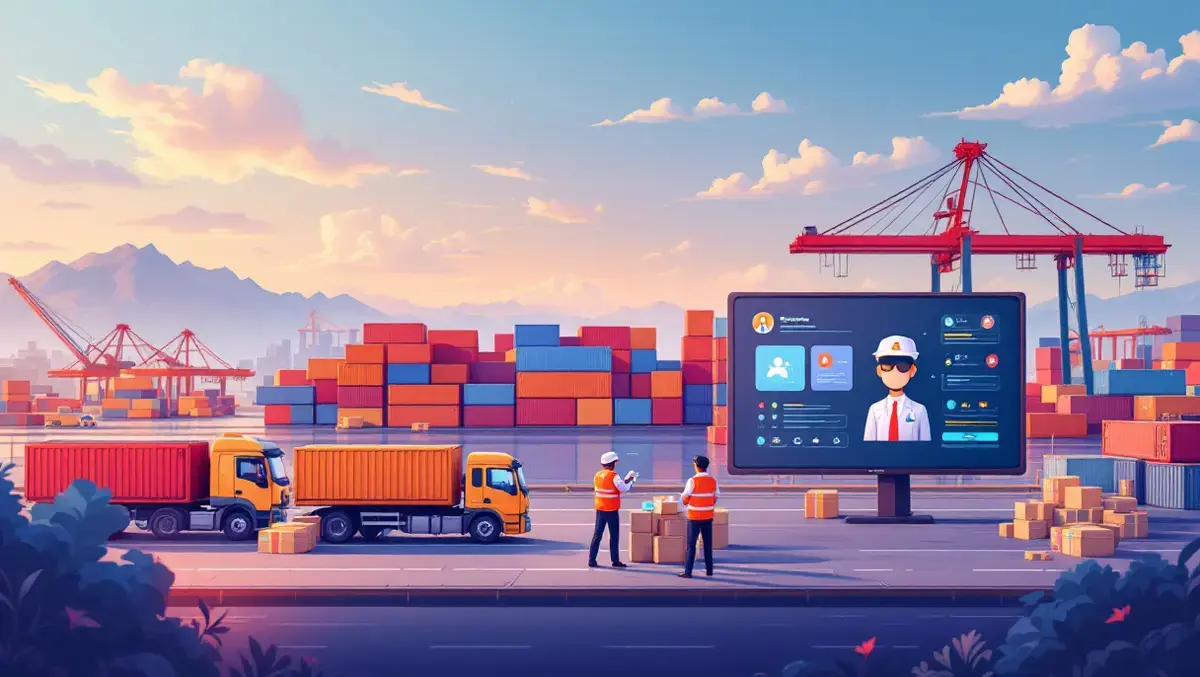
Cainiao rolls out AI customs agent at 25 China ports
Fri, 27th Nov 2026 (Today)
Cainiao has deployed its Customs AI Agent at more than 25 ports in China as cross-border parcel volumes rise during the year-end shopping peak.
The system is used for customs-related tasks including shipment tracking, risk identification, missing-document checks and exception escalation. It can interpret messages, assess clearance status, generate tasks and trigger system actions when issues such as detention alerts or compliance risks arise.
For logistics operators, customs processing has become a pressure point as shipment volumes increase across ports and international markets. Delays in declarations or document handling can disrupt sailing schedules, departure plans and wider fulfilment operations.
Cainiao says the AI agent provides round-the-clock monitoring of declarations and can respond in real time when exceptions emerge. The company says this cuts work that previously took minutes to a process completed in seconds, giving operations teams earlier notice of problems and more time to act.
Broader AI Use
The customs system is part of a wider push by Cainiao to apply artificial intelligence across its cross-border logistics network. Before declarations are filed, the company uses AI tools to screen for restricted or prohibited goods and identify compliance risks in shipment information.
After declaration, data models compare declared information with shipment records to detect anomalies and prompt follow-up action. Cainiao also uses a Customs Assistant that combines large language models with its own algorithms to improve product classification, identify tax discrepancies and support customs service work.
Explaining why customs has become a focus for automation, Xiong Wei, Chief Executive Officer of Cainiao Global, said: "Cross-border logistics is challenging because it requires both efficiency and certainty in a complex environment spanning multiple ports, regulations and time zones. Customs clearance sits at the core of this chain, handling a large volume of repetitive but highly precise work, which makes it an ideal area for AI to create value. As customs operations become increasingly AI-driven, Cainiao aims to further improve the efficiency, stability and resilience of the global cross-border fulfillment system, delivering a more reliable service experience for our customers."
Peak Pressure
Cainiao is also using AI across its fulfilment network during peak shopping periods. The company monitors shipment volumes, air capacity, flight availability and last-mile handling in real time so teams can identify bottlenecks and reallocate flights, vehicles and labour when congestion builds.
It is also applying AI to anomaly detection, with systems designed to flag risks such as cargo delays and equipment failures as they arise. Those incidents are then assessed and prioritised through predefined rules and risk models.
In warehouse operations, Cainiao uses AI to analyse historical orders, real-time sales data and regional demand signals to forecast volume spikes and storage gaps. The company says this has helped its overseas warehouses in Germany, Spain, France, Poland, Australia and the UK prepare extra capacity ahead of major promotions.
Its wave-planning algorithm now automates the generation of more than 90% of picking tasks, which Cainiao says is above the industry average.
UK Volumes
Cainiao linked its AI investment to growth in its time-definite logistics operations. During the Black Friday shopping period, average daily order volume on its UK three-day delivery route rose by more than 300% in November compared with October, according to the company.
Cainiao says it maintained delivery performance despite pressure on air capacity, slower customs processing and last-mile congestion. It has also expanded its global three-day delivery service to additional regions.
The customs rollout is intended to improve speed, accuracy and continuity in one of the most sensitive parts of cross-border shipping, where small processing delays can quickly affect the wider movement of goods.