

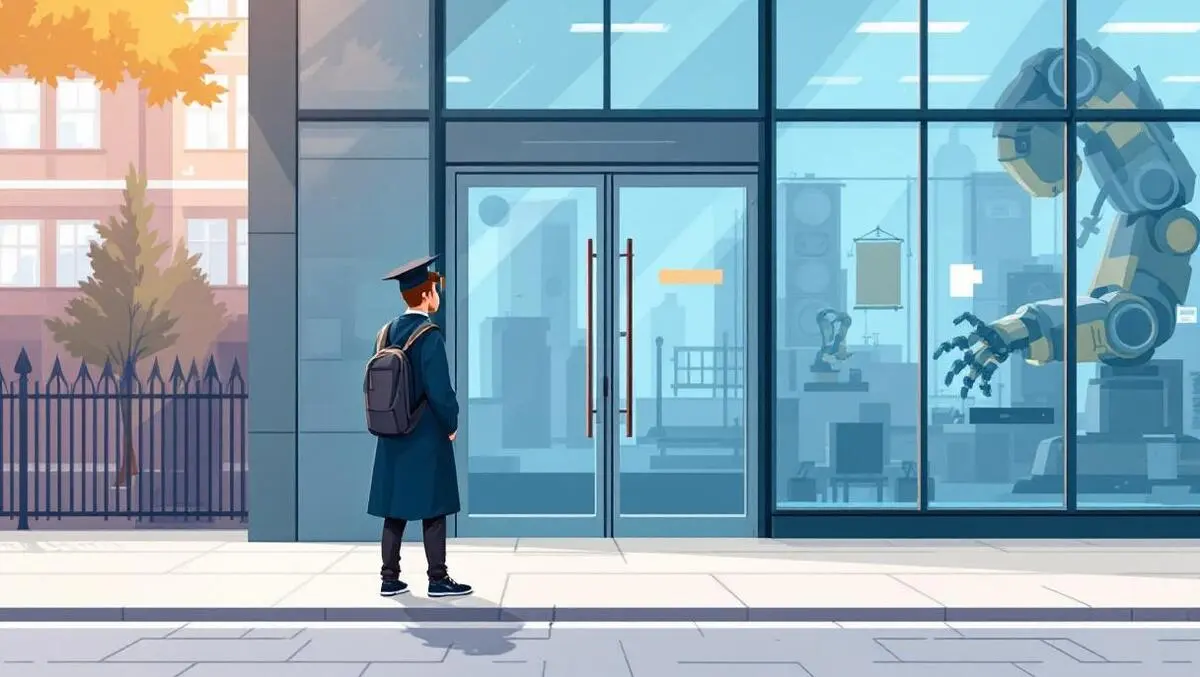

The number of new entry-level jobs in the UK has experienced a marked decrease following the introduction of ChatGPT, with particular impact on the technology sector and new graduates.
Recent survey data from Adzuna reveals that vacancies for graduate jobs, apprenticeships, internships, and junior roles not requiring a degree have declined by 32% since the launch of ChatGPT. This overall reduction in entry-level positions approaches one third in the same period.
Challenging landscape
Hans De Visser, Chief Technology Officer at Mendix, a Siemens business, commented on the situation, highlighting significant changes to the graduate recruitment market. De Visser stated,
"The graduate job market is undergoing seismic change, particularly in tech. The promise of a good job, following a good degree from a respectable university, once felt guaranteed, and today, it is anything but. A heady cocktail of hiring freezes, combined with the rapid rise of AI adoption and employer cost-cutting, has made it far tougher for recent graduates to get a foot on a career ladder.
This is especially true in the UK, where entry-level opportunities have been hit especially hard. According to Adzuna, vacancies for graduate jobs, apprenticeships, internships, and junior roles that don't require a degree have fallen by 32% since the launch of ChatGPT in November. Overall, the number of new entry-level positions in the UK has declined by nearly a third over the same period.
Junior developers are feeling the sting acutely. Entry-level roles are dwindling, and those that remain demand above and beyond traditional entry-level skills. In the six months to March 2025, just 100 permanent junior developer roles were advertised, down from 312 the year before. At the same time, expectations have soared. New grads are increasingly expected to arrive with skills in AI, automation, GenAI, and low-code platforms. In short, technologies that many degree programmes are only starting to incorporate.
The result is a growing disconnect between academic preparation and industry demand, pushing graduates to take ownership of their learning journeys earlier than ever. Lifelong learning is no longer optional; it's now the foundation for staying relevant in a tech career. Being a junior developer today isn't just about writing code - it's about being adaptive, cross-functional, and ready to work with rapidly evolving tools from day one.
With traditional pathways narrowing, many are rethinking how they enter and grow in the industry. That might mean pursuing alternative routes like bootcamps, freelance work, or cross-disciplinary roles to just gain experience. It's a difficult environment, but also one that rewards those who stay curious, keep learning, and move fast with the changes."
Adzuna's recent data supports these concerns, showing a sharp contraction in junior developer postings. The reduction from 312 to just 100 permanent junior roles over a recent six-month period illustrates the scale of the shift confronting new entrants to technology careers.
Industry expectations
According to De Visser, the skill set required for entry into technology roles has escalated. New graduates are not only required to demonstrate proficiency in programming, but also to show a working knowledge of new areas such as artificial intelligence, automation, generative AI, and low-code platforms. Many degree programmes have only recently begun offering modules in these newer technologies, risking a lag between academic preparation and industry requirements.
The changes extend beyond undergraduate courses. De Visser asserts that the dynamics of employment are pushing young professionals towards a model of continuous upskilling and learning throughout their careers, as a means to adapt to the evolving demands of the digital workforce.
Alternative routes
De Visser also points out a growing trend of graduates and career-starters seeking alternative routes into the sector. With traditional graduate pathways narrowing, options such as technology bootcamps, short-term contracts, freelancing, and cross-disciplinary experiences are increasingly used as means to gain vital work experience and develop up-to-date skills.
The rapid adoption of AI tools and cost-reduction measures by employers has created a highly competitive hiring environment, prompting both industry and educational providers to adapt to a shifting landscape in early careers recruitment.