

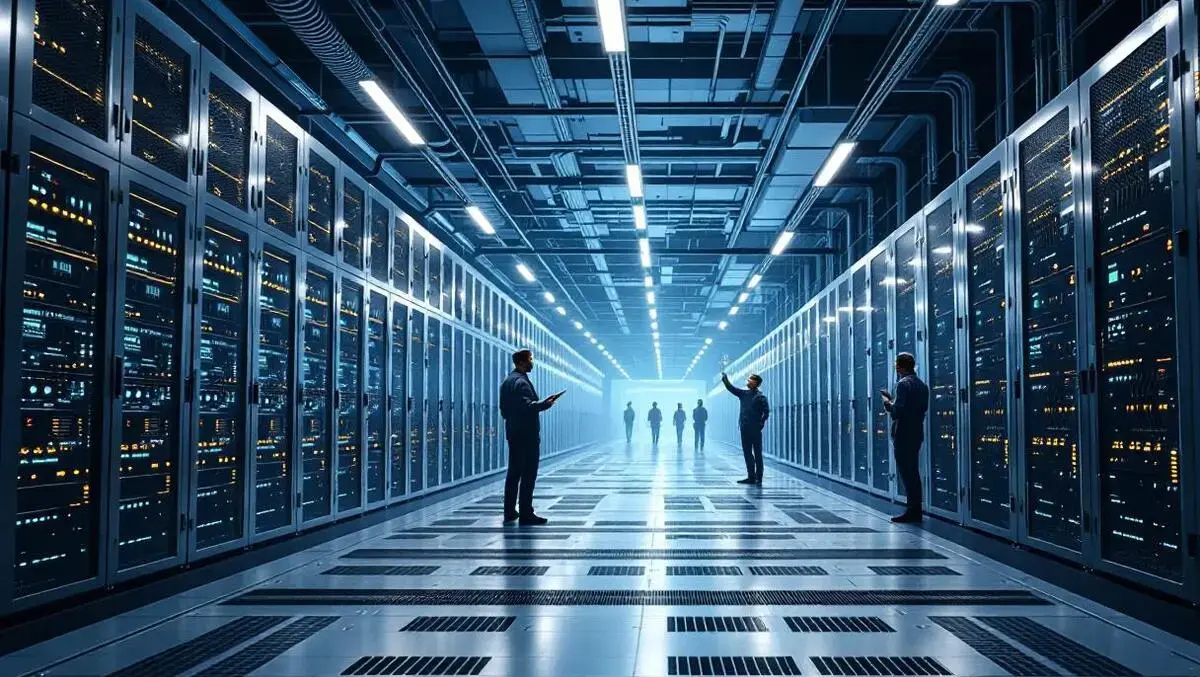

Siemens has launched a portfolio of direct current protection and switching products aimed at industrial sites, data centres and battery storage systems.
The range includes the SENTRON 3QD2 semiconductor circuit breaker and the SIRIUS 3RF5 solid-state switching device, both designed for low-voltage power distribution and industrial switching in direct current systems.
The products can be integrated into Siemens' SIVACON S8 low-voltage switchboard and SIVACON 8PS busbar trunking systems. Intended applications include data centres, manufacturing plants, battery storage systems and renewable energy integration.
DC Shift
The launch reflects growing industry interest in direct current systems as operators look to reduce losses caused by repeated conversion between direct current and alternating current. Solar generation and battery storage already produce or store electricity in direct current, making DC architectures attractive where that electricity can be used with fewer conversion steps.
One of the portfolio's main features is fault-interruption speed. The SENTRON 3QD2 uses semiconductor technology and protection algorithms to interrupt short circuits in the microsecond range, up to 1,000 times faster than conventional systems, according to Siemens.
That speed matters in DC grids, where faults can escalate quickly and sensitive equipment may need faster isolation than traditional approaches can provide. The device combines protection, switching, monitoring and energy management functions in a single unit.
Siemens also says the circuit breaker has no mechanical wear parts, eliminating the maintenance demands associated with conventional mechanical switching devices. That could make it relevant for operators of critical infrastructure where downtime is costly, including large-scale computing sites and industrial plants.
“With the consistent development of our pioneering semiconductor switching technology, we enable a new level of electrical safety also for the DC era,” said Andreas Matthé, Chief Executive Officer of Electrical Products, Siemens.
The second product, the SIRIUS 3RF5, is a solid-state switching device for DC applications. It is designed for high-frequency switching of resistive loads and is intended to improve plant efficiency and availability by reducing wear.
Efficiency Claims
Beyond the individual devices, Siemens linked the portfolio to broader claims about the economics of direct current systems. In one manufacturing example involving robots, the company said using DC technology together with energy recuperation and storage can reduce peak power demand by up to 80 per cent.
It also said DC systems can eliminate the need for reactive power compensation and reduce copper use in cabling or busbars. According to Siemens, that could cut material requirements by up to 50 per cent.
Those figures matter for industrial operators under growing pressure to lower energy costs and reduce material use in new facilities. They also come as data centre operators examine electrical architectures that can support higher power densities, particularly in facilities built for artificial intelligence workloads.
Siemens has been expanding its position in direct current infrastructure through research and industry initiatives including the Open Direct Current Alliance and Current/OS. The latest launch suggests the company sees a commercial opening as DC systems move from pilot projects towards wider deployment in selected industrial and infrastructure settings.
The business is part of Siemens Smart Infrastructure, which had about 79,400 employees worldwide at the end of September 2025. Across the wider group, Siemens reported revenue of €78.9 billion and net income of €10.4 billion in fiscal 2025, with around 318,000 employees worldwide in continuing operations.
“Our new DC portfolio equips customers with innovative solutions that not only enhance energy efficiency but also enable them to build a more resilient, future-ready infrastructure. This is a crucial contribution to the decarbonization of our industries and a testament to our commitment to creating technologies with purpose,” said Matthé.