

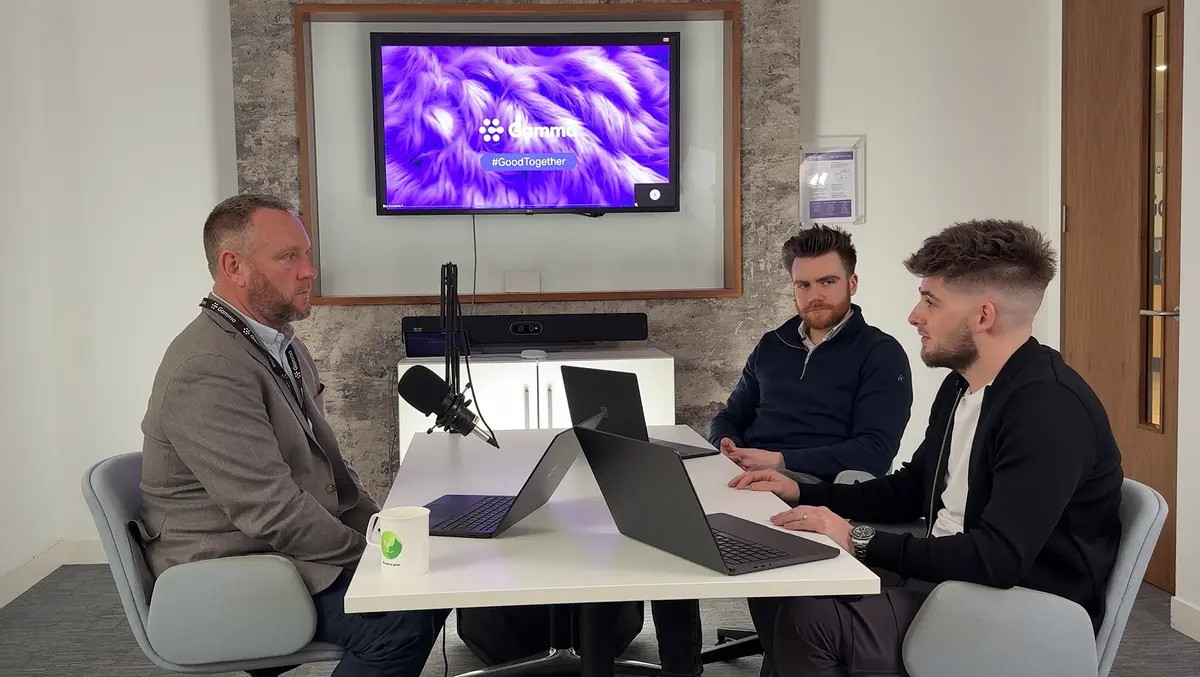

When "good enough" comms stops being good enough
UK organisations face forced change in voice and collaboration systems. The withdrawal of support for older services comes alongside broader operational pressure. In the NHS, telephony remains central to day-to-day access for patients and staff. Sheffield Teaching Hospitals has faced the same mix of legacy dependencies, cost pressure, and risk management as other large estates. The shift away from older networks also raises questions about resilience, ownership, and how much control customers really gain when they change supplier.
External events often drive action. IT and telecoms teams respond to end-of-life notices and service withdrawals, as well as operational incidents and near misses-some reported publicly.
Tom Boyle, Head of Telecoms at Sheffield Teaching Hospitals, said: "For us, it's usually something external-mainly the withdrawal of support and service cessation. Sometimes it's a near miss or an incident in the press involving communications, and we have to react. Most things these days are reactive."
The most widely discussed mass change in UK telecoms remains the retirement of the public switched telephone network (PSTN). Organisations have known it was coming, but the work has not always been straightforward. Large migrations tend to cover office workers and contact centres first, leaving many edge cases behind.
Jack Carr, Team Leader - Solutions Consultant at Gamma, said: "It's the big copper elephant in the room. We've known the dates for some time, even if they've moved. It's probably the clearest example of a mass event forcing change across telecoms. There's been a significant effort to move off legacy infrastructure, but nobody would claim every customer is fully independent of the PSTN. We've seen big migrations of the 'low-hanging fruit'-knowledge workers and contact-centre agents-but fringe use cases still rely on it: lift phones, alarms, entry systems, car park barriers. We can't assume they'll just keep working; they still need care and attention."
In hospitals, those fringe systems can include unexpected dependencies on older lines. Boyle said the surprises increase risk and operational anxiety, and he questioned how prepared the wider health service is.
"It's those nuanced cases that keep us up at night. Moving from ISDN to SIP, or to another cloud offering, is fairly straightforward. It's the bizarre ones. In Sheffield, we found equipment connected to the helipad for weather signalling that we didn't know relied on ISDN. In healthcare, it worries me that organisations don't realise the operational impact that's coming-especially with no national comms plan. Patients aren't aware either, and the main way to reach an NHS provider is still by telephone, usually a landline. There's risk either way, and the NHS needs to pay more operational attention to this."
For Sheffield Teaching Hospitals, the immediate trigger came from a different shock. The pandemic changed call volumes and cost patterns quickly. Boyle described a tariff model that charged per call, making the increase hard to absorb. A long-considered plan then became an active project.
"COVID was the biggest trigger. We were making and taking far more calls, and because we were charged per call, we were suddenly spending a fortune. It wasn't sustainable. We'd known for a long time we needed to move to SIP, but that was the moment it became unavoidable. We knew the COVID funding wouldn't last forever, so we had to act. That's when we started conversations about what it would look like, how it would work, and the cost. People-especially in large organisations-often don't realise how much they can save. It's rare to run a project with new technology that also costs less, but that was the driver for us." Boyle stated.
Carr said the urgency and perceived risk of a change programme depends on whether the trigger feels negative or positive. He also noted that, for most customers, major platform changes are infrequent-so familiarity with existing systems shapes stakeholder concerns.
Carr said: "It comes back to the trigger and how far out you are. Even with 'cold hard technology', it's still about people. Change driven by a negative event-PSTN switch-off, end-of-support, repeated outages-creates pressure: do this or bad things will happen. That raises the stakes and makes people nervous. Even when change is driven by a positive outcome, there can still be hesitation. These migrations are day-to-day for us, but for customers they might happen once every five, seven, or more years. People are deeply familiar with what they have, how it works, and its limits. That move creates unknowns, which is why working closely with the right partner matters-it reduces risk and makes the process feel more repeatable."
Boyle framed telephony change as a distinct operational risk because users feel quality issues immediately. He contrasted real-time calling with systems where small delays and performance issues can be tolerated.
"A phone call or collaboration session is live and instantaneous, so any problem-packet loss, for example-immediately degrades the experience. The feedback is instant, and people worry even about the basics like a wall phone or ward phone. With other platforms, you might press a button and accept a one-second delay. On a telephone call, you can't. Telephony has worked for so long and so well. As we said earlier, ISDN was bombproof-until it isn't. For us, there wasn't really a UC or CX strategy until we needed one. That's the risk and the difficulty."
In health settings, the patient dimension adds another layer. Boyle said it is unclear who is responsible for public awareness-and that services may only discover problems after incidents.
Boyle said someone needs to focus on this but he doesn't know whether it sits with the NHS centrally or elsewhere as there is a responsibility to inform the patient population beyond individual providers. He noted there will be scenarios where a provider loses service, or an individual does, and then how do they engage with each other, adding that the worry is we will find out after incidents instead of thinking about it beforehand. He concluded that the responsibility sits somewhere in the industry, but he is not sure where and that is a real concern.
Carr argued that platform changes expose legacy design assumptions. He pointed to resilience issues around power and connectivity, what happens when a site loses external links, and the operational importance of internal calling in large organisations.
"Since COVID, the major UC and collaboration vendors have really accelerated. There's choice in the market, and each has strengths. But the common thread is those fringe use cases. ISDN looked simple, but it baked in assumptions-like power. In a VoIP world, resilient power and connectivity become critical. If a site is cut off from the wider world, what does local survivability look like? An NHS trust is one of the best examples. In some cases, calling within a site is as important as calling externally. You need to plan for worst case, not best case, from the start. If everything always worked perfectly, these migrations would be easy."
He also said fragmented ownership and contract structures often surface late. Organisations may only discover the full stakeholder map once planning begins, and contract end dates can create transitional costs.
"When you start considering a move, it becomes obvious how many stakeholders you have-internally and externally. Who do you contract with for each component of the estate, and how does it all fit together if you change? Are elements redundant, or intrinsically linked? Do contract end dates line up? Do you need to budget for months of overlapping billing if you move too early? Can you phase elements if you aren't ready yet? Then there's the question of how you manage partnerships once the platform changes." Carr stated.
What organisations wish they had known earlier
Boyle highlighted number porting as an unexpected risk. He said it can leave hidden dependencies on third parties even after changing suppliers-an issue with particular weight in healthcare, where public-facing numbers are a core route into services.
Boyle said: "The big lesson for us was number porting. I don't think many people realise that when you port your numbers from one supplier to another, you can still depend on the original range holder."
"We assumed we relied entirely on Gamma's network, but we still rely on two other provider networks to route calls to us. People think that once they switch supplier, everything is solved and the new supplier can fix any issue. In reality, there are cases where neither you nor your supplier has full control because other parties are involved. As the NHS, we've taken this to Ofcom to ask whether anything can be done. The key lesson is to understand how porting works and where the dependencies sit." he added.
Boyle said the concept of a "range holder" surprised him. "I assumed it moved with the number. In some cases, I understand it can, and I've heard of organisations exploring 'lift and shift' approaches. I didn't realise this dependency could remain, and it's a significant risk in healthcare."