

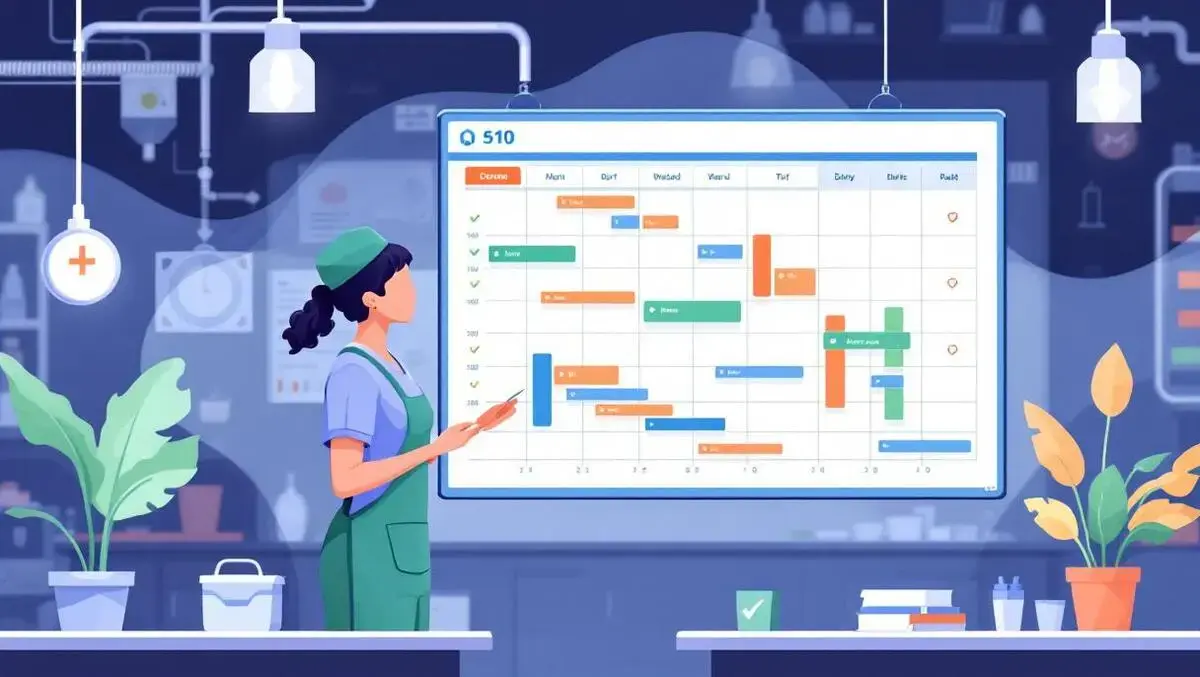
Humanforce launches AI rostering tool for frontline staff
Thu, 21st May 2026 (Today)
Humanforce has launched Smart Scheduling, an AI-based rostering product for frontline workforces designed to match staffing levels to forecast demand.
The launch addresses a persistent problem for employers in sectors where labour is one of the biggest operating costs and staffing needs can change quickly. Many organisations in aged care, hospitality, events and stadia, healthcare, childcare and retail still rely on manual or static roster planning, even as compliance demands tighten.
According to Humanforce, Smart Scheduling uses historical and current demand signals to forecast staffing requirements. These inputs include sales, weather, bookings, foot traffic, minimum staffing levels and opening hours.
Humanforce says the system can reduce roster management time by up to 70% and lower labour costs by 15% through more precise shift staffing. The software can also generate and fill shifts in minutes based on worker availability, skills, budget settings, employee preferences and workplace rules.
The product is part of a broader market shift towards software that automates routine management tasks for employers with large hourly paid or shift-based workforces. In these businesses, roster errors can affect wage costs, service levels and compliance with awards, agreements and internal rules.
Compliance focus
A central element of the product is compliance checks built into the rostering process. Shifts can be tested against configured requirements, including breaks, fatigue settings, qualifications, and award or agreement conditions, before they are offered to staff or published.
This approach is intended to reduce rework and roster exceptions by identifying problems earlier in the workflow. It also reflects growing scrutiny on employers to demonstrate stronger control over pay, safety and scheduling practices at scale.
Chief executive Clayton Pyne positioned the product as a response to competing pressures on managers in frontline sectors. "For frontline industries, the roster is where cost, compliance and experience collide. Smart Scheduling turns that complexity into action - aligning labour to demand while making scheduling fairer and more predictable for the people doing the work," he said.
Employees will be able to interact with schedules through Humanforce's Work App, where they can manage availability, receive shift offers and provide consent for additional work.
The emphasis on employee preferences is notable because retention and reliability remain key issues in many shift-based industries. Employers are increasingly looking for scheduling systems that not only contain costs but also make hours and shift patterns clearer for staff.
Pyne linked that issue to operational strain on managers. "Frontline organisations shouldn't have to choose speed or safety. Smart Scheduling brings compliance into the engine room of rostering so efficiency gains don't come at the expense of people or standards," he said.
Manager oversight
The software is intended to support, rather than replace, manager judgement. Managers can review recommendations, alter assumptions, adjust rosters and approve outcomes before schedules are published.
That hybrid model addresses a common concern about AI in workforce management, particularly in sectors where local knowledge of staff, demand spikes and service needs can be difficult to capture fully in automated systems. By keeping final approval with supervisors, Humanforce is presenting automation as a way to reduce administrative work while preserving accountability.
Pyne made that point directly in a further comment on the launch. "If the roster feels opaque or inflexible, people disengage - and managers end up firefighting. Preference-aware scheduling makes work easier to commit to, and that's where reliability and retention start," he said.
Organisations can choose how much of the workflow to automate, from forecasting demand to generating and filling shifts. That flexibility suggests Humanforce is targeting customers that may prefer gradual adoption rather than a full switch to automated scheduling in one step.
The broader commercial case for products such as Smart Scheduling rests on the cost of labour and the operational complexity of managing large, distributed workforces. For employers operating across multiple sites, small improvements in roster accuracy can materially affect wage spend, overtime, agency use and compliance administration.
Humanforce framed the product as part of a people-focused approach to AI in workplace software. "AI should take the paperwork off managers' plates, not take people out of people processes," Pyne said. "Smart Scheduling gives teams speed and precision, while keeping humans in the loop."