

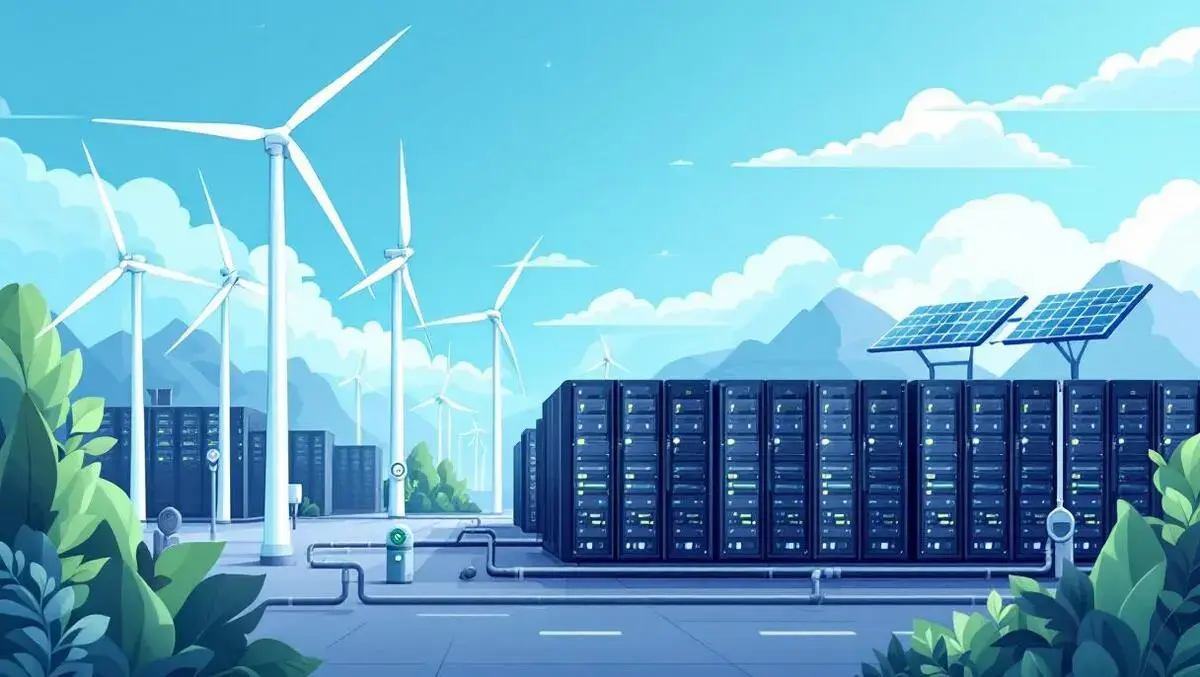
Coalition launches standards for greener AI data centres
Thu, 23rd Apr 2026
Nine building and climate organisations have launched the Greening AI Data Centres Coalition to set sustainability benchmarks for data centre development.
The coalition includes the Building Research Establishment, Climate Bonds Initiative, German Sustainable Building Council, Global Real Estate Sustainability Benchmark, Green Building Council of Australia, Green Building Council South Africa, Indian Green Building Council, U.S. Green Building Council and World Green Building Council.
Its initial work will focus on two areas: an internationally aligned framework for environmental and social performance standards for data centres, covering energy, carbon, water, waste, biodiversity and community impact; and support for green finance instruments, including green bonds and sustainability-linked loans, for projects that meet those standards.
James Fisher, Head of Strategic Partnerships, Building Research Establishment, said, "BRE is pleased to be part of the Greening AI Data Centers Coalition, bringing together organizations with shared expertise across the built environment. As AI infrastructure continues to expand, collaborative approaches grounded in recognized standards such as BREEAM will be essential to support more sustainable outcomes for buildings, infrastructure and the communities they serve."
Rising demand
The launch comes as demand for computing infrastructure rises alongside the spread of artificial intelligence. The organisations behind the initiative say cities are under growing pressure from data centre expansion because of concerns over electricity and water use, effects on local utility costs, noise, and the limited number of long-term jobs such facilities typically create.
Data centres account for about 1.5% to 2% of global electricity consumption, according to figures cited by the coalition. The International Energy Agency expects that demand to more than double by 2030.
Sean Kidney, CEO, Climate Bonds Initiative, said, "Trillions are going into building AI data centers, but without clear standards, it risks becoming a climate disaster. The solutions are simple: use clean energy, recycle water and re-use heat. This coalition is about setting the rules to get that right."
Water use is also coming under greater scrutiny. In some regions, the organisations say, certain facilities consume as much water as a small city, adding pressure to already stretched local supplies.
Standards push
The coalition wants to establish a clearer definition of what qualifies as a green data centre as investor interest in the sector grows. That includes creating benchmarks to help investors, operators, communities and policymakers distinguish between projects with lower environmental impacts and those that risk overstating their sustainability credentials.
Dr. Chris Pyke, Global Real Estate Sustainability Benchmark, said, "Data centers are the fastest-growing, most impactful category of real estate. GRESB shares the Greening AI Data Centers Coalition goal of providing investors with the information they need to constructively engage with developers and operators to protect financial value and improve social and environmental outcomes. Investors, equipped with timely and relevant information, can play a key role in making essential data center development safe and sustainable."
By setting common criteria, the group also aims to address a fragmented landscape in which data centre developers and financiers face different standards across markets. A more consistent framework could influence both capital allocation and project design, especially in regions where power constraints and water stress are becoming more pronounced.
Dr. Christine Lemaitre, CEO, German Sustainable Building Council, said, "Data centers are becoming an increasingly significant subject in Europe too, requiring comprehensive and sustainable planning and implementation in order to minimize any negative implications for climate protection. In this context, the link to the municipal context plays a particularly important role. Developing common standards in a timely manner that work on a global scale is a key task, making our coalition particularly significant."
Environmental pressure
The launch reflects a broader debate over the environmental cost of the AI boom. New data centres are being proposed and built rapidly to meet demand for cloud services and AI workloads, but they also require large amounts of energy for computing and cooling.
If those facilities rely heavily on fossil fuel-based grids or draw from scarce water resources, they could complicate wider decarbonisation efforts. That tension has made data centres a growing focus for urban planners, utilities, investors and sustainability assessors.
Davina Rooney, Chief Executive Officer, Green Building Council of Australia, said, "Artificial intelligence is driving rapid growth in data centers around the world, including here in Australia. As this infrastructure expands, we need clear expectations for sustainability that protect energy systems, water resources, and communities. This coalition will bring global expertise together while recognizing that local conditions, from climate to grid dynamics, must shape how sustainable data centres are delivered."
Finance angle
The coalition's emphasis on financial tools is notable because green bonds and sustainability-linked loans are becoming more common in property and infrastructure funding. A recognised set of criteria for data centres could give lenders and investors a clearer basis for deciding which projects qualify for such funding.
That may matter as operators seek large sums to expand server capacity and related infrastructure. It could also shape how developers approach site selection, energy sourcing, cooling systems and community impact if access to finance becomes tied to measurable environmental and social standards.
Mr K S Venkatagiri, Executive Director, Indian Green Building Council of Confederation of Indian Industry, said, "Greening AI data centers is no longer a choice; it is an imperative for a sustainable digital future. For over two decades, IGBC has championed green data centers, proving that energy efficiency, resilience, and scale can go hand in hand. India has total 1.4 GW of total Designed IT Load out of which more than 850 MW of IT load is Green Certified. As AI accelerates demand, sustainability must accelerate innovation. The future of AI must be powerful, responsible, and truly green."
The founding members span building certification, sustainability benchmarking and green finance. Together, they give the initiative reach across property markets, institutional investors and standards bodies in several regions.
Cristina Gamboa, CEO, World Green Building Council, said, "Data centers are rapidly becoming part of the physical fabric of our built environments, with significant impacts on energy systems, water resources and local communities. As a founding member of the Greening AI Data Centers Coalition, the World Green Building Council is proud to help bring together global expertise from across the building and construction sector to define what truly sustainable data centers look like. By setting clear, credible standards, this Coalition will help ensure the growth of AI infrastructure supports climate goals, community resilience and long-term sustainability."
Peter Templeton, President and Chief Executive Officer, U.S. Green Building Council, outlined the rationale for the group's formation.
"We are proud to be a founding member of this coalition to accelerate sustainable design and operations in data centers worldwide. As a strategic asset class, data centers are central to technological innovation and economic growth. Through this coalition, we are committing our collective expertise to balancing this growth with responsible development that protects energy affordability, local resources, and quality of life," said Templeton.
Georgina Smit, CEO Designate, Green Building Council South Africa, said, "GBCSA is proud to join this collective effort to develop an internationally aligned framework for greening data centers. As Africa's primary digital infrastructure hub, South Africa hosts over half of the African continent's installed capacity. A standardized definition for 'green data center' is essential to ensure that expansion aligns with national climate commitments, infrastructure capacity, and long-term economic resilience. This is necessary for the market to adopt a 'build-right' rather than a 'build-fast' approach, resulting in a more resilient, investable, and future-fit digital infrastructure ecosystem."