

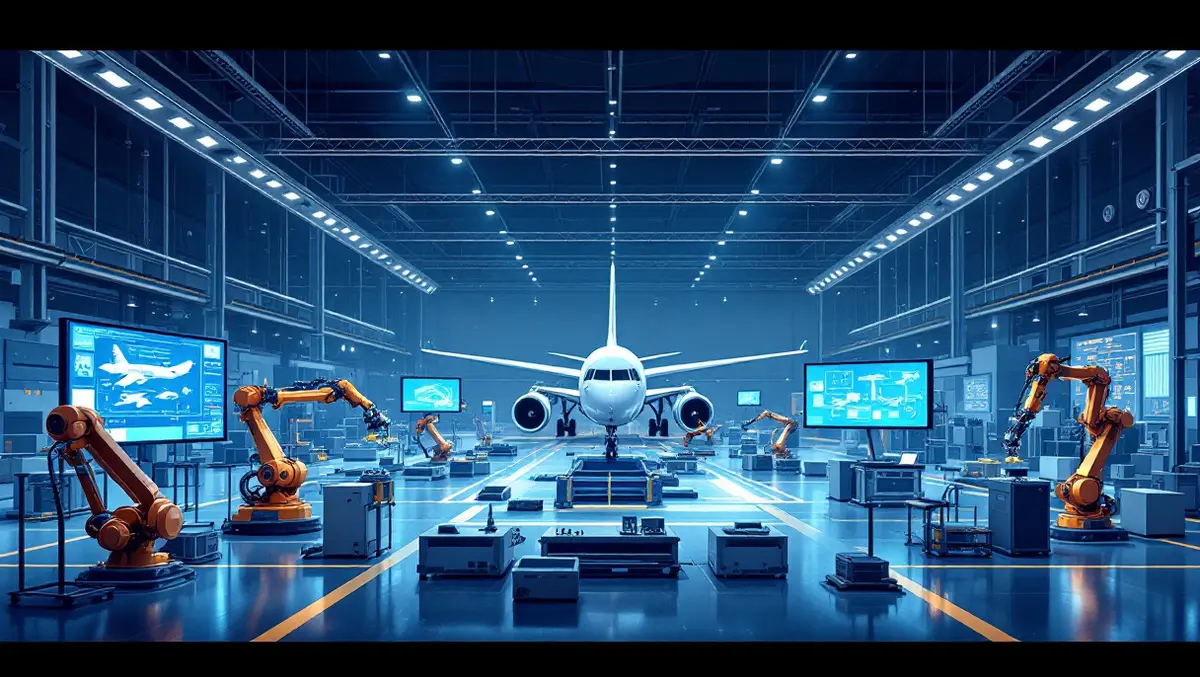
Aerospace manufacturers embrace AI for future supply chain gains
Fri, 12th Sep 2025
A new study has found that a significant majority of aerospace manufacturers are increasingly open to adopting agentic artificial intelligence for the management of their supply chains, with AI anticipated to bring about the most significant changes to aircraft manufacturing by 2035.
Industry transition
The TCS Future-Ready Skies Study 2025, based on feedback from 323 senior aerospace executives in North America and Europe, points to a sector actively preparing for an AI-powered future. Survey respondents represented a cross-section of aerospace manufacturers, Advanced Air Mobility companies, Maintenance, Repair and Overhaul providers, and electric vertical takeoff and landing firms.
Among the key findings, 63% of aerospace executives indicated they are open to the use of agentic AI in operating supply chains. Despite this readiness, only 6% currently leverage such systems, suggesting there is a significant gap between interest and actual adoption.
In manufacturing, 38% of those surveyed expect AI-driven real-time decision-making to be the largest catalyst for change in how aircraft are built by 2035. This is ahead of the 24% who cited digital twins and the 19% who pointed to robotics as primary enablers for transformation.
Human expertise remains vital
The report highlights a future where human skills and AI will work together in aerospace production. On average, aerospace companies predict that just 40% of their manufacturing operations will reach a 'lights-out' status - meaning highly automated with minimal human intervention - within five to seven years. The majority of manufacturing work, 60%, is expected to still require human input, indicating a continued reliance on employee expertise.
Steve Lucas, Chairman and CEO, Boomi, said, "The Future-Ready Skies Study shows that the aerospace industry is at an inflection point where the promise of AI depends on getting the fundamentals right. Change only happens, however, at the speed of trust and that trust begins with data. Agentic AI can only succeed when it's built on a strong foundation of connected, reliable data. By integrating and connecting everything across their complex ecosystems, companies can accelerate decisions, scale innovation, and turn complexity into a true competitive advantage."
Supply chain challenges
The findings reveal vulnerability within aerospace supply chains. Only 34% of respondents say their organisations can shift sourcing within 30 days if there is a significant disruption from a major Tier 1 supplier. This points to the need for greater resilience and flexibility in supply chain management, particularly as companies consider adopting more agentic AI solutions.
Integration of digital tools is progressing, with 59% of aerospace manufacturers having at least partially implemented digital thread integration, though full lifecycle integration remains rare. For Maintenance, Repair and Overhaul operations, just 2% of senior executives believe their processes will be fully autonomous by 2030, particularly in moving from the detection of issues to repair decisions without human involvement.
Investment in technology is similarly cautious but forward-looking. Just over half (51%) of MRO providers expect a return on investment in advanced technology within five years, and nearly two-thirds (64%) see predictive analytics and agentic AI providing tangible returns in the same period. Still, only 5% of MRO executives consider their digital transformation strategy adequately scaled for future industry needs.
Advanced air mobility and digital adoption
Within the rapidly developing Advanced Air Mobility sector, which includes electric aircraft, 70% of companies surveyed are actively working on commercial platforms. Challenges persist, with only a third (34%) of companies describing public acceptance as an obstacle, while most have shifted focus to advancing operational and regulatory readiness.
Further, 32% of aerospace leaders anticipate measurable returns on investment in MRO technologies within three years, and 80% acknowledge that accelerating digital adoption is vital for mitigating future risks and inefficiencies. However, the pace of adoption must increase, as 80% of executives expect operational and financial drawbacks, such as rising costs and increased downtime, if digital strategies do not scale as planned.
Anupam Singhal, President, Manufacturing, TCS, commented, "The aerospace industry has always been one where ambition is matched by precision and safety. Today, ambition is redefined as AI moves from supporting operations to shaping enterprise strategy - advancing passenger experience, safety, and sustainability. At TCS, we see this as a leadership opportunity to help aerospace enterprises build resilient, adaptive ecosystems and shape skies that are bold, transformative, and future-defining."
The study reflects a sector that is responding to market opportunities and regulatory shifts, while also grappling with operational transformation and digital integration challenges. With the global aerospace market forecast to exceed USD $1 trillion by 2030 and the MRO segment anticipated to reach USD $137 billion, navigating this transition will be critical for organisations aiming to sustain growth and competitiveness.